
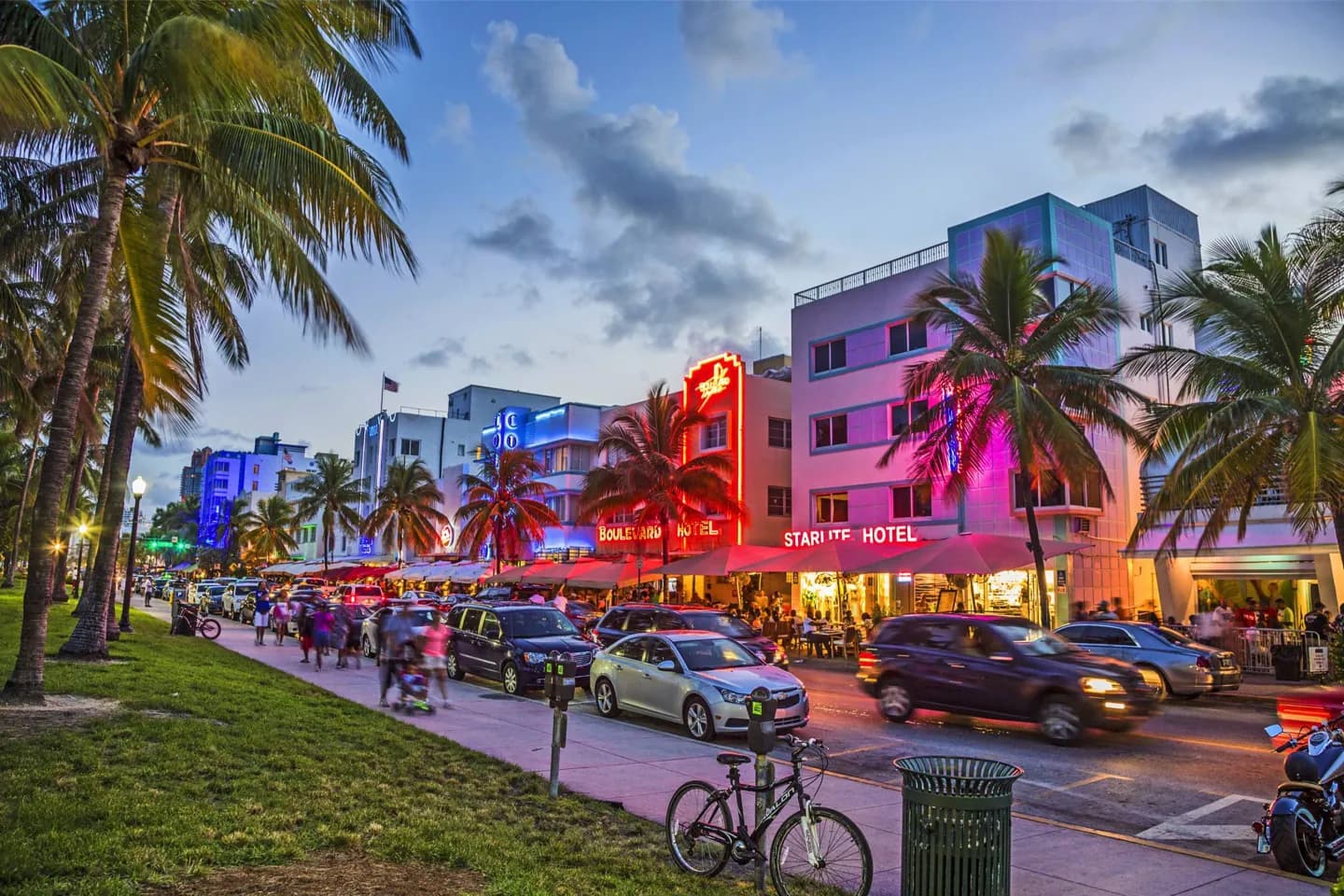
Why go
Miami pairs bayfront culture with a strong Cuban American identity, while Orlando centers much of its visitor appeal on theme parks. Jacksonville follows the St. Johns River; Pensacola looks toward the Gulf and naval history. Tallahassee adds a capital-city perspective. Each city provides a distinct base for a regional visit.
Useful to know
- Select a city base before combining distant attractions.
- Keep Miami, Orlando and Pensacola as separate regional plans.
The route, stop by stop
Times are planning estimates. Unknown visit durations start at an editable 30 minutes; access is checked separately.
- 03
Optional · – min
Fort Lauderdale
Fort Lauderdale sits on the Atlantic coast north of Miami, with a strong maritime identity. The New River connects its waterfront setting to the history behind its name.
Explore - 04
Optional · – min
Jacksonville
Jacksonville centers on the St. Johns River in northeast Florida. Riverfront art, colonial history and the nearby Atlantic beach communities give the area several distinct directions for a visit.
Explore - 05
Optional · – min
Tallahassee
Tallahassee offers Florida’s capital and university setting rather than a coastal resort experience. Political-history exhibits provide a useful starting point for understanding the city’s role in the state.
Explore - 06
Optional · – min
Panama City
Panama City adds a port-city perspective to the Florida Panhandle. Its name and downtown Harrison Avenue preserve a story of development tied to interest in the Panama Canal.
Explore - 09
Optional · – min
West Palm Beach
West Palm Beach introduces the northern part of South Florida through its railway-era development. Nearby Palm Beach landmarks help explain the resort ambitions behind the region’s growth.
Explore