
Why go
Descartes, Montesquieu, Rousseau and Voltaire offer a compact route into ideas that still appear in French civic language. Their works move from how to know something to who should govern and what liberties people should have, giving historical depth to France's republican symbols.
The full story
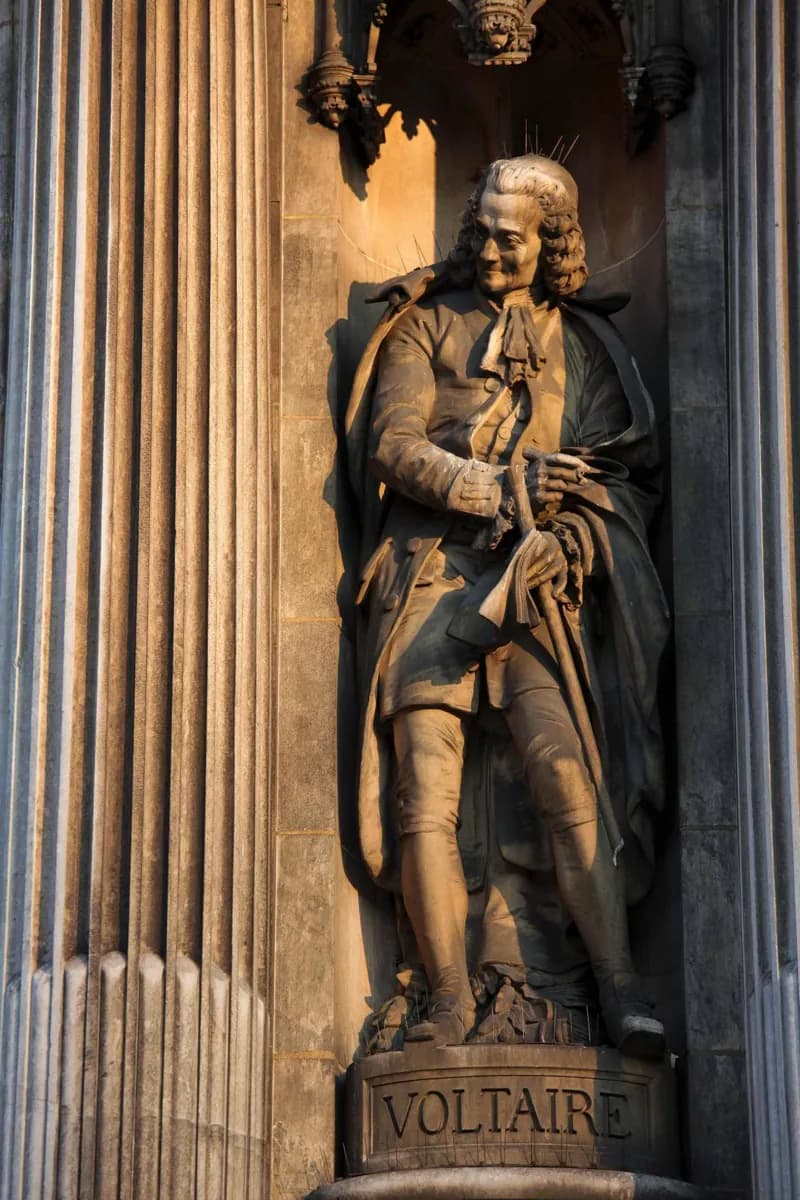
René Descartes and Blaise Pascal were central figures in seventeenth-century French thought, though they approached reason and belief in different ways. Descartes' Meditations asked what can be known with certainty. The eighteenth-century Enlightenment carried those questions into public life. In The Spirit of the Laws, Montesquieu examined how political powers might be divided. Rousseau's The Social Contract argued for the sovereignty of the people against rule justified by divine right. Voltaire became associated with the defence of religious freedom and fair trials. The French Revolution gave these debates a sharper public setting, but the story did not stop there. Auguste Comte later proposed positivism as a way to understand society; Henri Bergson explored experience and time; and twentieth-century thinkers such as Michel Foucault and Jacques Derrida questioned familiar assumptions about knowledge and language. Read the names as a sequence of changing questions, rather than a single French doctrine.