
Why go
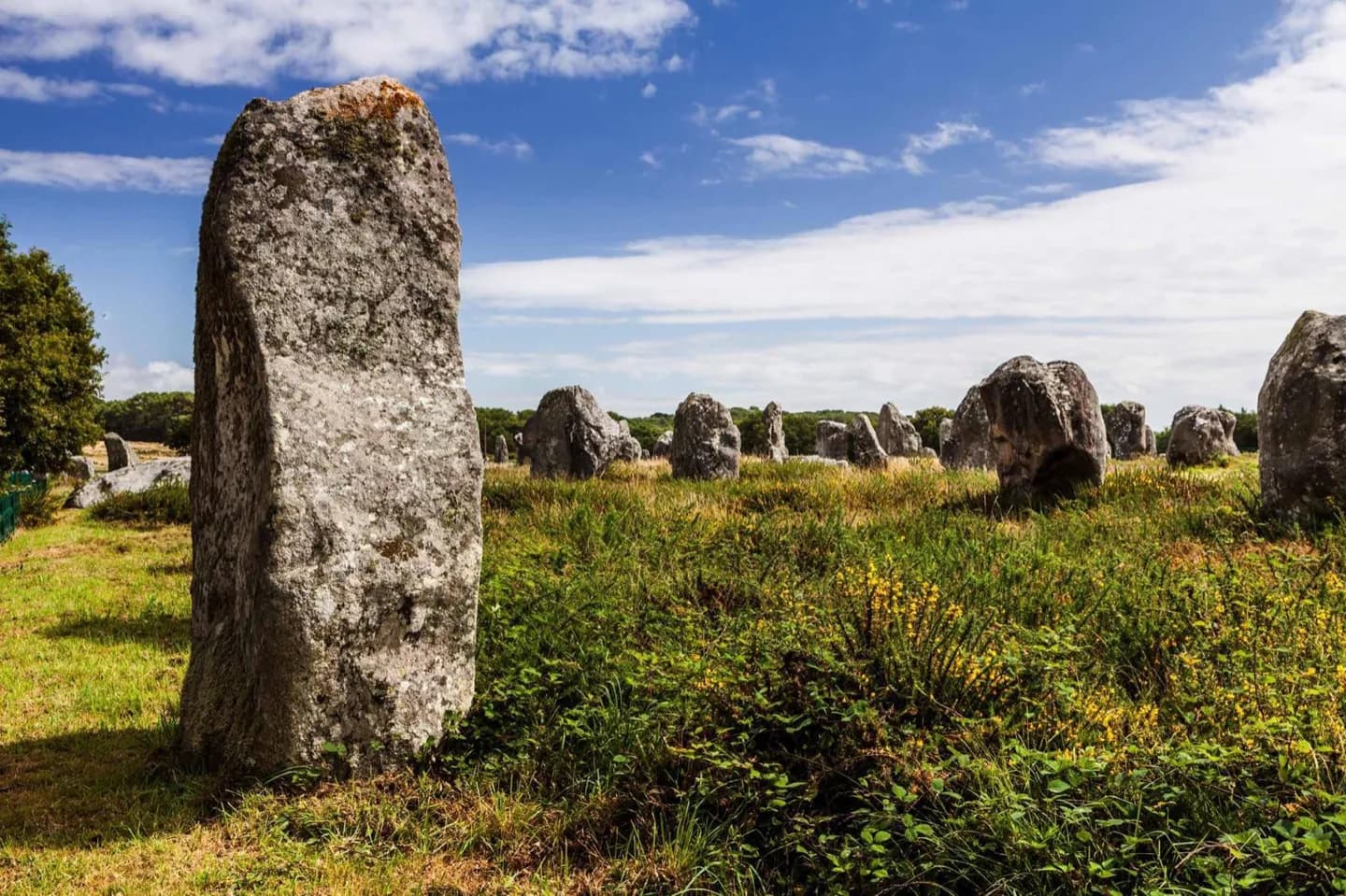
Use Lascaux and Carnac as contrasting starting points: one preserves an image-making tradition underground, while the other turns an open landscape into a field of monuments. Their difference is more revealing than treating all prehistoric sites as one period. The contrast also guards against collapsing millennia into one story.
The full story
Human presence in what is now France reaches far back into the prehistoric era, through changing glacial climates and mobile hunter-gatherer lives. Decorated caves belong to a later Paleolithic chapter. Lascaux is the best-known example in the supplied account, and its painted walls show that underground spaces held meaning beyond shelter. The Neolithic brought more settled communities and agriculture to western Europe. At Carnac, dense alignments of standing stones make that later world visible outdoors and across a much larger area. The exact beliefs behind the stones are not established by this account, so their value lies in the scale and deliberate arrangement you can observe rather than a confident ritual explanation. When choosing between these subjects, think about the kind of evidence you want to encounter: cave imagery records marks made on enclosed surfaces, while megaliths alter the land itself. Seeing both gives a clearer sense of how different prehistoric lives and techniques left different traces across France.