
Why go
Northern war landscapes, Normandy’s landing sites and places tied to occupation tell connected but distinct stories. Following the chronology also shows why postwar reform, decolonization and the Fifth Republic followed a period of profound upheaval. Give each place the time and context its subject demands.
The full story
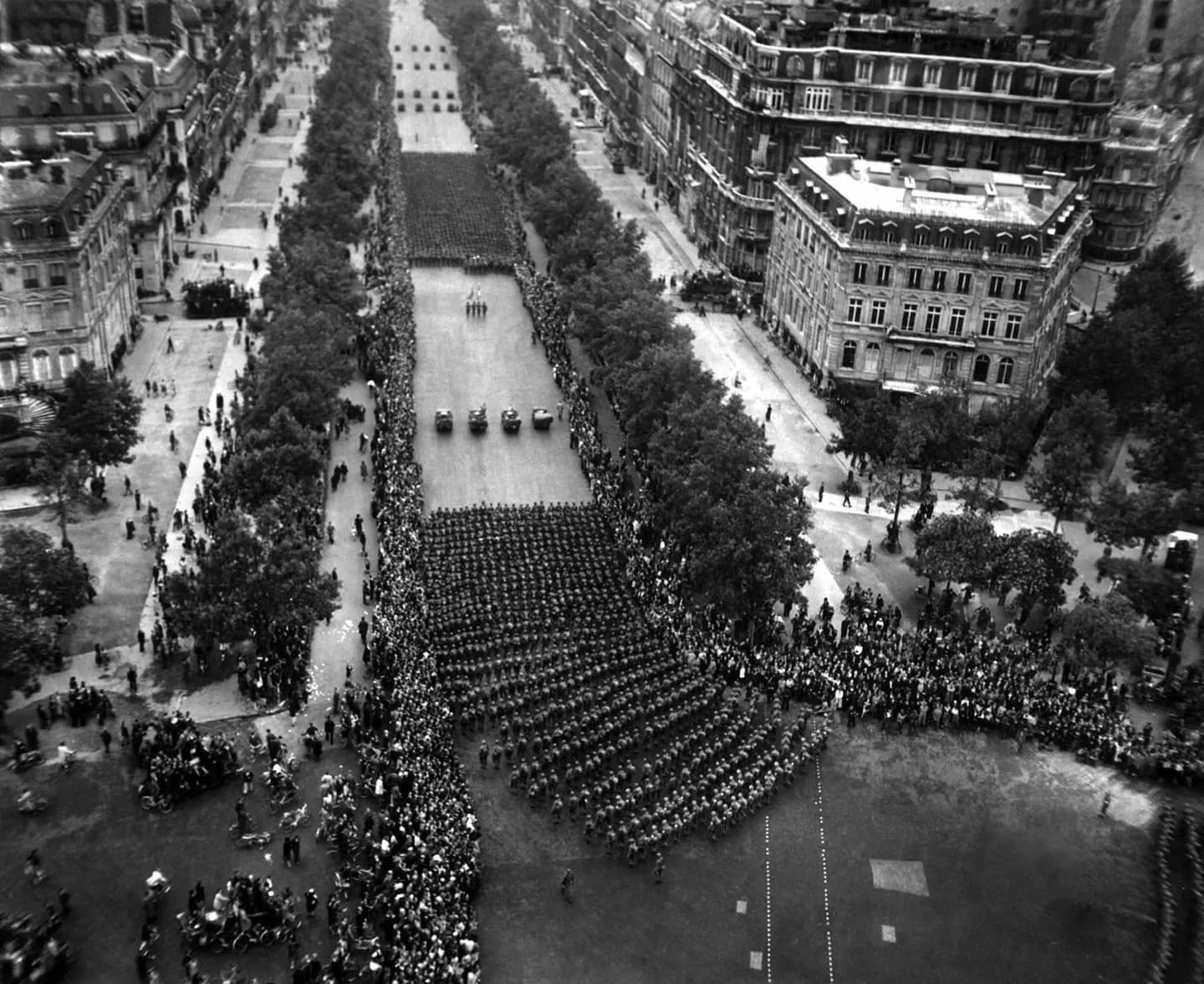
France fought in the First World War at immense human and material cost, especially in the north. A generation later, Germany invaded in 1940. The country was divided between occupied territory and the Vichy regime, which collaborated with Nazi Germany; Charles de Gaulle led Free France from London. Deportation and persecution form an essential part of this history and should not be folded into a simple victory narrative. Allied landings in Normandy in June 1944 and Provence that August, together with the French Resistance, helped bring liberation. The provisional government restored French sovereignty and introduced changes including women’s suffrage and social security. Postwar stability remained difficult. The Fourth Republic later gave way to the Fifth Republic in 1958, amid the Algerian War; Algeria became independent in 1962. On a visit, match the place to the event: a First World War landscape, a Normandy landing site, a memorial to deportation and a postwar civic monument speak to different experiences. Reading them in order avoids compressing decades of conflict and political change into one story.