
Why go
Taillevent's Le Viandier and descriptions of aristocratic banquets give context to historic kitchens and food displays. They show why preserved meats, strongly seasoned sauces and elaborate presentation mattered before modern storage and service styles. This is a useful lens for a medieval castle or museum visit.
The full story
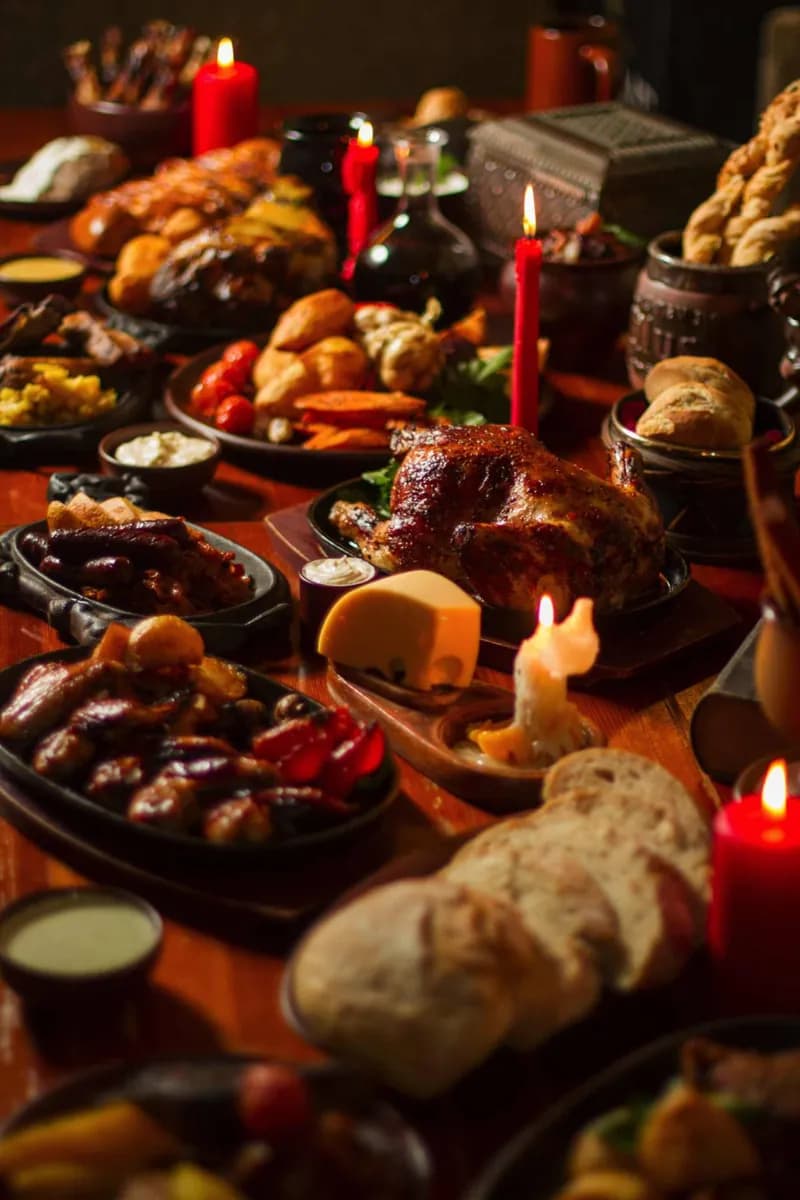
Aristocratic banquets in medieval France could bring several dishes to the table at once, rather than in the sequence familiar from a modern restaurant. Diners ate much food by hand. Sauces were thick and strongly seasoned, and pie crusts could serve as containers rather than the main pleasure of the dish. Meals might end with dragées, aged cheese or spiced wine. Seasons and the church calendar set further limits. Winter called for food preserved by salting, smoking, drying or brining; fruit, nuts and roots could be kept in honey. Fish ponds supplied species such as carp and pike. Display mattered as much as flavour at elite tables, with colour added to make dishes striking. These details describe wealthy dining, not every household. Keep that distinction in mind when a castle kitchen or banquet image seems to stand for all medieval French food.