
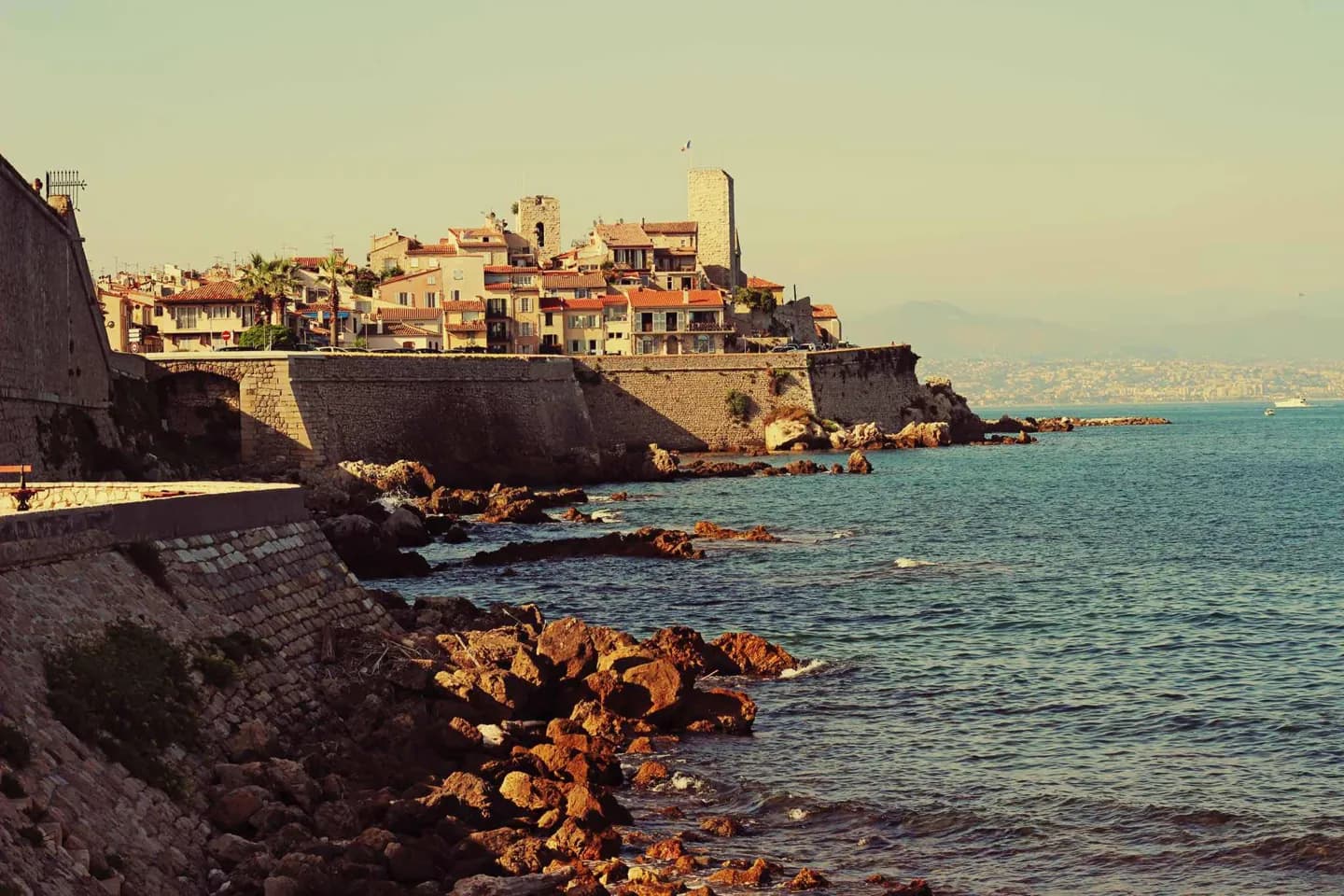
Why go
Read the streets around the château and former cathedral as layers of a much older port town. Finds from the Iron Age, Greek trade and Roman administration explain why this particular headland mattered long before Antibes became a resort. The ancient layers are especially relevant around the central rock.
The full story
Archaeologists have found traces of an Iron Age community around the château and former cathedral. Imported amphorae show that the people on this rock had Mediterranean connections before the Greek colony took shape. Antipolis developed through the influence of Greek Marseille, although the precise site of its first Greek town remains uncertain. Hellenistic material has been found beneath parts of today’s old town, including the area around the château and church. In the second century BC, conflict between Marseille’s colonies and neighbouring Ligurian groups brought Roman intervention. After Caesar defeated Marseille in the first century BC, Antipolis became separate from its former metropolis and gained a Roman civic status. This sequence gives the old town a useful scale: the narrow streets sit over successive settlements rather than beside a single surviving ancient monument.