
Why go
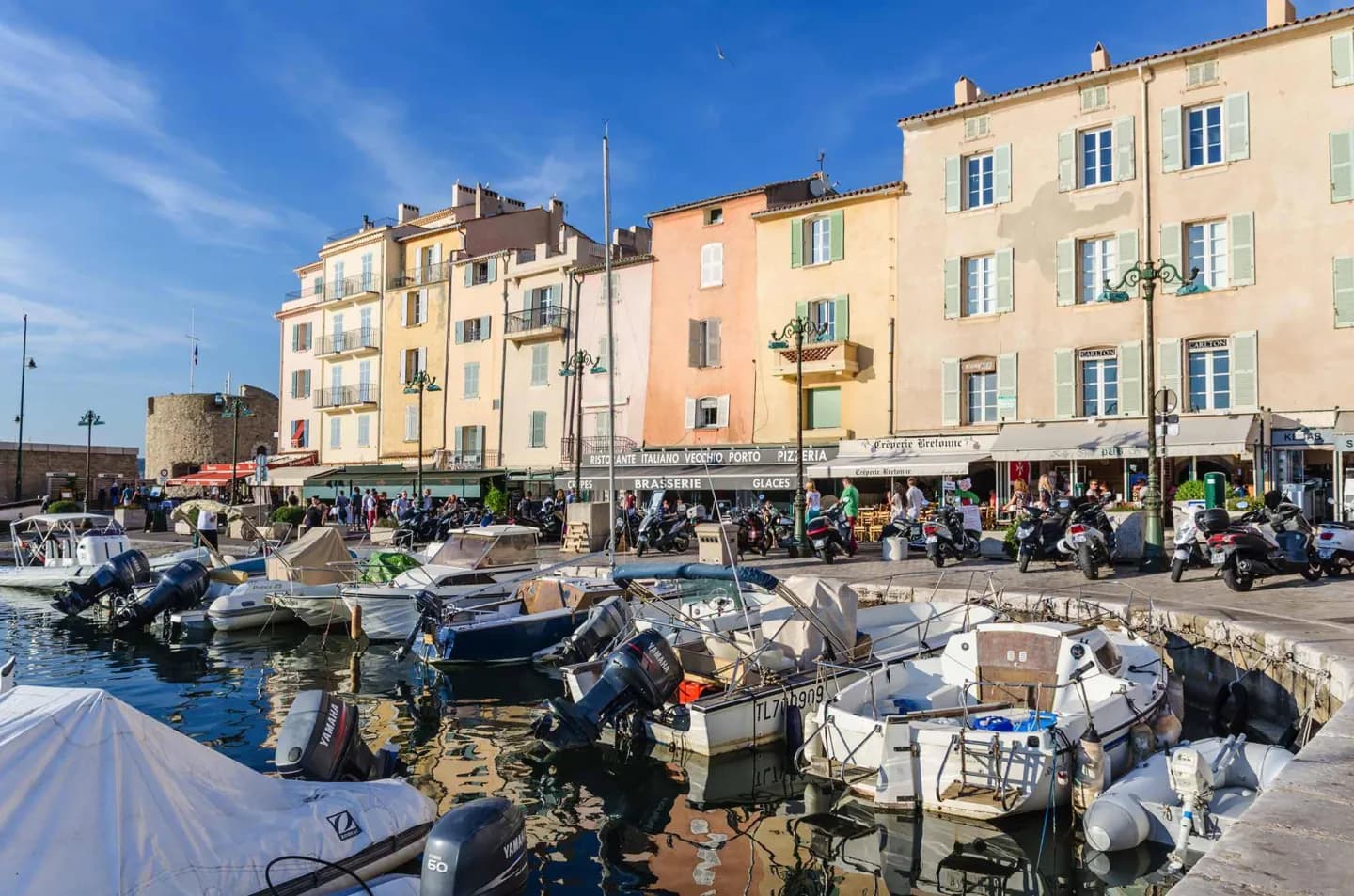
The interest lies in how an old fishing and military town became a celebrated resort. The harbor displays its public face, while the narrow streets keep the village scale visible. Film and popular culture later changed its reputation, but those two physical settings make the history readable during an ordinary walk.
What to look for
- Follow the harbor frontage to see the town's best-known setting.
- Turn into the smaller village lanes behind the port.
- Compare the working-port scale with the resort image shaped by film culture.
The full story
Saint-Tropez was a military stronghold and fishing village before its twentieth-century resort fame. Its harbor remains the easiest place to see the older maritime setting, though the village lanes behind it are equally important to the town's scale. After the Second World War, cinema and popular music helped turn Saint-Tropez into an international seaside name. That reputation can dominate expectations, but the walk from port to back streets gives a more grounded view. The town's image changed quickly; its street pattern and relationship with the water explain why it had a life before the publicity. Looking closely at the harbor and lanes is a way to separate the real built town from its familiar public image. The contrast also explains why a short port stop only tells part of the story.
Useful to know
- Walk the harbor and inner village as one circuit instead of stopping only at the waterfront.
- Leave extra time if you want to explore beyond the port; this is a town area rather than one timed venue.
Your next visit
Estimated · Declared scenario and planning estimates; no live opening, weather, queue or booking service.
Outdoor visit · 30–45 min
World planning estimate; admission, opening, visit duration and access need checking.