
Why go
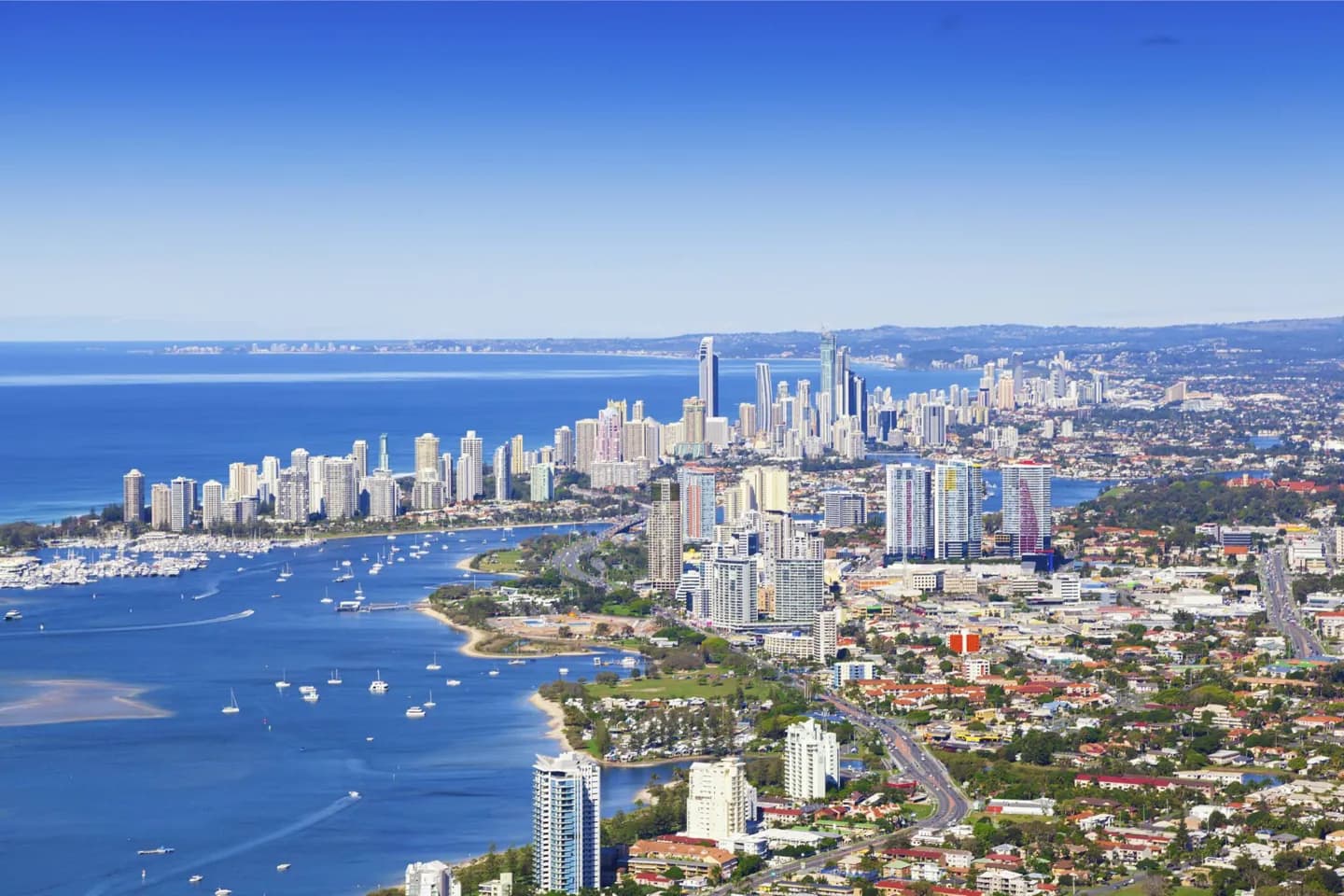
Southport and Surfers Paradise reveal different stages of the city's growth. The hinterland's red cedar drew European settlers inland in the nineteenth century; Southport then grew as a Brisbane holiday retreat. The later resort boom gave the coast its current name and skyline. Knowing that sequence makes the contrast between river, beach and built-up shore easier to read.
The full story
European maritime records of the area date to James Cook's voyage in 1770 and Matthew Flinders's passage in 1802. John Oxley landed at Mermaid Beach in 1823; the beach's name refers to the cutter Mermaid. European settlement expanded later, as red cedar brought timber workers to the hinterland and Nerang developed as a base for that trade. Southport was surveyed in 1875 and acquired a reputation as a holiday retreat for Brisbane residents. The coast was long called the South Coast. Around 1950, “Gold Coast” emerged as a nickname associated with high prices, but businesses soon adopted it for the holiday strip from Southport to Coolangatta. The Town of South Coast formally became the Town of Gold Coast in 1958. Surfers Paradise's hotel development and the later tourism boom helped transform separate seaside settlements into the continuous urban coast visitors see today.