
Why go
The mountains are more than a scenic backdrop. Much of the park is built from ancient sediments transformed into hard rock, while limestone underlies some coves. At Cades Cove, that contrast helps explain why a wide, settled valley lies within steep mountain terrain. Raven Fork Valley offers another window into older rocks on the North Carolina side.
The full story
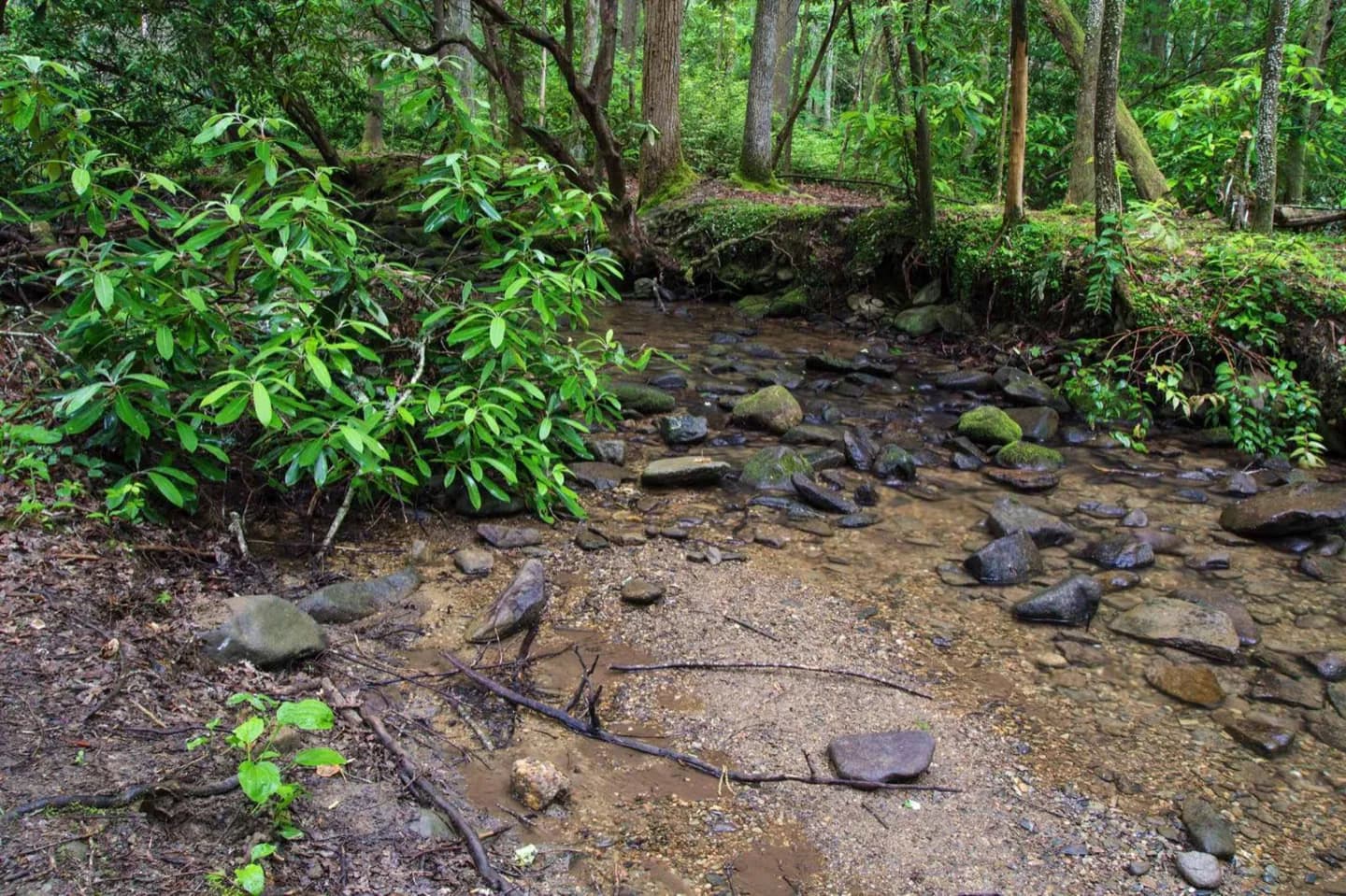
Many rocks in Great Smoky Mountains National Park belong to the Ocoee Supergroup: ancient layers of sand and mud later changed by heat and pressure into rocks such as sandstone, slate, and schist. Older gneiss and related rocks occur around the Raven Fork Valley and upper Tuckasegee River. The park also contains younger sedimentary layers, including limestone in some coves. Cades Cove is a geological window, where the rocks surrounding the valley differ from those exposed on its floor. The Appalachian mountains rose as continental plates collided, then long erosion stripped away softer layers and exposed older formations again. The result is visible without memorizing rock names: steep ridges, water-cut valleys, and unusually open coves sit close together. When crossing from a ridge into Cades Cove, notice the change in landform as well as the historic buildings; the valley's shape helped make settlement possible there.
Useful to know
- Use Cades Cove to compare the open valley floor with the surrounding mountain slopes.