
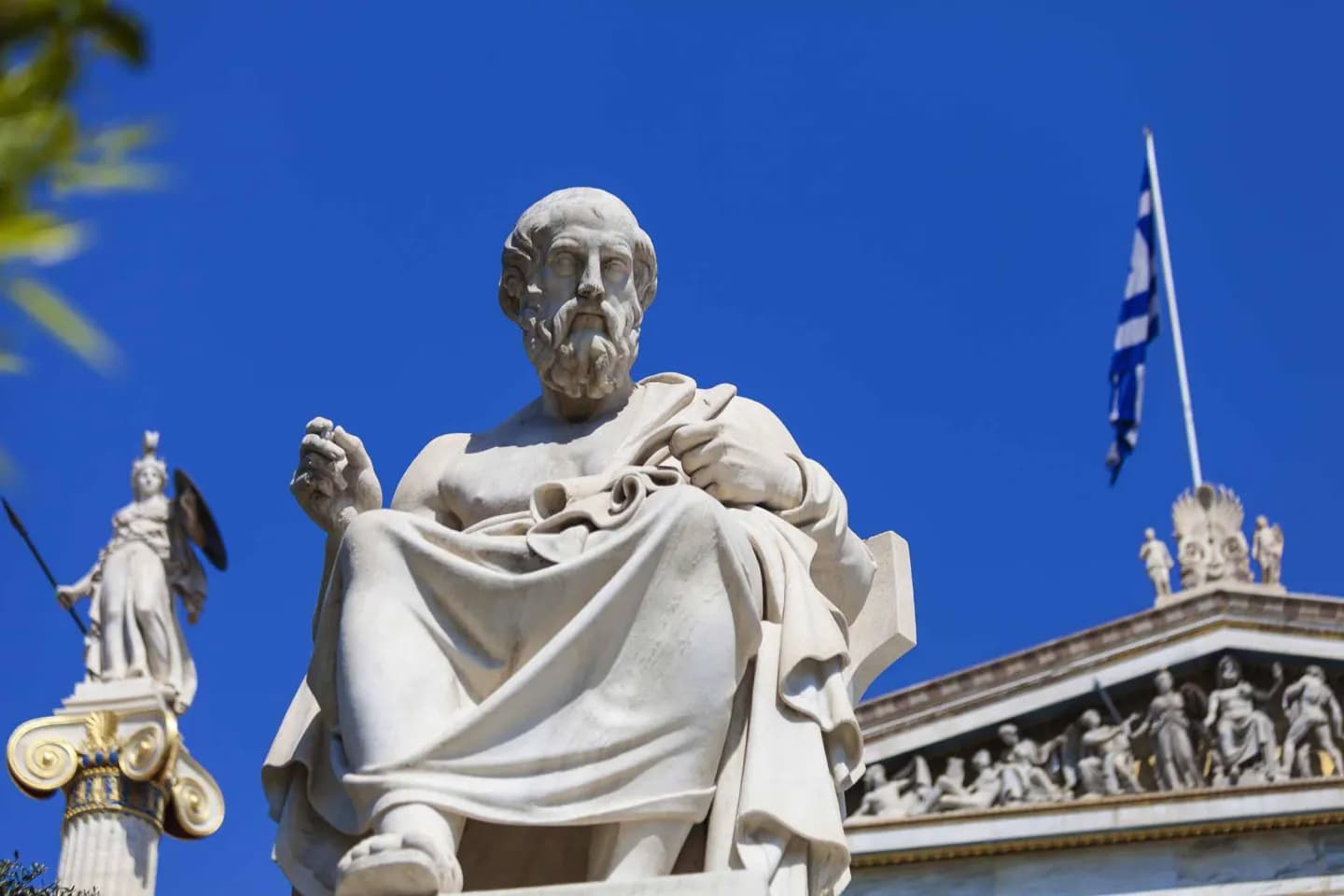
Why go
The Acropolis shows religious and civic ambition; the Ancient Agora points toward public argument and political life. Reading Socrates, Plato and Aristotle alongside those places helps turn abstract names into questions about evidence, justice and government. Earlier thinkers such as Thales approached the natural world in another way.
The full story
Ancient Greek philosophy developed over several centuries and did not follow one agreed method. Thinkers now called pre-Socratic asked about the nature of the world, change and the basic substance of things. Thales of Miletus, for example, is remembered for explaining the cosmos through water. The surviving accounts are incomplete, so simple labels can hide disagreement and uncertainty. Socrates became the central figure in a later Athenian tradition, known chiefly through other writers. Plato and Aristotle then offered different ways of examining knowledge, ethics and political life. Plato explored forms and ideal arrangements of a city; Aristotle gave greater weight to observation and practical comparison. These arguments continued into the Hellenistic and Roman periods and influenced later traditions well beyond Greece. On a visit to Athens, the point is not to treat every stone as a philosopher's classroom. The useful connection is between a city that supported public debate and questions that still sound familiar: What counts as a good reason? Who should govern? What is a good life?