
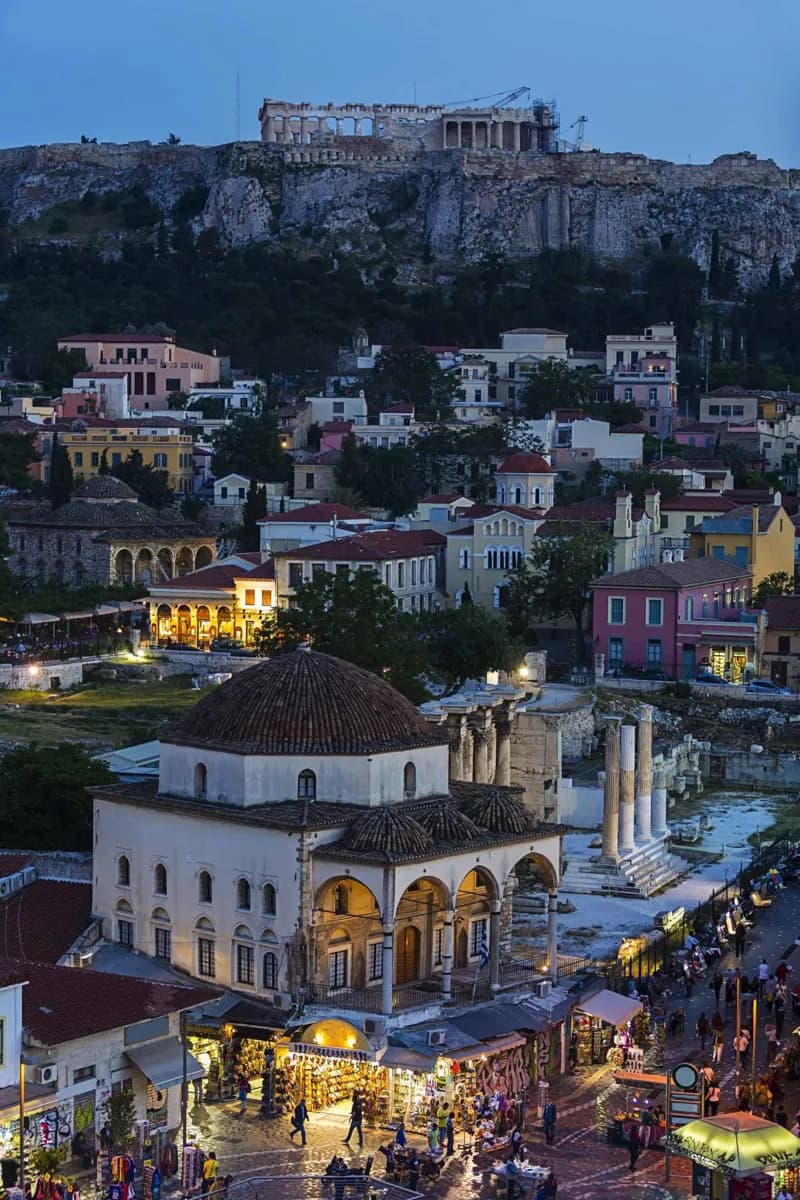
Why go
A visit to an Orthodox church or monastery is more comfortable when shoulders and knees are covered and photography signs are respected. A greeting before a request is a useful habit in a café or village. The twentieth-century military junta remains a serious historical subject, so approach it with care rather than easy generalizations.
The full story
Greek social life cannot be reduced to a single national manner. A practical starting point is simple courtesy: greet someone when entering a small place or beginning a request, and learn a few Greek words such as parakaló, used for 'please' or 'you're welcome' depending on context. Gestures are not always interpreted as they are elsewhere, so clear words are safer than relying on a hand sign. Churches and monasteries are active religious places as well as visitor sites. Covering shoulders and knees is a sensible way to prepare, and any posted dress or photography rules should take priority. This matters at famous monasteries such as Meteora as much as at an ordinary parish church. History can also enter casual conversation. Ancient and Byzantine heritage, the civil conflicts of the twentieth century and the 1967–74 military junta carry different meanings for different people. Listen before making assumptions. People will have their own views on these subjects. Listening to an individual and respecting the place in front of you is more useful than guessing a reaction.