
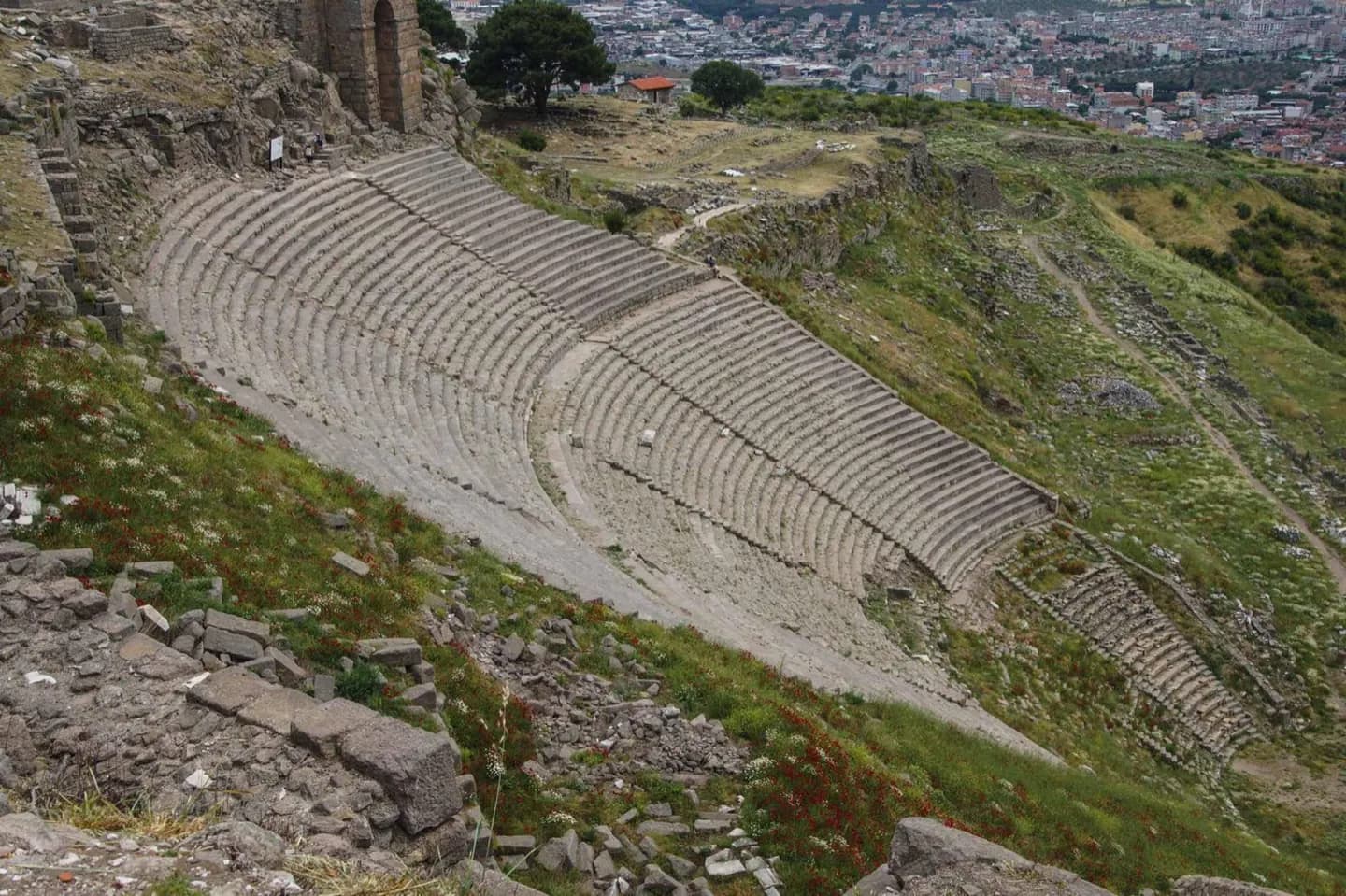
Why go
Knowing that tragedy and comedy were performed for the Dionysia changes how an ancient theatre reads: it was a civic gathering place, not just a preserved set of seats. Karagiozis shadow theatre and the later stage traditions of Crete, Corfu and Athens give visitors a broader cultural line to follow.
The full story
In classical Athens, performances at the Dionysia honoured Dionysus and brought audiences together for drama. Tragedy, comedy and satyr plays developed in that setting. An ancient theatre therefore speaks to a public event as much as to architecture; the seating, stage and relationship to a sanctuary all mattered to the experience. The tradition did not simply stop after antiquity. Later forms changed with political and cultural conditions. Mime and pantomime persisted in Byzantine times, and Karagiozis, a shadow puppet form, became prominent during the Ottoman period. Venetian Crete contributed to a theatrical revival, with figures such as Vitsentzos Kornaros and Georgios Chortatzis. After independence, modern stages drew in part on theatre and opera from the Ionian Islands and Italy. Corfu's San Giacomo theatre belongs to that chapter, while Athens developed revues, musical comedies and other performance forms. A visitor may encounter ancient theatres, puppet figures or a contemporary production on the same trip. Treat them as related but distinct parts of Greek performance history.