
Why go
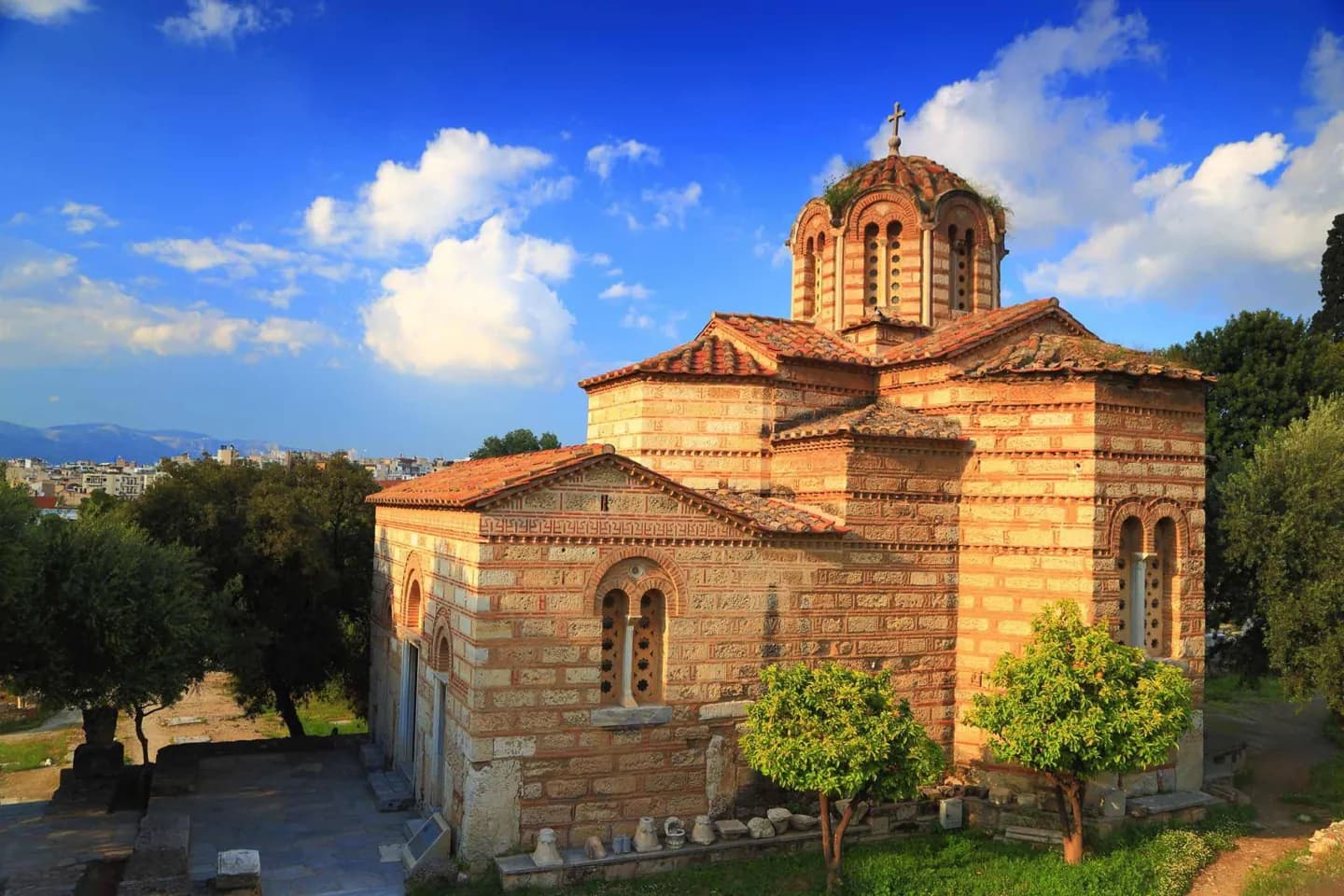
Religious history adds meaning to Byzantine churches, Meteora's monasteries and the streets of Thessaloniki. Orthodox traditions shaped many buildings and festivals, while Thrace's Muslim communities and Thessaloniki's Jewish past show a wider story. This context helps visitors look beyond architecture alone without assigning a belief to anyone they meet.
The full story
Eastern Orthodox Christianity has a prominent place in Greek public and cultural life. Its churches, icons and monasteries are visible across cities, villages and mountain landscapes. At Meteora, monasteries stand on rock pillars; in many towns, a church is still a working place of worship rather than a monument arranged only for visitors. Observe posted rules and give services their space. Greece also has other long religious histories. Muslim communities have deep roots in Thrace. Jewish life in Thessaloniki was especially significant before the Holocaust, which devastated the city's community during the German occupation. Those histories are worth remembering when visiting a city often described mainly through its Roman and Byzantine buildings. The country's religious makeup has changed over time, and old percentage estimates cannot describe a person you encounter today. For a traveler, the useful distinction is between a site’s art and architecture and the community that uses it. Dress and photography expectations may vary by place; check the signs at the entrance and follow the practice of the site you visit.