
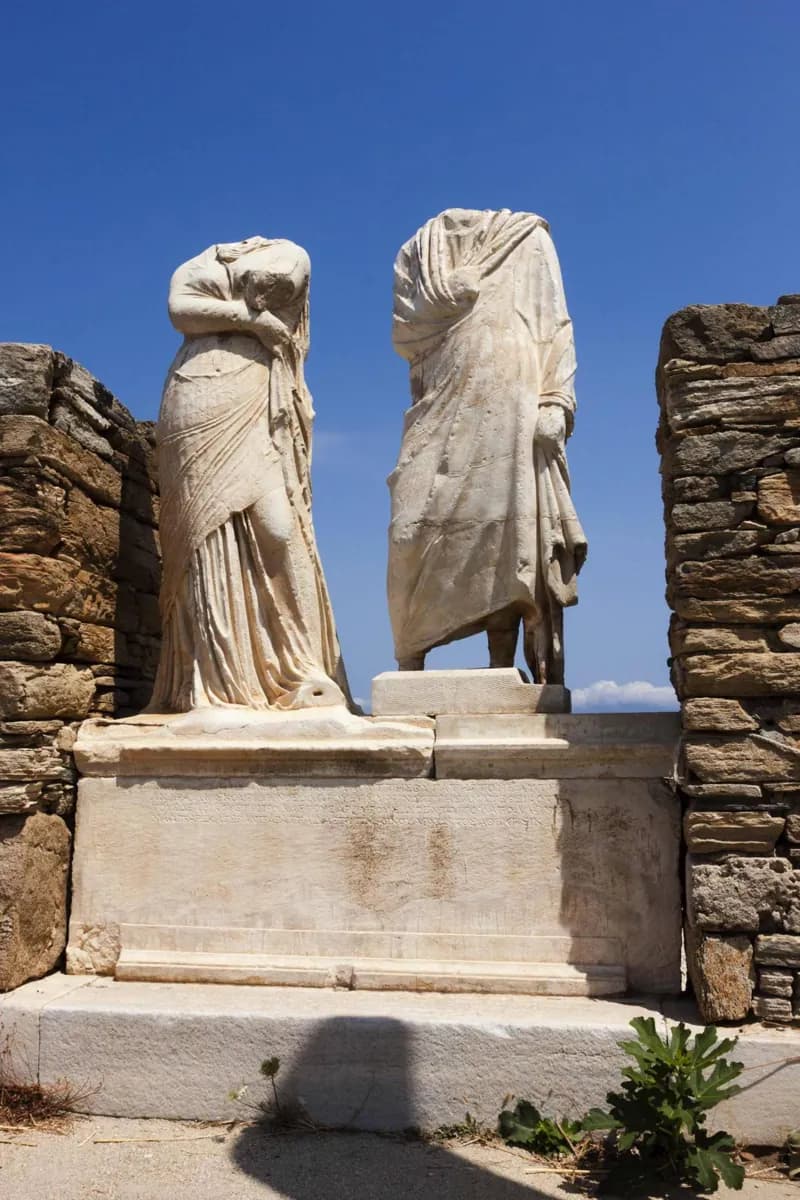
Why go
The island hosted the Delian League's treasury before Athens moved it in 454 BC. Later, its port drew merchants from around the Mediterranean, while its market was tied to the slave trade. That history gives the agoras and foreign sanctuaries a less purely ceremonial meaning.
The full story
Delos had long been revered as the birthplace of Apollo and Artemis. Athens treated the island's sanctity as a matter of public policy, removing graves and restricting birth and death there. After the Persian Wars, the Delian League met on the island and kept its treasury here until Athens transferred it in 454 BC. Trade later reshaped Delos. The harbour drew merchants, and the island became a major centre of the slave trade. Foreign religious associations also left buildings among the Greek sanctuaries. Market squares, cisterns and house remains reflect a dense town that depended on imported supplies. Attacks in the first century BC and changing trade routes brought a sharp decline. The present ruins preserve both the prestige of a sacred place and the traces of a commercial community that once lived around it.