
Why go
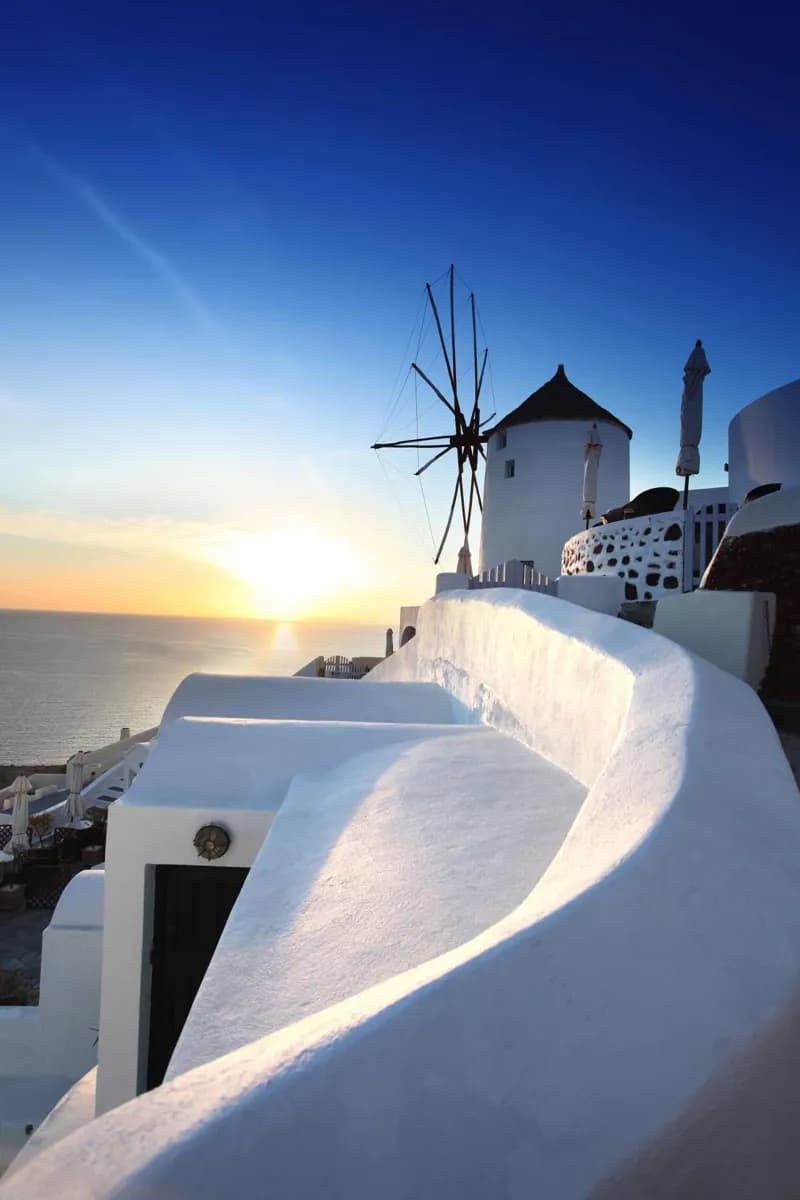
Follow the lanes with an eye on how buildings occupy the steep slope. Modest cave houses are cut into the volcanic rock, while the captains’ mansions stand higher and use broader facades and terraces. The ruined castle and an old windmill add landmarks to that layered skyline.
The full story
Oia’s small seamen’s houses were built into niches along the caldera, with narrow lanes and churches threaded between them. Their cave-like rooms use the volcanic slope itself, a different approach from the larger houses that wealthy ship captains built in the nineteenth century. Look for the captains’ more formal facades, high vaulted interiors and broad terraces, often in prominent positions above the sea. The ruined castle at the top of the settlement and an old windmill help frame the village skyline. Beginning in 1976, a Greek National Tourism Organisation programme restored traditional houses and architectural groups in Oia and adapted some for new uses. That work helps explain why buildings with very different origins still sit together in the present village. Many are now private homes or businesses, so enjoy their architecture from the public lanes unless a building clearly welcomes visitors.
Your next visit
Estimated · Declared scenario and planning estimates; no live opening, weather, queue or booking service.
Outdoor visit · 30–45 min
World planning estimate; admission, opening, visit duration and access need checking.