
Why go
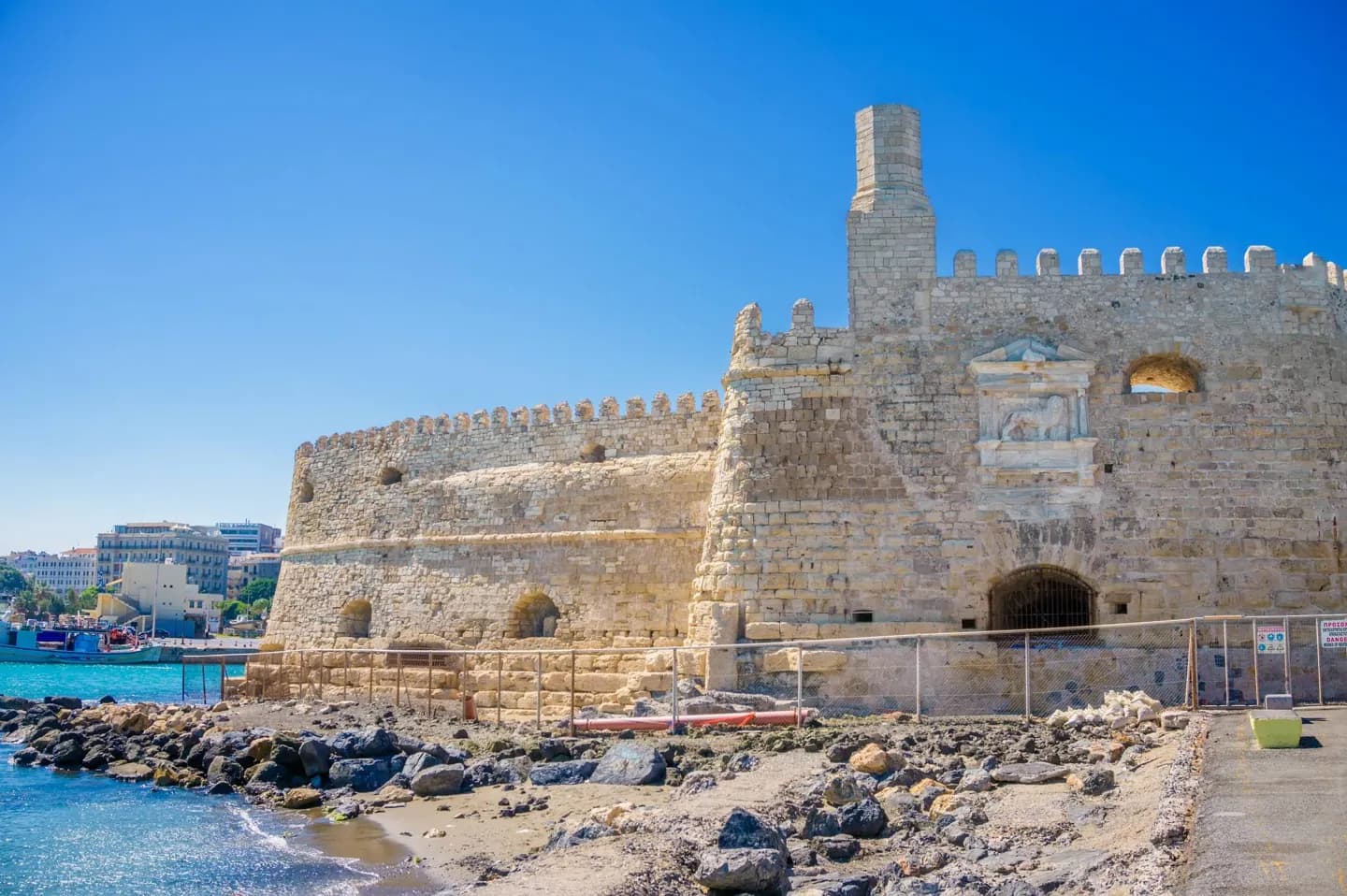
The fortress is where the harbour view and Candia's military history meet. Walking its rooms and upper level reveals how a compact fort controlled the port entrance, while the Venetian winged lions still announce the power that built it in stone.
What to look for
- Winged-lion reliefs on the fortress gates.
- The contrast between the high rectangular and lower curved sections.
- Harbour views from the battlements.
The full story
Venice built the present harbour fortress in the sixteenth century, replacing an earlier tower at the port entrance. Known as Castello a Mare, it formed the seaward end of Candia's defensive system while the larger city walls protected the landward side. The structure has a high rectangular part and a lower curved part, with heavy masonry meant to resist attack from the sea. Its rooms served practical needs as well as defence, including storage, barracks and a water supply. The winged lions carved at the gates marked Venetian authority in a way still visible to visitors. During the long Ottoman siege of Candia, the fort's guns were neutralised, and the city eventually surrendered in 1669. Ottoman additions altered parts of the defences, but the main Venetian form remains. From the battlements, the position at the harbour mouth explains the fortress more clearly than its name alone.
Useful to know
- Check the official timetable before planning an interior visit; published seasonal hours conflict.
- Combine the fortress with a walk along the old harbour to see its position from both land and sea sides.
Your next visit
Estimated · Declared scenario and planning estimates; no live opening, weather, queue or booking service.
Outdoor visit · 30–45 min
World planning estimate; admission, opening, visit duration and access need checking.