
Why go
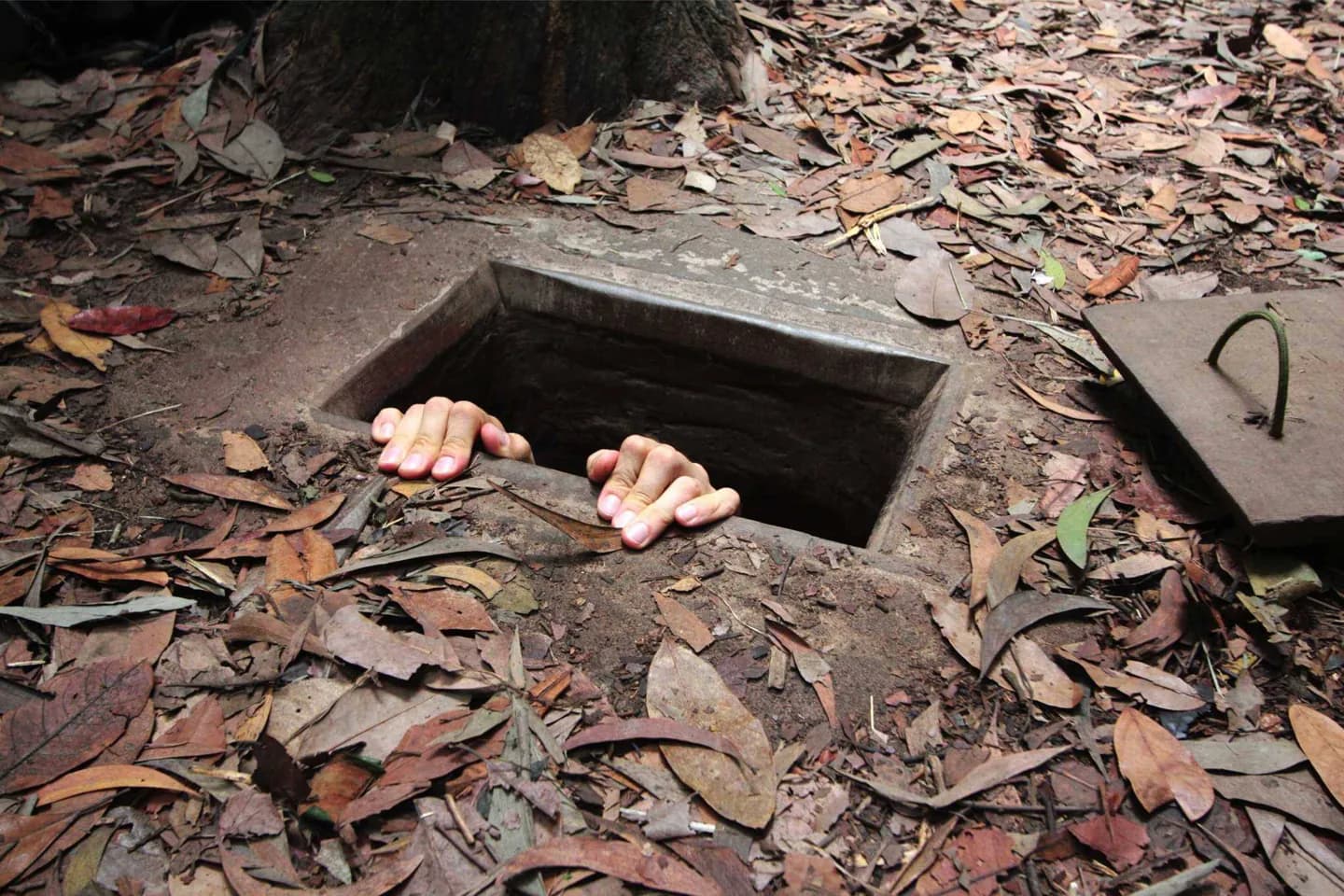
Concealed entrances and ventilation openings make the underground network easier to understand than a description alone. Displays and reconstructed work and living spaces connect the tunnels to daily wartime needs. The visit suits travelers prepared for a substantial excursion and, if entering a passage, tight spaces and crouching.
What to look for
- Concealed entrances show how tunnel access was hidden at ground level.
- Ventilation features reveal how the underground network functioned.
- Reconstructed work and living spaces show uses beyond movement and shelter.
The full story
The Củ Chi tunnels served several purposes during the Vietnam War. Fighters used underground passages to move and communicate, while other spaces held supplies and supported daily life. That range of uses helps explain why the site includes more than passages to crawl through. At Bến Dược and Bến Đình, preserved sections sit alongside artefact displays, models and reconstructions. Look at the concealed entrances first, then the ventilation features and the spaces set up for work or living. Together, they make the practical demands of an underground network visible. Some passages are exceptionally narrow, so seeing the surface displays can still be a meaningful way to understand the site. The two visitor complexes present parts of the same history, but they are separate destinations for route planning.
Useful to know
- Decide whether to visit Bến Dược or Bến Đình, then route to that complex’s entrance.
- Tunnel passages are narrow and may require crouching or crawling; plan around that before entering.
- Check the operator’s current timetable before the excursion.
Your next visit
Estimated · Declared scenario and planning estimates; no live opening, weather, queue or booking service.
Outdoor visit · 30–45 min
World planning estimate; admission, opening, visit duration and access need checking.