
Why go
The mountain view alone did not make Interlaken a resort. Artists drew attention to the region around 1800, visitors arrived for air and spa treatments, and boats and railways made longer excursions practical. The story gives the Höheweg's hotels and the two-lake transport pattern a reason to exist.
The full story
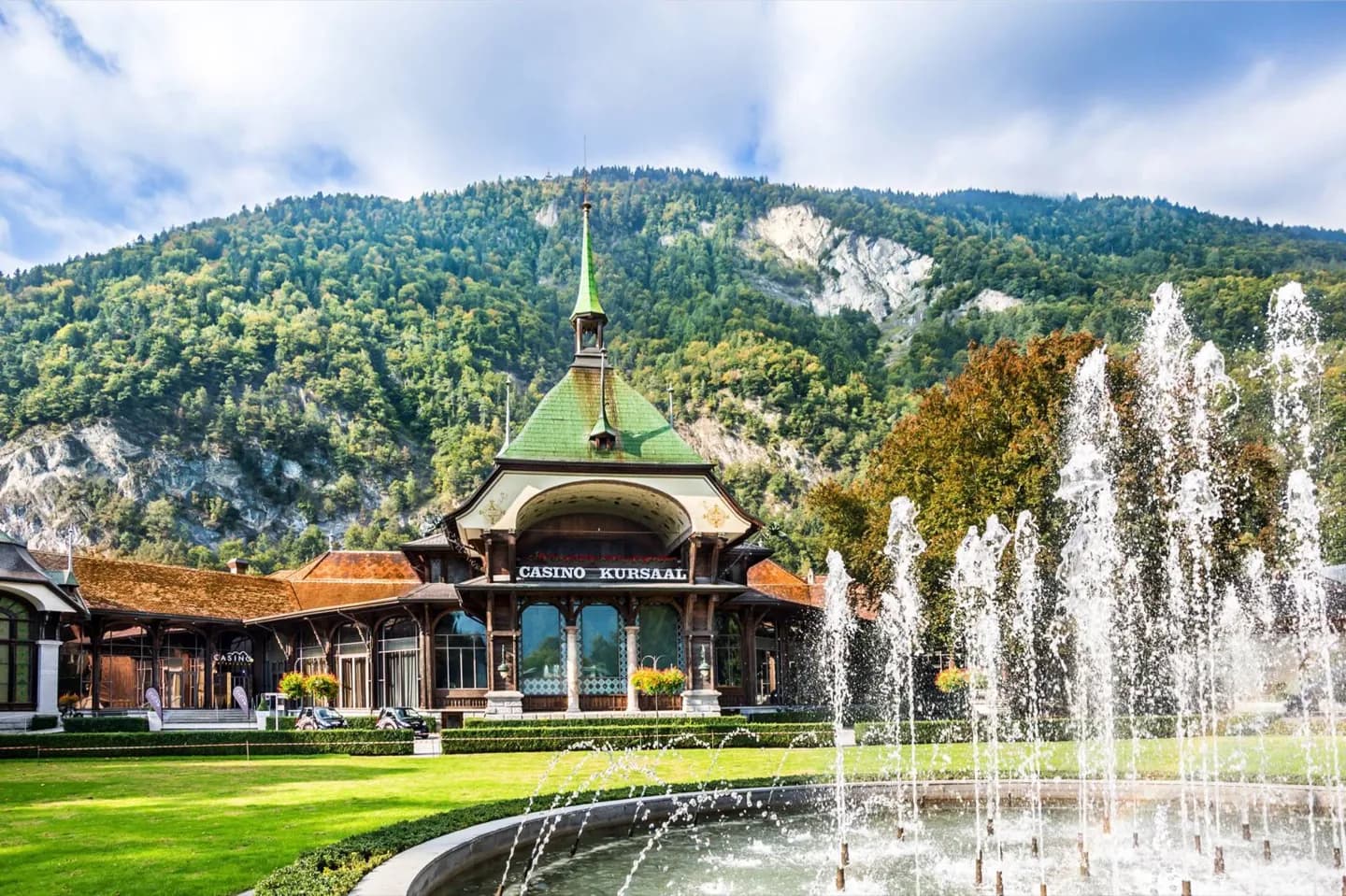
Swiss landscape artists, including Franz Niklaus König, helped spread Interlaken's image around 1800. The Unspunnen festivals of 1805 and 1808 brought more attention, and by the 1820s visitors were coming for mountain air and spa treatment. The Kursaal opened in 1859 as part of that resort culture. Transport then reshaped what a stay could include. Steamships began serving Lake Thun in 1835 and Lake Brienz in 1839. The Bödelibahn, opened in 1872 and extended two years later, first linked the boats on opposite lakes rather than a national rail network. Later rail lines connected Interlaken to Thun, Lucerne, Lauterbrunnen and Grindelwald. That sequence made the town a gateway to the valleys as well as a destination in its own right. The world wars interrupted tourism; a postwar revival included convention and conference travel. Grand hotels and transport corridors still show how the resort expanded from lakeside journeys to mountain excursions.