
Why go
Knowing the formats is more useful than following an old restaurant list. The Spice Bazaar and nearby streets suit browsing, a lokanta offers prepared dishes for a practical meal, and a meyhane makes shared plates and conversation part of the evening.
The full story
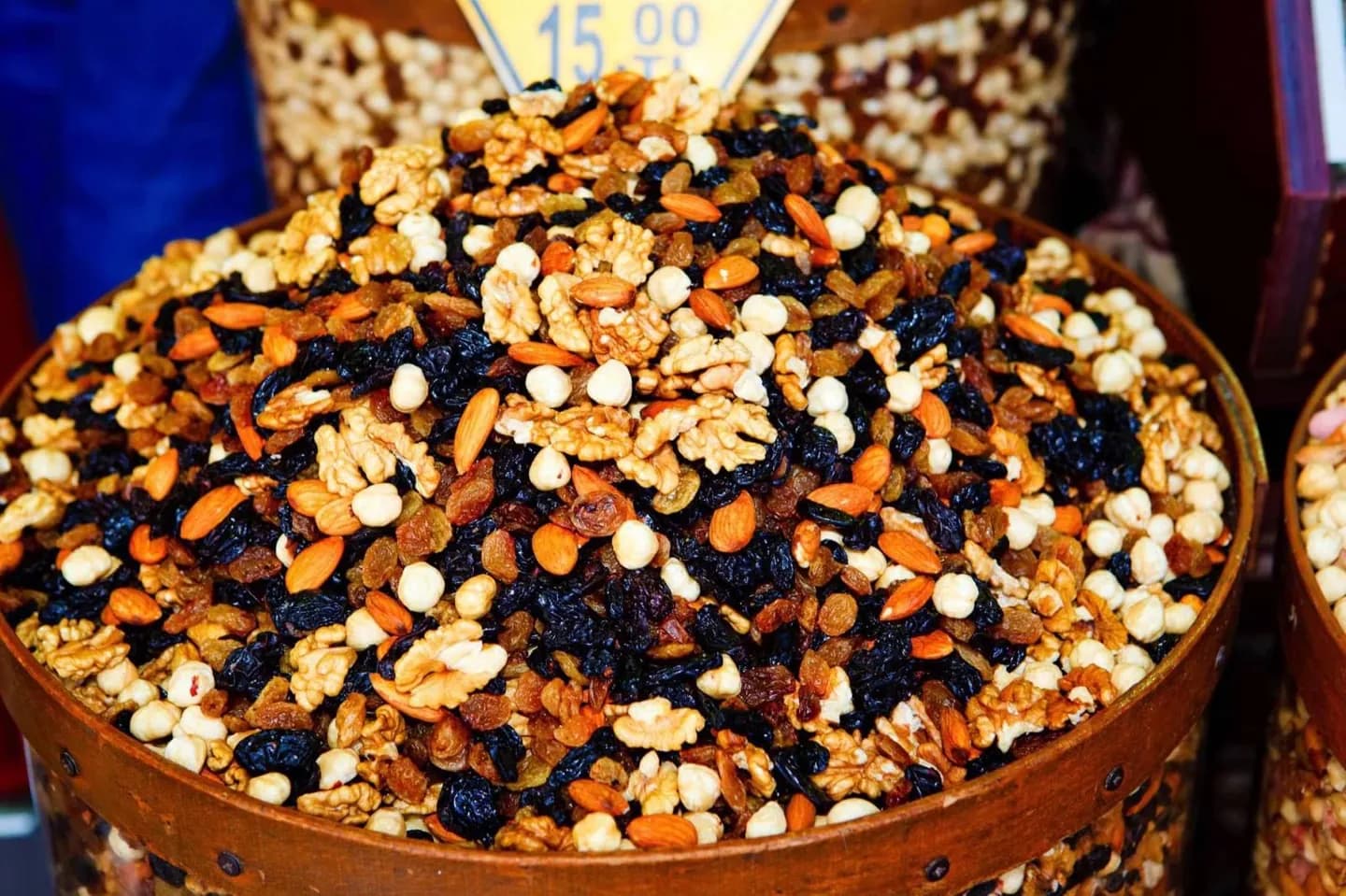
Istanbul's food culture reflects trade routes, imperial kitchens, regional migration and life around the water. Breakfast may spread across bread, cheese, olives, eggs, preserves and tea, while a lokanta displays prepared dishes that can be chosen without decoding a long menu. Street and bakery stops include simit, pastries and other quick foods. Meze are small dishes intended for sharing and often structure a longer meal; fish and seafood connect naturally to the Bosphorus and Sea of Marmara, though season and sourcing vary. Markets help visitors understand ingredients rather than merely buy souvenirs. At the Spice Bazaar and surrounding Eminönü streets, compare dried fruit, nuts, sweets, spices and pantry goods, then step away from the busiest displays before deciding what to purchase. Tea is an everyday social drink, and Turkish coffee is a distinct preparation rather than a larger cup of filtered coffee. Use these categories to choose a setting and pace, then verify dietary needs directly because broths, pastries and shared plates may contain ingredients not obvious at first glance.
Useful to know
- Use a lokanta for a flexible meal and a meyhane when shared plates and a longer evening are the point.
- Ask directly about allergens and meat stock; ingredients may not be obvious in prepared dishes.