
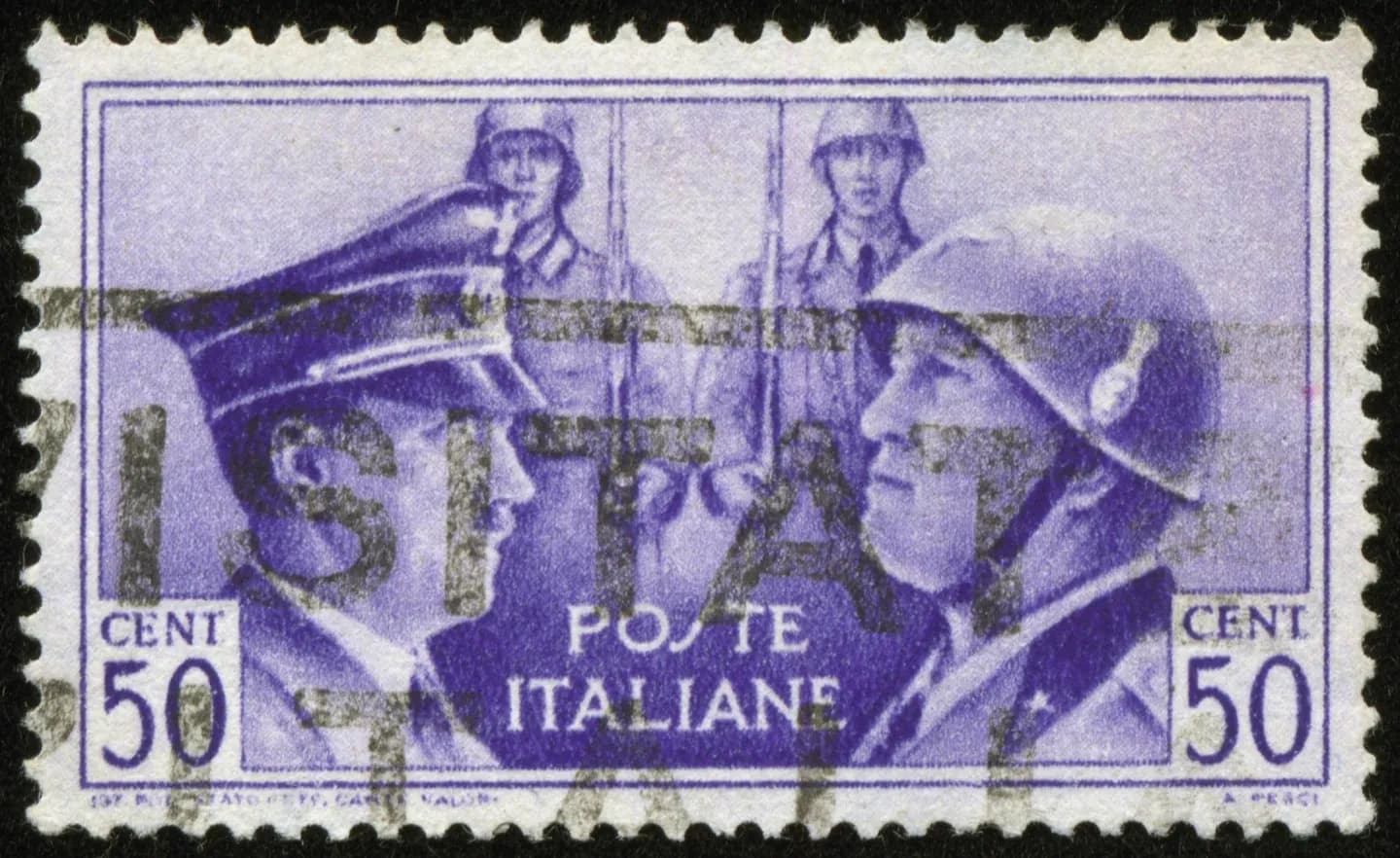
Why go
The collapse of Mussolini’s government in 1943 did not end the fighting. Allied forces advanced from the south, Germany occupied much of the north and centre, and the Resistance became part of the final struggle. A memorial in Sicily belongs to a different stage of the war from a Resistance site in the north.
The full story
After the First World War, economic and social turmoil helped Benito Mussolini rise to power. Appointed prime minister in 1922, he dismantled political freedoms and established a dictatorship. The regime invaded Ethiopia in 1935, annexed Albania in 1939 and entered the Second World War alongside Nazi Germany in 1940. Military defeats followed across several fronts. An Allied invasion of Sicily in July 1943 preceded Mussolini’s fall. Italy’s armistice was announced in September, but the country did not leave the war behind. German forces occupied the north and much of the centre as Allied armies moved slowly up the peninsula. A German-backed Italian Social Republic placed Mussolini in charge of territory in the north. The anti-fascist Resistance, or Resistenza, grew during this divided and violent period. German forces in Italy surrendered in April 1945. The war killed civilians as well as soldiers and left the economy badly damaged. Memorials, museums and local accounts may focus on different parts of this sequence, so the place and date of an event matter.