
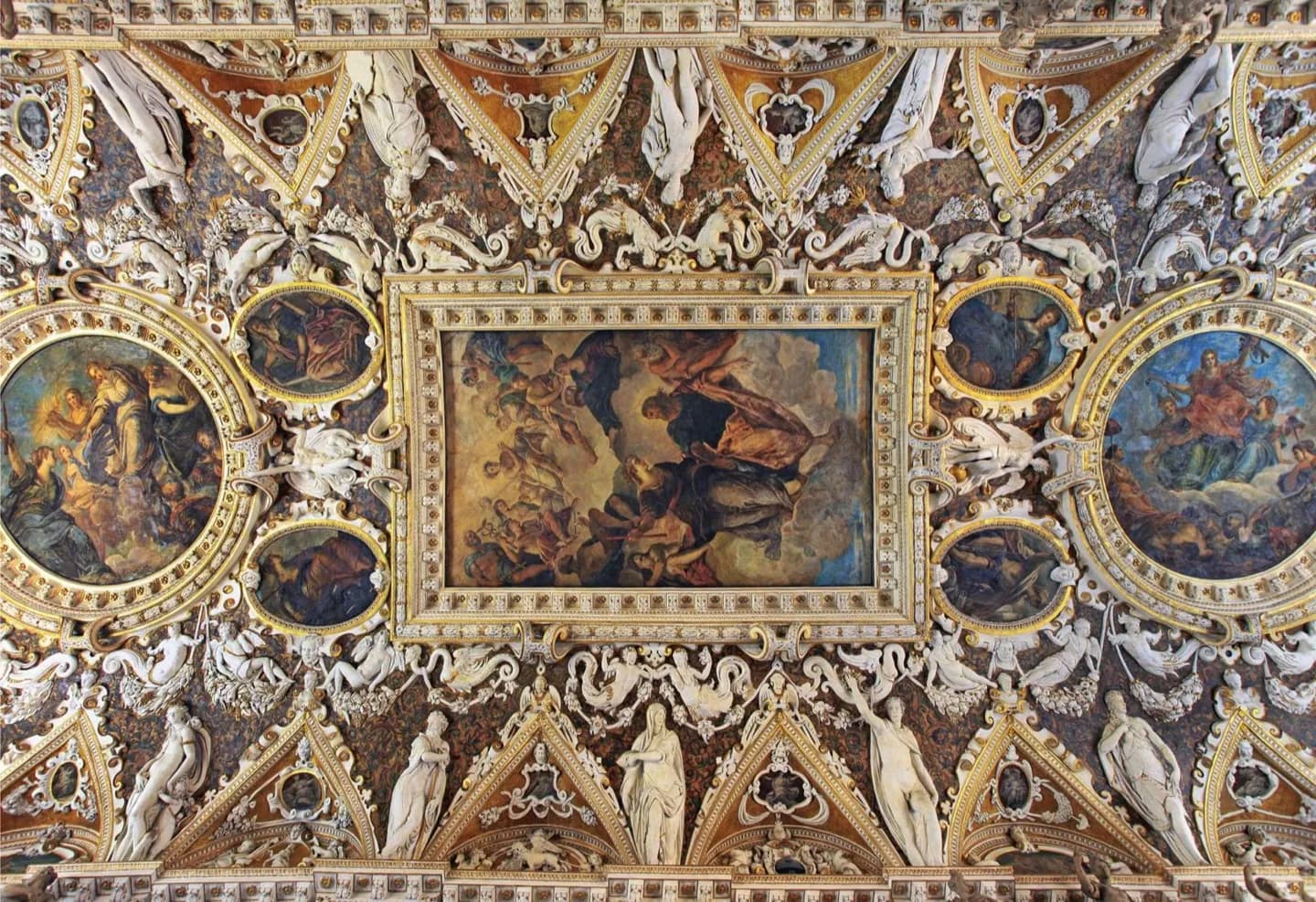
Why go
This short history gives a reason to look closely at surfaces as well as famous works. Roman painters used walls for landscapes, figures and imagined architecture; Renaissance artists later revisited antique decorative ideas in places such as the Vatican Loggias.
The full story
Painting in ancient Rome was often part of an interior. Wall compositions could show landscapes, portraits, mythological scenes or painted architecture that seemed to extend a room. Artists also worked with fresco, tempera and encaustic techniques, while mosaics carried images onto other surfaces. The legacy account links these decorative forms to the grotesque motifs that Renaissance artists encountered in ancient Roman remains. Raphael’s decoration of the Vatican Loggias is one later example of antique forms being reworked rather than merely copied. This connection offers a useful way to look: notice whether an image belongs to a wall, ceiling or room before concentrating on its subject. Renaissance painting developed new approaches to space and the human figure, but it also drew on older material in the cities around it. A Roman wall and a Renaissance decorative scheme are separated by centuries; seeing both makes the revival of antiquity more concrete than a simple sequence of famous painters.