
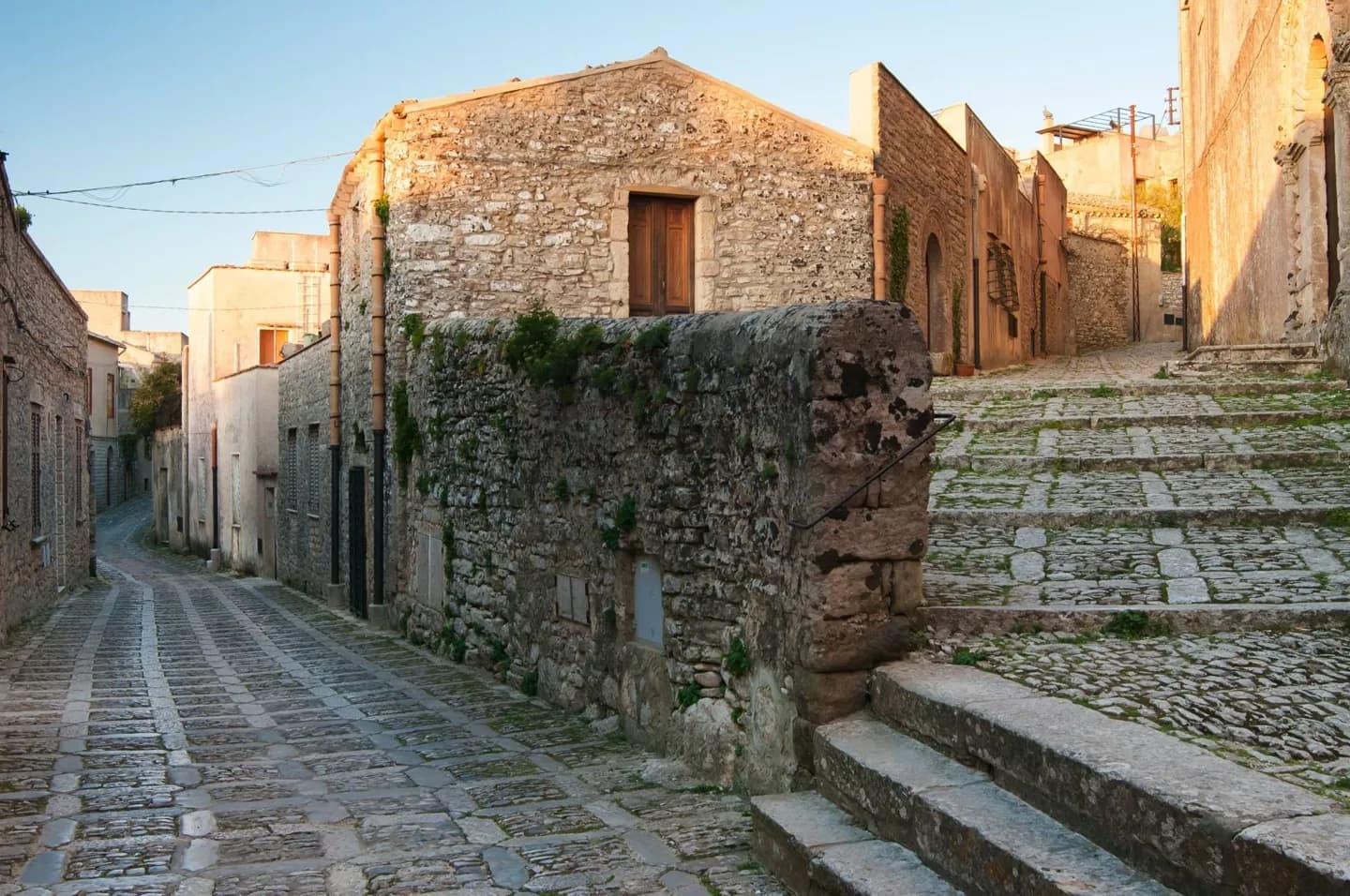
Why go
Venice, Genoa, Pisa and Amalfi show the maritime side of the period, while northern and central communes show how cities governed themselves. Their differing histories explain why Italy has no single medieval city type. Look for the different roles of the town hall, cathedral, defensive works and waterfront in each place.
The full story
The end of the Western Roman Empire did not bring one replacement state. Ostrogothic rule was followed by a Byzantine reconquest, then Lombard expansion in the sixth century. The Franks later absorbed the Lombard kingdom, and the papacy developed territorial power in central Italy. These overlapping claims shaped a divided peninsula. By the high Middle Ages, many towns had become communes with their own civic institutions. Conflicts between imperial and papal supporters also marked urban politics; the names Ghibelline and Guelph recall those rival alignments. In 1176, the Lombard League defeated Emperor Frederick Barbarossa at Legnano, a sign of the northern cities’ growing strength. Along the coast, Venice, Genoa, Pisa and Amalfi developed as maritime republics. Sea trade tied them to the eastern Mediterranean and brought wealth into their ports. When visiting a medieval centre, notice the relationship between civic space and the surrounding territory. In a maritime city, the harbour and trade routes may explain more than a palace façade alone.