
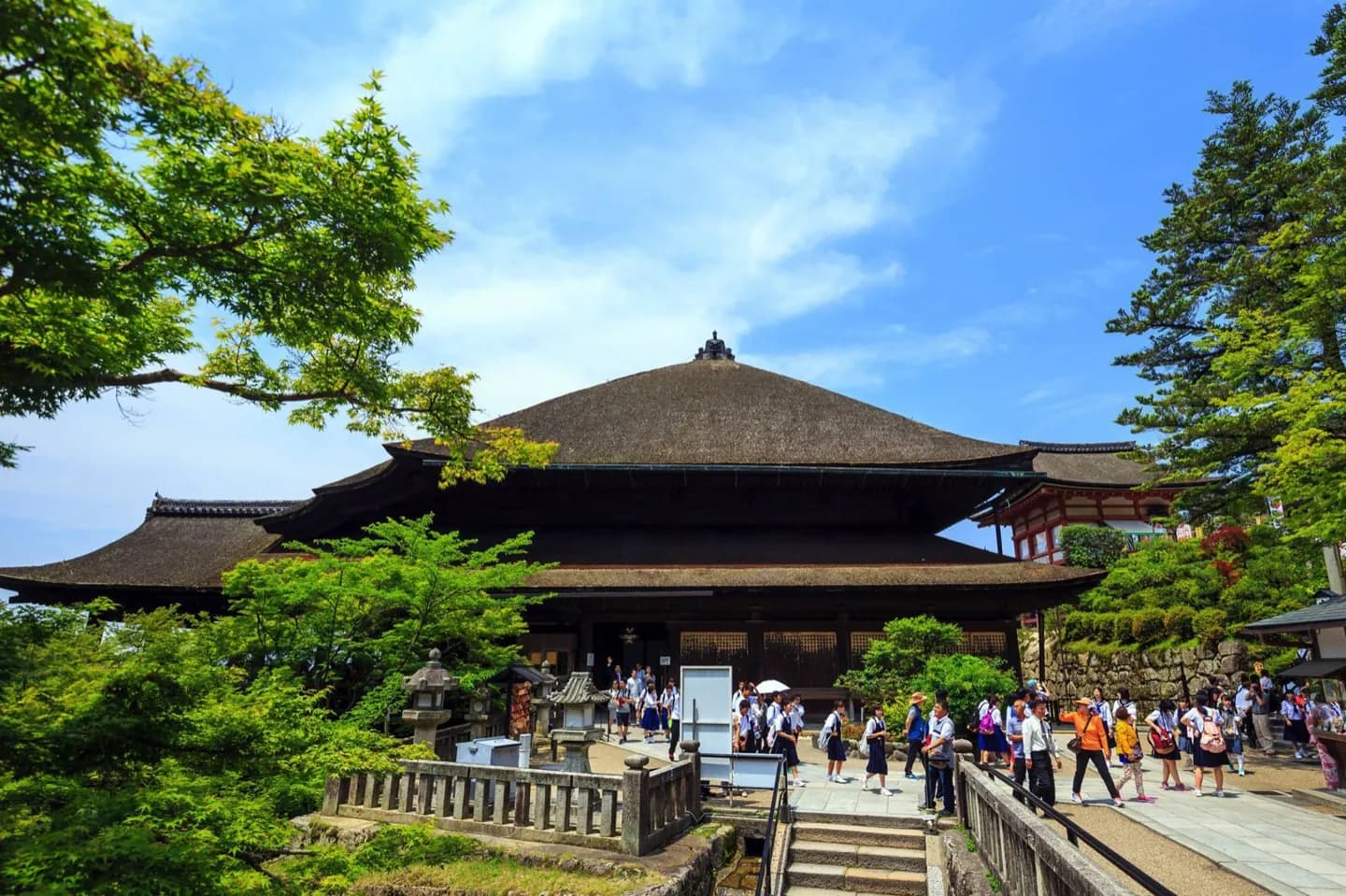
Why go
Religious practice in Japan is often encountered through events and life-cycle customs rather than formal affiliation. This guide helps you understand why a shrine visit, temple gathering or local festival may carry meanings beyond sightseeing during a trip through Japan.
The full story
Many Japanese customs draw on more than one religious tradition. Shinto shrine visits commonly mark life events, including a new baby’s first formal visit, children’s milestone birthdays and the beginning of adulthood. Buddhist priests often conduct funerals, and Buddhist memorial rites remain important in family observance. Matsuri are local festivals, frequently associated with Shinto shrines and community well-being. Their form varies from place to place, so a festival is best understood through its own town, shrine and seasonal purpose. Annual observances called nenjū gyōji also reflect Chinese and Buddhist influences. New Year and Obon are major moments for family and religious practice. New Year can include shrine or temple visits for blessings, while Obon is connected with remembering ancestors through home rituals, graveside care, temple prayers and folk dancing. These traditions give a fuller context to a crowded shrine approach or a summer festival.