
Why go
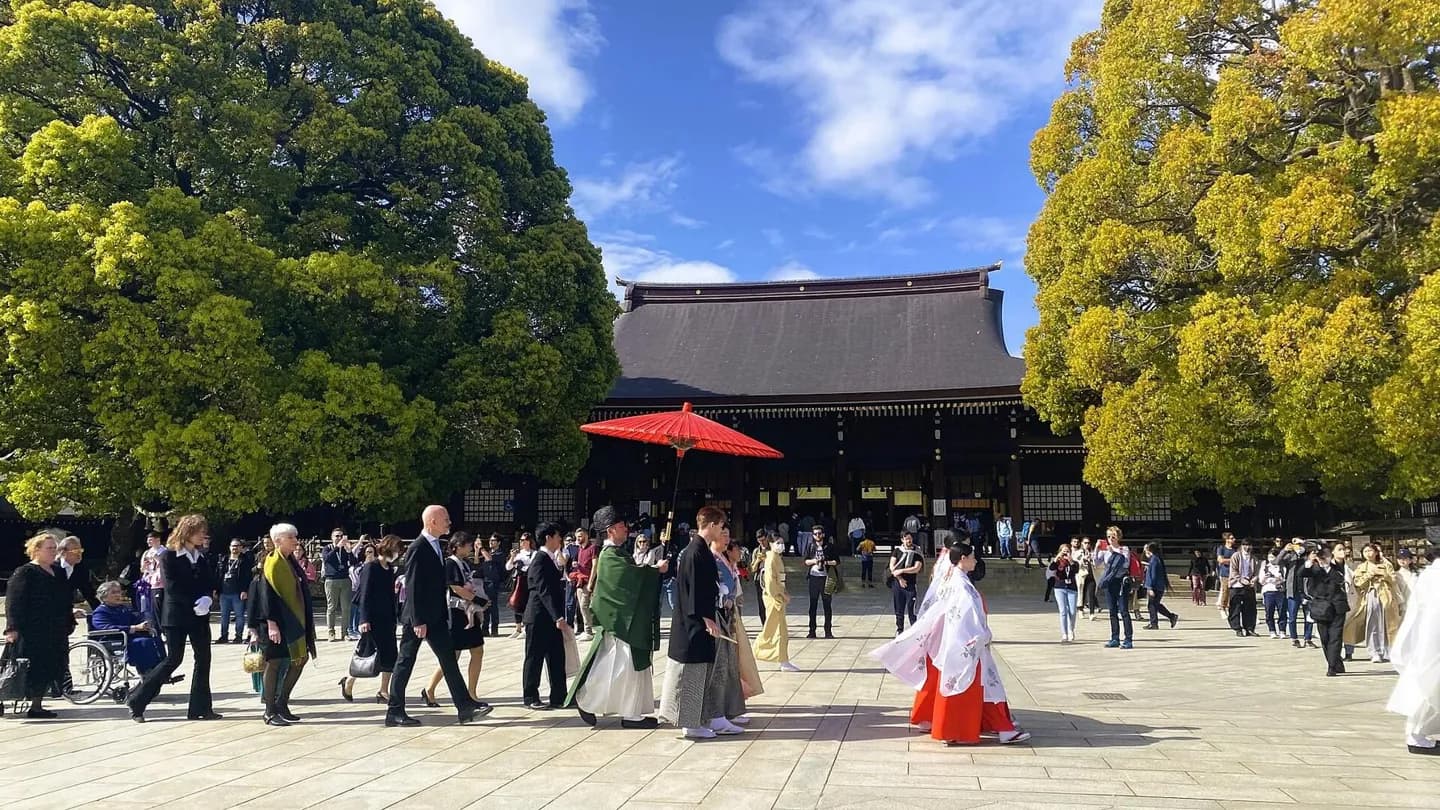
The appeal lies in the gradual change of pace: walk beneath the trees and through the torii before reaching the shrine courtyard. This is a chance to experience Shinto worship in central Tokyo and understand the commemorative role of the site. Seasonal events and ceremonies can give the precinct a very different atmosphere.
What to look for
- Wooded approaches and monumental torii
- The main worship courtyard
- The shrine’s dedication to Meiji and Shoken
The full story
Meiji Jingu’s forest is part of the shrine’s history, rather than simply scenery surrounding an older building. After Emperor Meiji and Empress Shoken died, the movement to commemorate them led to the creation of a shrine at Yoyogi. Trees were donated from across Japan, and volunteers helped establish the precinct, which was completed in November 1920. That collective effort gives the long wooded approach a commemorative meaning: the landscape itself formed part of the offering. Walking from the city toward the courtyard, you experience a place deliberately made to support remembrance and worship. The result also shows how a major Shinto shrine can shape its surroundings through landscape planning, turning donated trees into a lasting sacred setting within the capital.
Useful to know
- Allow for the walk from the entrance to the main shrine.
- Follow posted photography restrictions around worship spaces.
- Check the official calendar if you want to avoid a major ceremonial crowd.
Your next visit
Estimated · Declared scenario and planning estimates; no live opening, weather, queue or booking service.
Outdoor visit · 35–65 min
World planning estimate; admission, opening, visit duration and access need checking.