
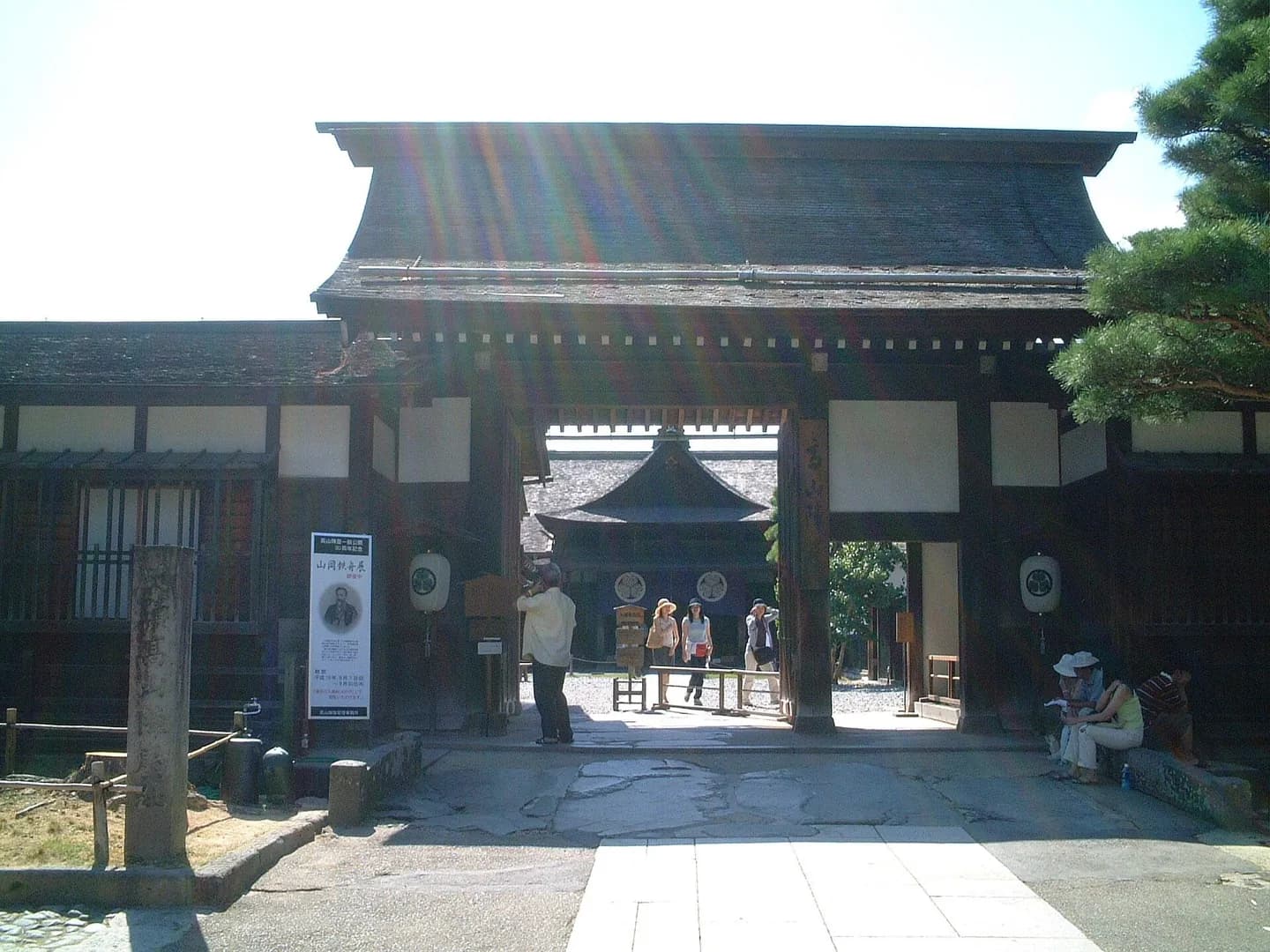
Why go
This gives Takayama’s historic streets a political context: timber rooms were places where taxes, justice and regional governance took practical form. The surviving main building distinguishes the site from reconstructed historical displays. Follow the room sequence and notice the difference between official working areas and the quieter residential portions of the complex.
What to look for
- Surviving magistrate’s office main building
- Administrative and residential rooms
- Historical storehouse
The full story
Takayama Jinya shows how a distant region was governed through ordinary rooms, paperwork, tax collection and formal judgment. The complex served provincial officials under the Tokugawa shogunate and continued as a government office into the modern period. Its surviving main building gives the visit an unusual continuity: this is administrative architecture rather than a castle or religious monument. The reception hall connects three rooms across 49 tatami mats, while the oshirasu was used for investigations and the announcement of judgments. The granary stored rice paid as tax by surrounding villages and was moved here from Takayama Castle in 1695. Smaller details soften that official atmosphere. Rabbit-shaped nail covers carry auspicious associations, and a wave pattern at the entrance expresses hopes for enduring peace and prosperity. Look for these details while following the room sequence; they bring craftsmanship and symbolism into an otherwise practical building.
Useful to know
- Ask about English guide availability when you arrive.
- Follow the room sequence to compare official and residential spaces.
- Look for rabbit nail covers and the entrance wave pattern.
Your next visit
Estimated · Declared scenario and planning estimates; no live opening, weather, queue or booking service.
Indoor visit · 45–75 min
World planning estimate; admission, opening, visit duration and access need checking.