
Why go
The Old City holds landmarks central to Judaism, Christianity and Islam within a remarkably small area. Its four quarters help you orient yourself, while a walk beyond the walls shows that present-day Jerusalem is much larger than the historic core. Use this overview to decide whether your time is best spent on sacred sites, neighborhood streets or both.
The full story
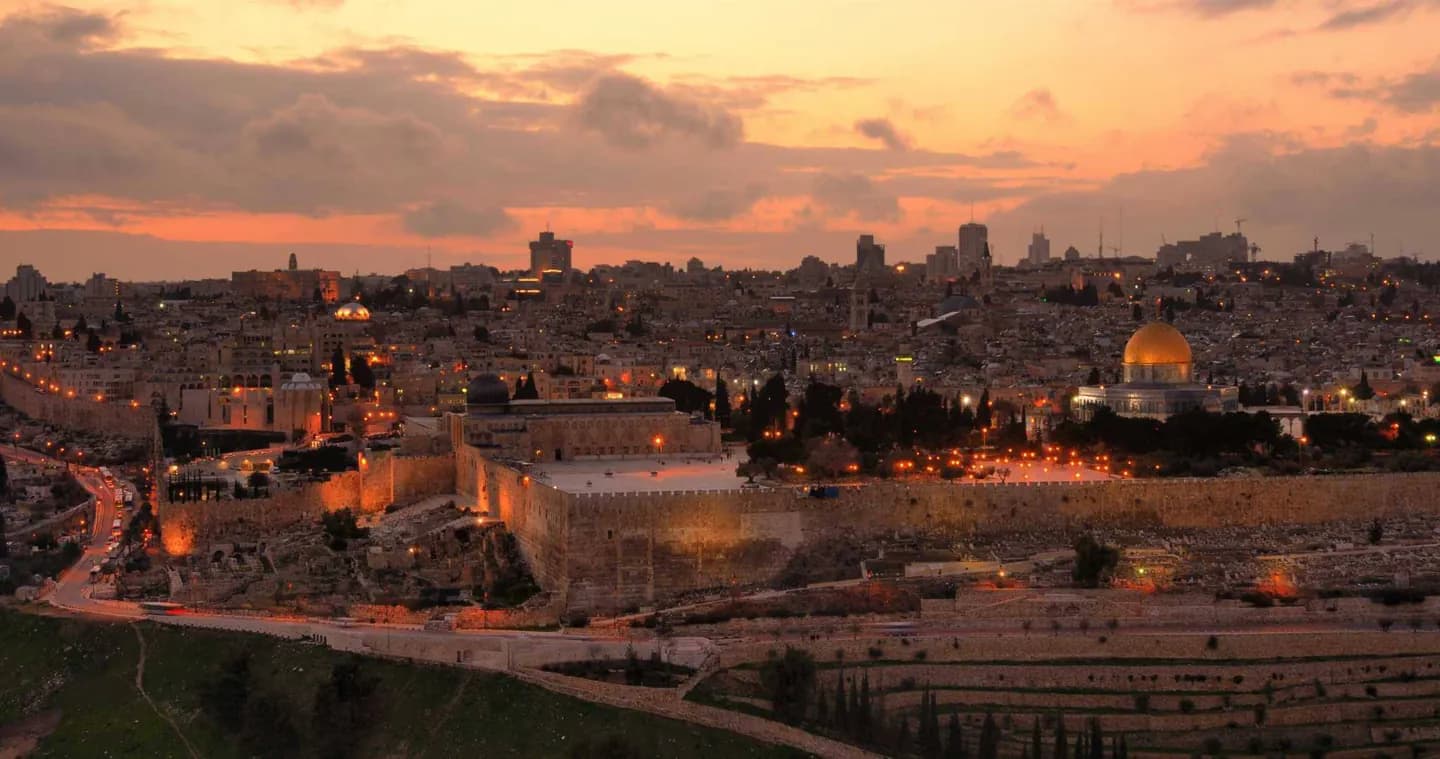
Jerusalem lies in the Judean Mountains, between the Mediterranean Sea and the Dead Sea. Its ancient center remained within the walls for centuries; the city's later growth spread far beyond them. This difference matters when planning a visit. The Old City is compact enough to move between its Armenian, Christian, Jewish and Muslim Quarters, yet each turn can lead to a site with a different religious meaning. The Western Wall is a Jewish place of prayer. The Church of the Holy Sepulchre is associated with Jesus's crucifixion and burial in Christian tradition. The Dome of the Rock and al-Aqsa Mosque belong to the Haram al-Sharif, a central place in Islam. The walled Old City is a UNESCO World Heritage Site. Its quarter names are useful for finding your way, but they do not reduce the living city to four neat categories. Plan time outside the walls as well if you want to understand Jerusalem beyond its best-known monuments.