
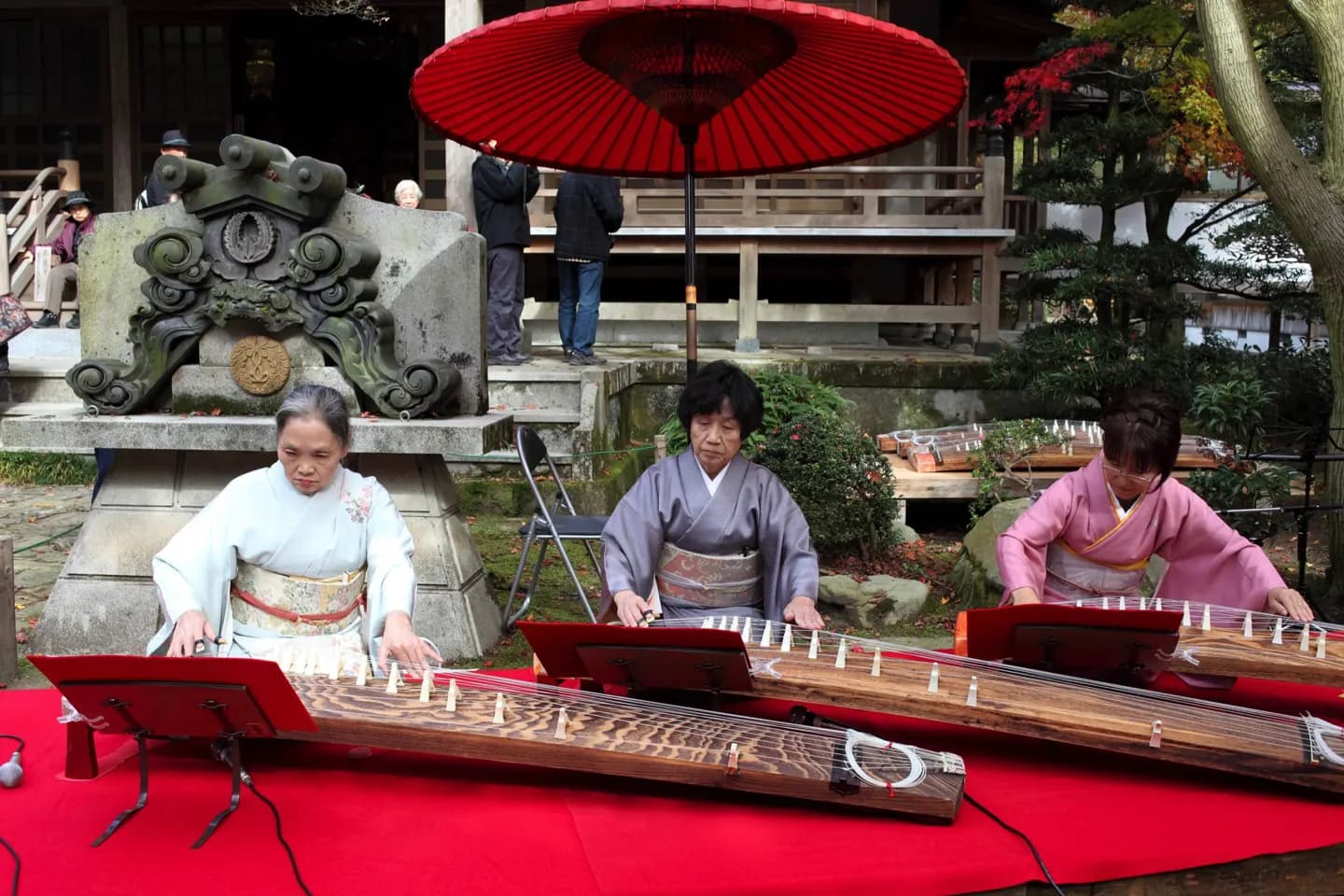
Why go
Traditional music offers clear listening choices. Shōmyō is Buddhist chant, gagaku is court music, and honkyoku is solo shakuhachi repertoire; each connects sound to a different setting, from temple practice to Imperial performance and Zen devotion across historical eras and places.
The full story
Japanese music includes contemporary styles, karaoke, and many older repertoires whose settings shape what you hear. Two of the oldest recognised traditions are shōmyō, Buddhist chanting, and gagaku, orchestral court music associated with the Nara and Heian periods. Gagaku includes kangen, its instrumental form, and bugaku, dance accompanied by the ensemble. Its repertory also records exchange: tōgaku came through the Chinese Tang dynasty, while komagaku arrived through the Korean peninsula. Another route leads to honkyoku, solo shakuhachi pieces that emerged by the thirteenth century. Fuke sect priests known as komusō played them for alms and enlightenment; although the sect ended in the nineteenth century, the music continues in concert and performance settings. Traditional timing can follow intervals of human breathing rather than Western mathematical timing. That makes a useful listening question: do you want the ceremonial scale of gagaku, the voice-led concentration of shōmyō, or the sparse line of a shakuhachi?