
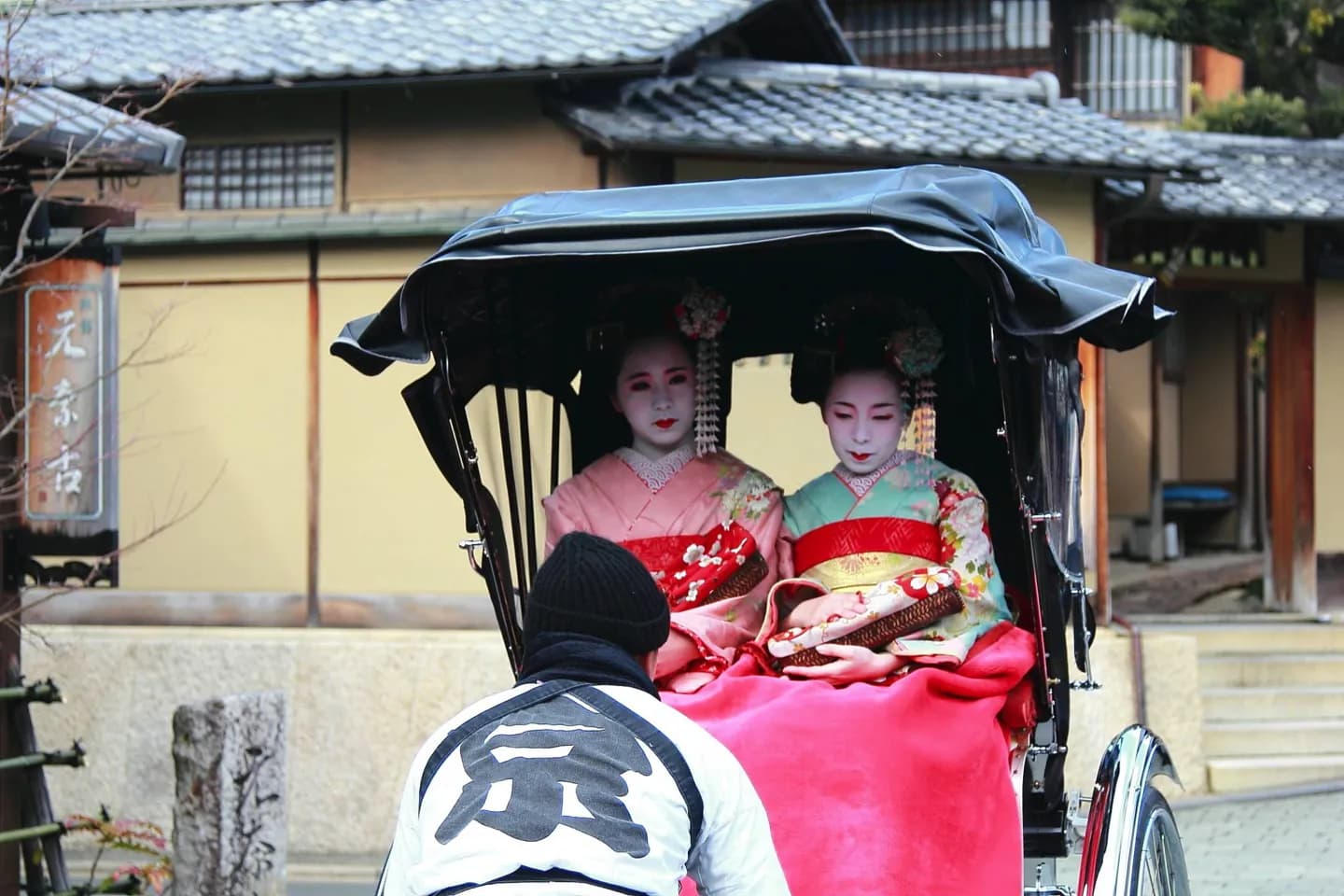
Why go
Traditional clothing becomes more interesting when you can identify its parts. Wafuku includes kimono and related garments, while an obi sash, haori jacket, hakama, wedding uchikake, or summer yukata each changes the silhouette, season, specific social occasion, and ceremonial context.
The full story
Kimono originally meant simply “something one wears,” but came to identify the full-length garment also called naga-gi. Together with related clothes, it forms wafuku, Japanese dress, in contrast to yōfuku, Western-style clothing. Early forms were influenced by Chinese Han clothing through embassies to China, and the overlapping collar became fashionable in the eighth century. The kimono is not one fixed outfit. Its approximate sizing is adjusted in fitting, and an obi creates a major part of the finished shape. A haori and hakama can make a formal ensemble, while yukata is the summer version. The uchikake is a long silk bridal overgarment, often worked with birds or flowers in silver and gold thread. For a visitor, the useful distinction is between textile design, formal dress, and clothing for a particular season or ceremony. Focus on collar, sash, sleeve, and fabric before reading social meanings into colour or marital status.