
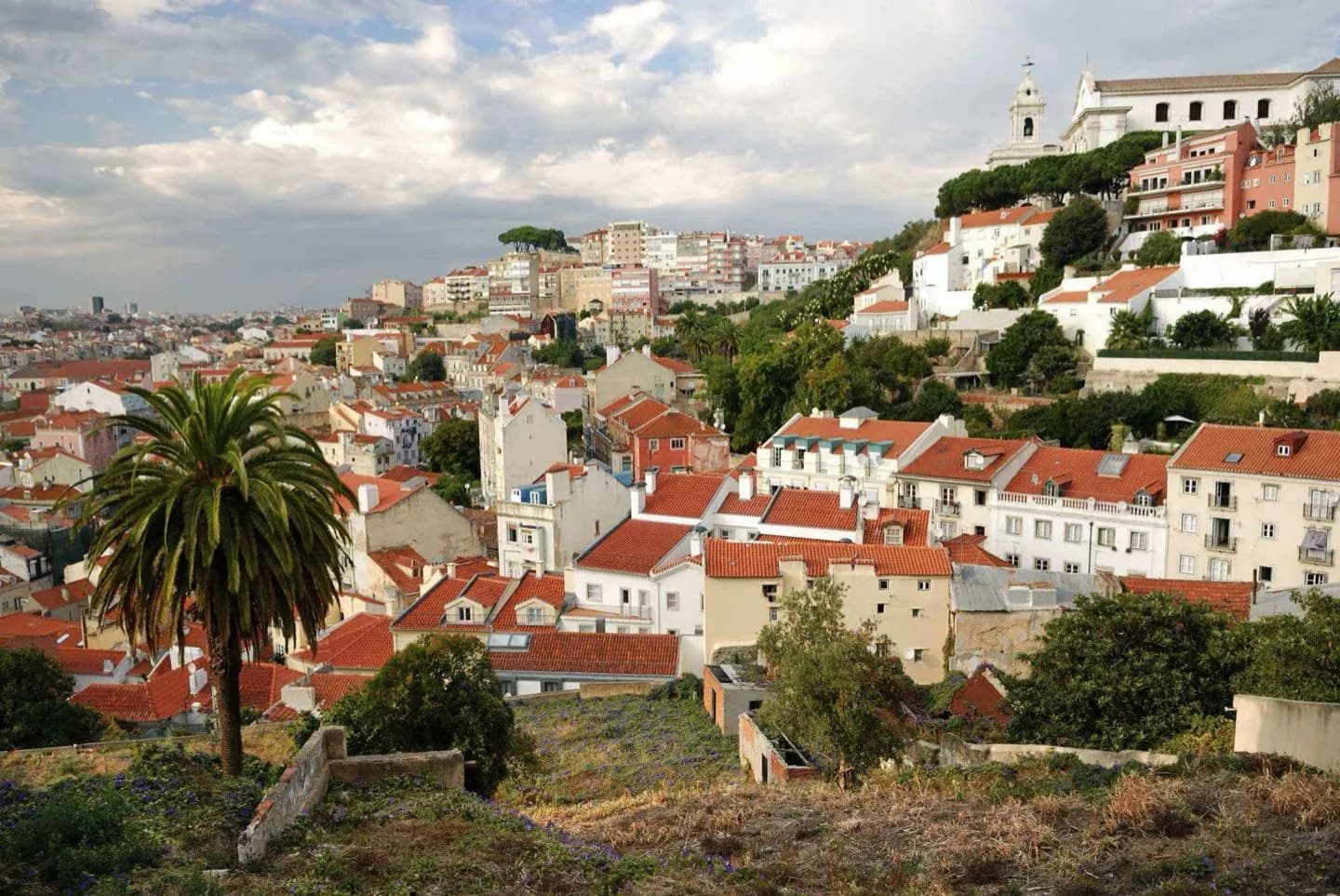
Why go
A short stay becomes clearer when the river and slopes guide the choices. The medieval city gathers around the castle hill and the Tagus, while later avenues extend inland. That contrast lets travelers combine dense historic streets with open waterfront space, and it explains why Lisbon feels different from one neighborhood to the next.
The full story
Lisbon’s position on the Tagus made it a natural place for exchange between the interior of Iberia and the Atlantic. The river remains the city’s main line of orientation: it frames the old quarters, the monumental district of Belém and the broad public spaces nearer the center. Inland, the ground rises quickly, producing the sequence of ridges and slopes that defines many walks. The city is Portugal’s political and cultural center, but its visitor appeal is not an abstract capital-city status. It lies in the way different periods meet at close range. A route can move from a Romanesque church or medieval lane to Pombaline rebuilding, then reach a 19th- or 20th-century boulevard. Use that compactness to plan a few connected areas rather than treating Lisbon as one flat central district.