
Why go
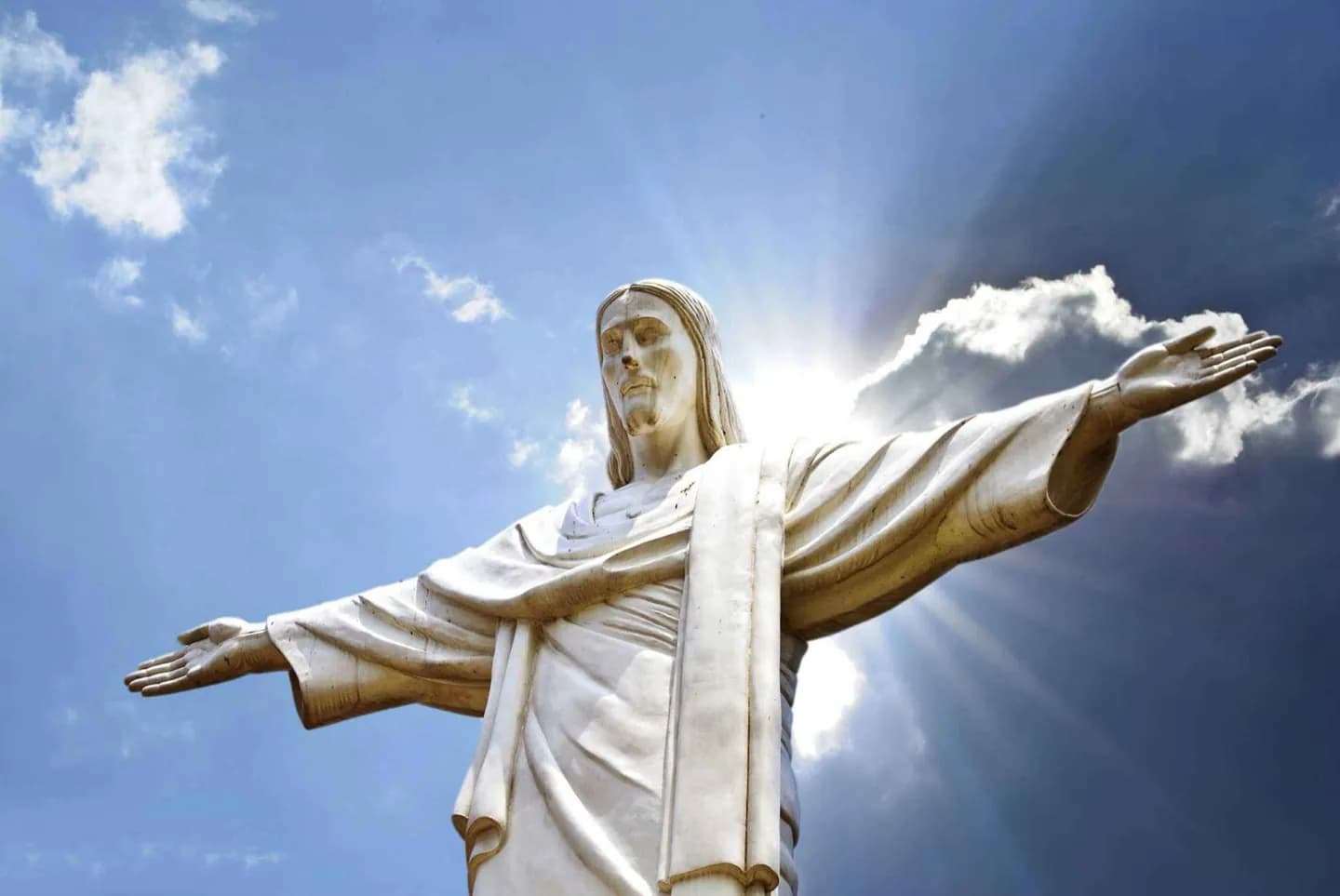
The south-bank position reverses the usual Lisbon viewpoint: instead of looking outward from the old city, visitors see its hills, waterfront and bridge as one panorama. The monumental statue and chapels add a distinct 20th-century Catholic setting above the river.
What to look for
- The upper terrace looks over Ponte 25 de Abril toward Lisbon’s hills and waterfront.
- The concrete monument rises above a four-arched pedestal on the Almada escarpment.
- The Chapel of Nossa Senhora da Paz occupies the base beneath the statue.
The full story
Cristo Rei was inspired by Rio de Janeiro’s Christ the Redeemer after Lisbon’s Cardinal Patriarch visited Brazil in the 1930s. Portugal’s bishops approved the project in 1940 as a plea that the country remain outside the fighting of the Second World War. Construction began later and the sanctuary was inaugurated in 1959, during the Estado Novo dictatorship. The monument therefore combines religious devotion, national gratitude and the politics of its period. Its scale is inseparable from the site: the statue and pedestal rise on the Almada escarpment, placing the viewing terrace high above the Tagus and directly beside the southern approach to Ponte 25 de Abril. The Chapel of Nossa Senhora da Paz sits within the base, while elevators inside the pillars reach the terrace. Later chapels and sanctuary buildings expanded the complex beyond the monumental figure visible from Lisbon.
Useful to know
- Make the terrace the priority and choose a clear day; distance visibility determines much of the payoff.
- Check the seasonal timetable before crossing the Tagus because access hours change during the year.
- Allow for a separate south-bank excursion rather than squeezing the sanctuary between central Lisbon stops.
Your next visit
Estimated · Declared scenario and planning estimates; no live opening, weather, queue or booking service.
Outdoor visit · 30–45 min
World planning estimate; admission, opening, visit duration and access need checking.