
Why go
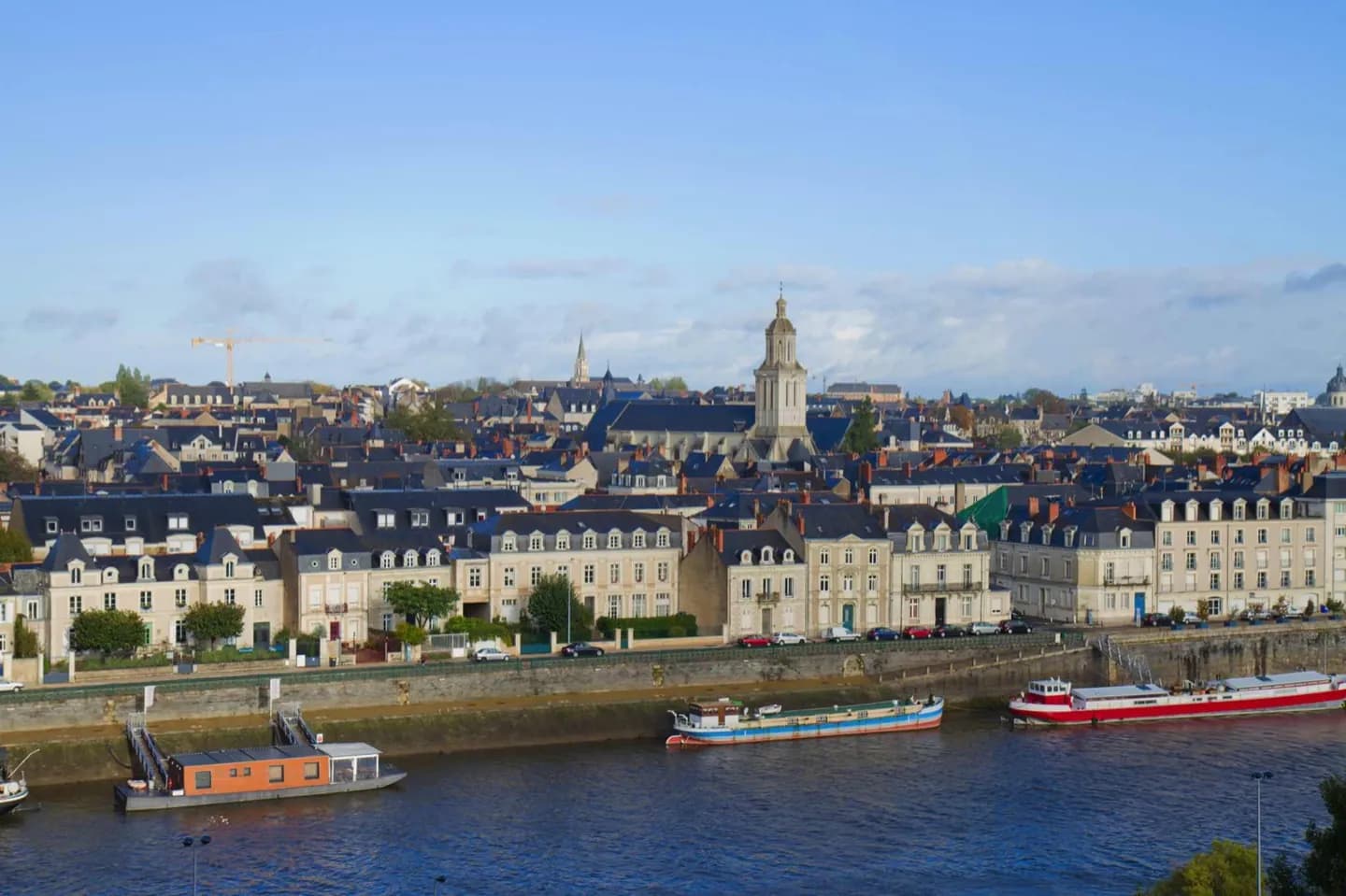
The Plantagenet stronghold gives Angers a harder-edged silhouette than the Loire’s courtly château towns. Inside, the Apocalypse Tapestry changes the visit from fortress architecture to medieval art; across the Maine, La Doutre shows another stage of the city’s growth. It rewards that contrast.
What to look for
- The château’s heavy walls dominate the old centre.
- The Apocalypse Tapestry links the fortress to medieval storytelling.
- La Doutre lies across the Maine from the castle promontory.
The full story
Angers was the historic capital of Anjou and an important Plantagenet stronghold. The castle promontory still makes that role legible: the château commands the old centre, while its interior houses the Apocalypse Tapestry, a major surviving medieval tapestry cycle. The Maine, a short river formed upstream by the Mayenne, Sarthe and Loir, shaped the city as much as the fortress did. Angers first developed chiefly on the eastern bank; La Doutre on the other side grew later into a river-port quarter. The contrast is useful on foot. One side concentrates the city’s medieval authority, and the other helps explain its commercial expansion. Angers also has a later history of slate, textiles and distilling, but the château and river give the clearest starting point for understanding why this city became more than a stop between Loire châteaux.
Useful to know
- Give the château and tapestry their own block of time before crossing to La Doutre.
- Expect a river crossing when combining the old centre with La Doutre.