
Why go
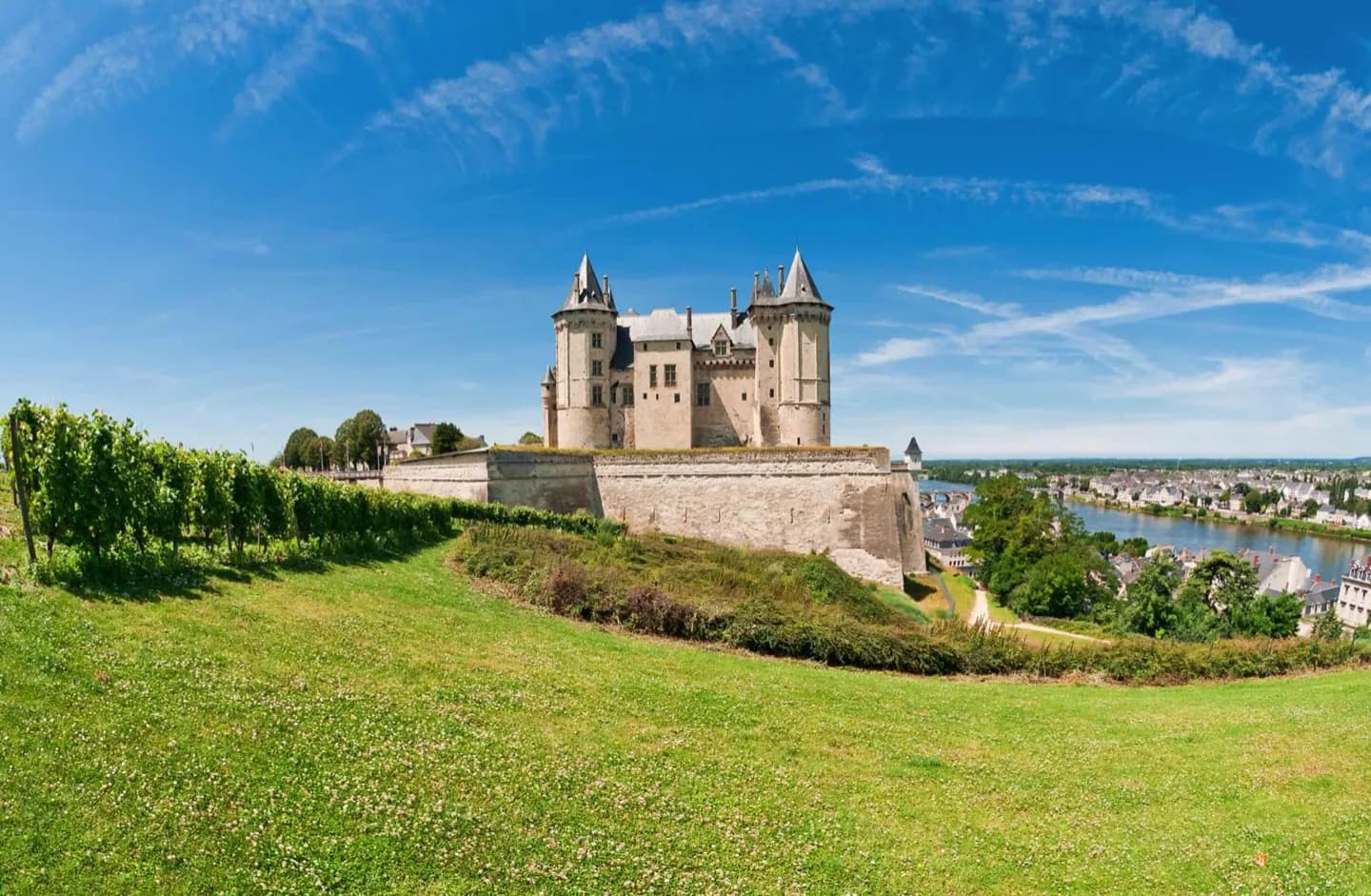
The elevated site explains the early castle, while later rebuilding turned it into a more courtly residence. Its image in the Très Riches Heures du Duc de Berry offers a rare historical comparison for the silhouette seen today. That comparison brings its shifting uses into focus.
What to look for
- The height above the Loire and Thouet recalls its strategic role.
- Its silhouette appears in the Très Riches Heures du Duc de Berry.
The full story
Saumur’s first fortress was built in the tenth century by the Count of Blois to defend the area against raids. It passed to the Counts of Anjou, was destroyed in the eleventh century, and was rebuilt under Henry II of England in the twelfth. Philip II later brought Saumur into the French royal domain. The château’s distinctive outline appears in the September scene of the Très Riches Heures du Duc de Berry, an early fifteenth-century illuminated manuscript. That picture helps connect its courtly image with its older strategic position over the Loire and Thouet. Its use did not stay courtly: in the seventeenth century it became barracks, and under Napoleon it served as a prison. The town later acquired the building and began restoration and museum use. These changes explain why a château that looks like a residence can also carry the history of a fort, garrison and jail.
Useful to know
- Compare the château’s silhouette from town with its elevated river setting.