
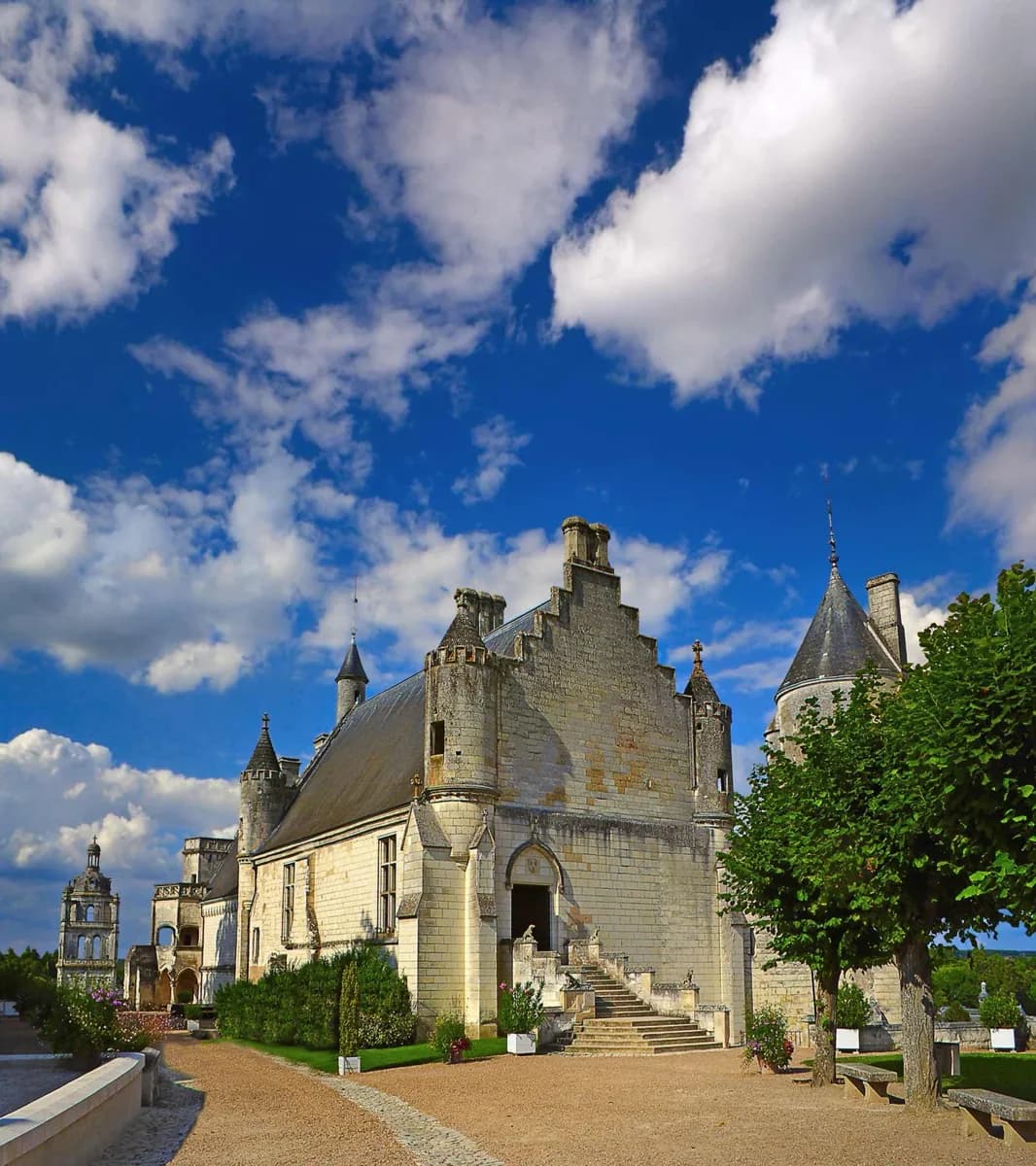
Why go
The keep's size makes medieval defence tangible, while later stories explain why the same walls held prisoners. Loches is especially useful if you want to understand a fortified royal site beyond its silhouette: power here meant both protection and control.
The full story
The great stone keep at Loches dates to the time of Fulk III of Anjou. Its thick walls and stacked rooms were built for a stronghold overlooking the Indre. In the 12th century, Henry II of England and Richard the Lionheart held the castle. Philip II of France captured it in 1204 and strengthened the military complex. Loches later became associated with Charles VII, who used it as a residence, and with Agnès Sorel. Under Louis XI, the fortress took on a harsher role as a state prison. Its cells continued to hold prisoners in later centuries, including captured Englishmen during the American Revolutionary War. The building was damaged during the French Revolution and partly restored afterward, leaving some sections in ruins. Seen in order, the imposing keep, the royal associations and the prison history explain why Loches feels less like a decorative Loire residence than a place where rulers exercised authority.