
Why go
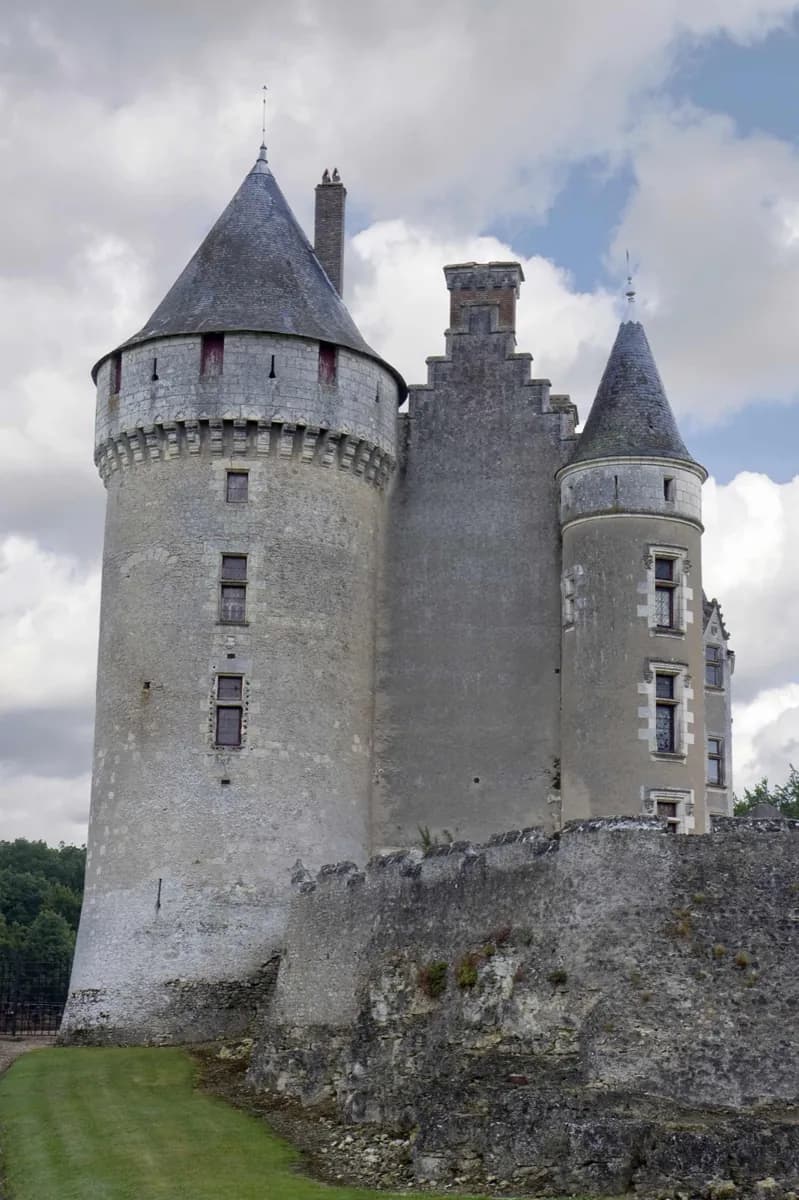
Compare the heavy round tower and gatehouse with the longer residential wing. The contrast shows how a strategically placed castle could become a more comfortable estate while preserving the forms that once announced control of a route. The outbuildings add a later estate story.
The full story
Montpoupon stood on a route between Montrichard and Loches where a medieval fortification had strategic value. Its surviving towers recall that first role. The de Prie family held the estate for centuries and enlarged it as military needs and residential expectations changed. A round tower with a projecting upper fighting gallery still gives a clear sense of defence; the gatehouse and later wing show how the complex was adapted. During the French Revolution, parts of the old walls were removed. In the 18th century, a new owner concentrated on the estate's farms, mills and water rights, but planned château repairs were interrupted by political upheaval. Later work added outbuildings and revived a Renaissance appearance around 1900. The result is a building best read in layers, rather than as an untouched medieval castle. Its agricultural buildings also tell part of the estate's story beyond the fortified core.