
Why go
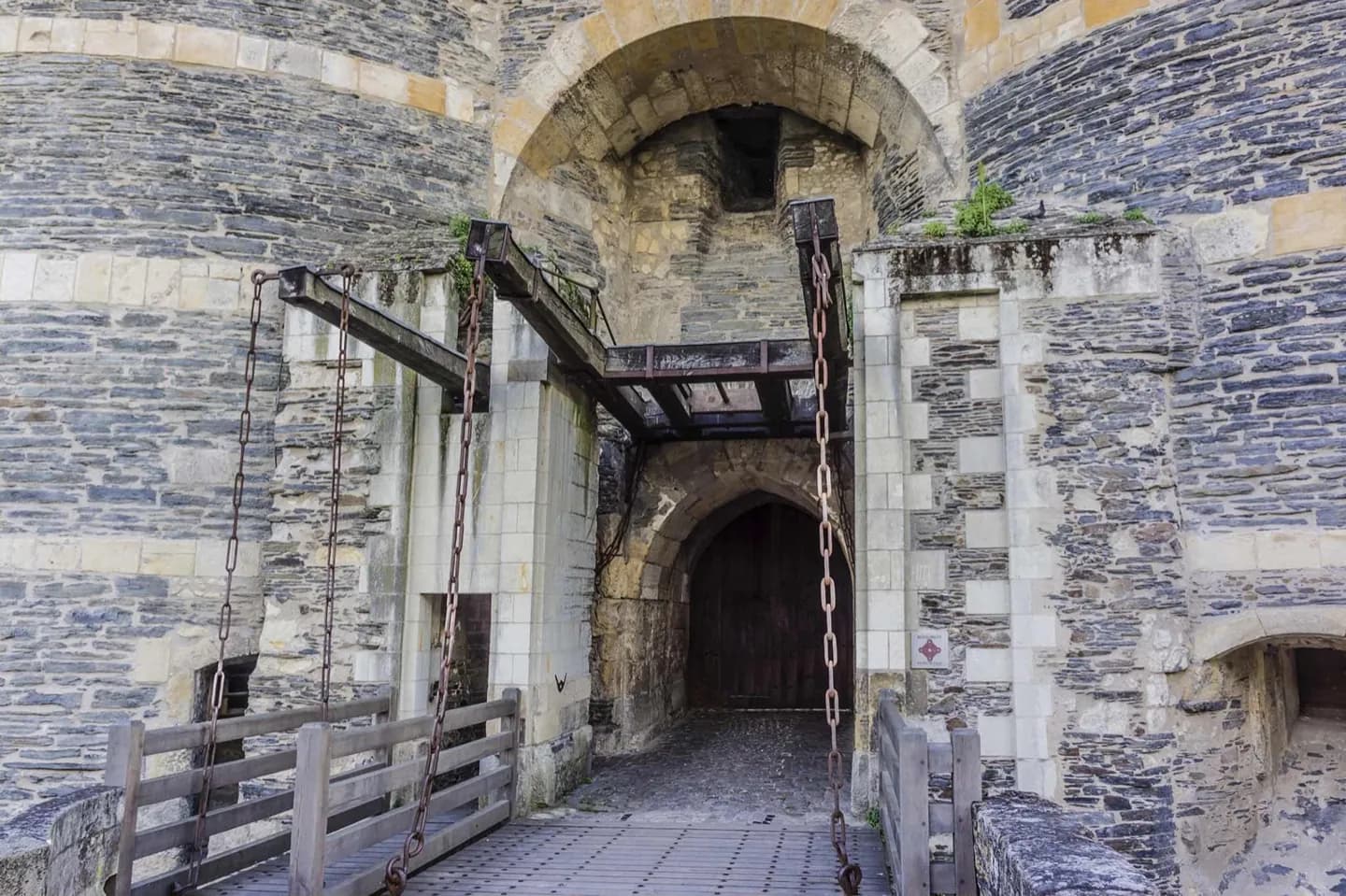
The great thirteenth-century walls above the Maine speak to royal control after the Angevin period. The fourteenth-century Apocalypse Tapestry, commissioned for the dukes of Anjou, changes the visit from fortress history to courtly art. Look from the ramparts toward the Maine before turning to the tapestry: the two views reveal different ambitions of the same rulers.
What to look for
- The massive walls rise above the Maine.
- The Apocalypse Tapestry brings fourteenth-century court art into the fortress.
The full story
The site above the Maine held a castle for the Counts of Anjou from the ninth century. It later became part of the Plantagenet world before Philip II of France took the region in the early thirteenth century. Under the young Louis IX, major new fortifications gave Angers the formidable walls seen today. The building then served a different kind of power. Louis I, Duke of Anjou, commissioned the Apocalypse Tapestry in the fourteenth century, turning a biblical vision into an enormous work of courtly art. A chapel and royal apartments were added in the following century. Later use moved back toward the military: the castle housed a garrison, a prison and a powder magazine. That sequence is visible in the contrast between the tough outer walls and the fragile textile preserved within. Angers is therefore a good reminder that a fortress could also support dynastic ceremony, religious imagery and artistic patronage.
Useful to know
- Leave enough attention for the tapestry after reading the fortress exterior.