
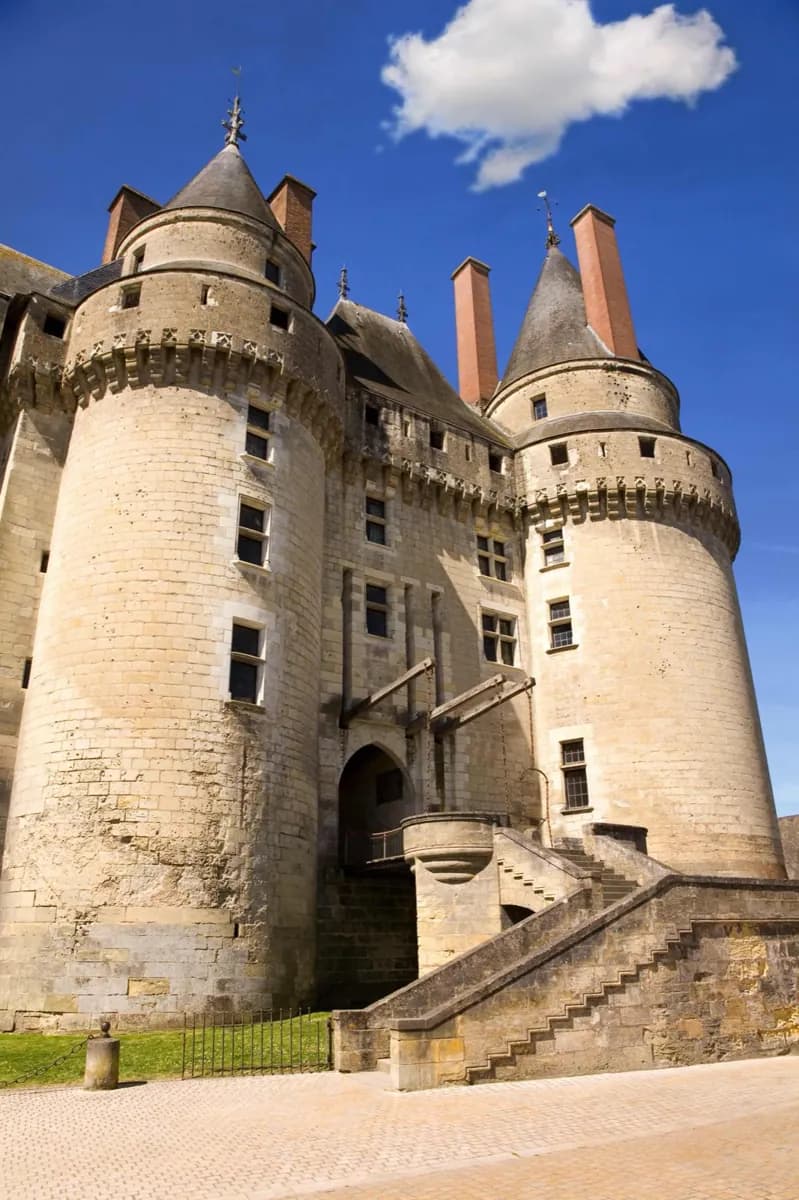
Why go
The ruined keep and Louis XI's rebuilt château tell different chapters on the same site. Look at the older defensive remains before the decorated chimneypieces and rooms: Langeais makes the move from frontier fortification to late medieval royal display unusually clear.
The full story
Fulk Nerra, Count of Anjou, established a fortification at Langeais in 992 during a struggle with the Counts of Blois. The position near the Loire mattered because rival lords competed for control of routes and territory around Tours. Early works began in timber, followed by a stone keep whose ruins remain an important witness to castle building around the turn of the first millennium. The site changed hands and faced sieges as the rivalry continued. After destruction during the Hundred Years' War, Louis XI rebuilt Langeais in the 15th century. The later château kept a defensive appearance while its rooms and monumental chimneypieces served a more residential and ceremonial life. In the 19th century, Jacques Siegfried restored the building and assembled tapestries and furnishings. Those interiors help visitors imagine the later château, though they also reflect a much later effort to present the Middle Ages.