
Why go
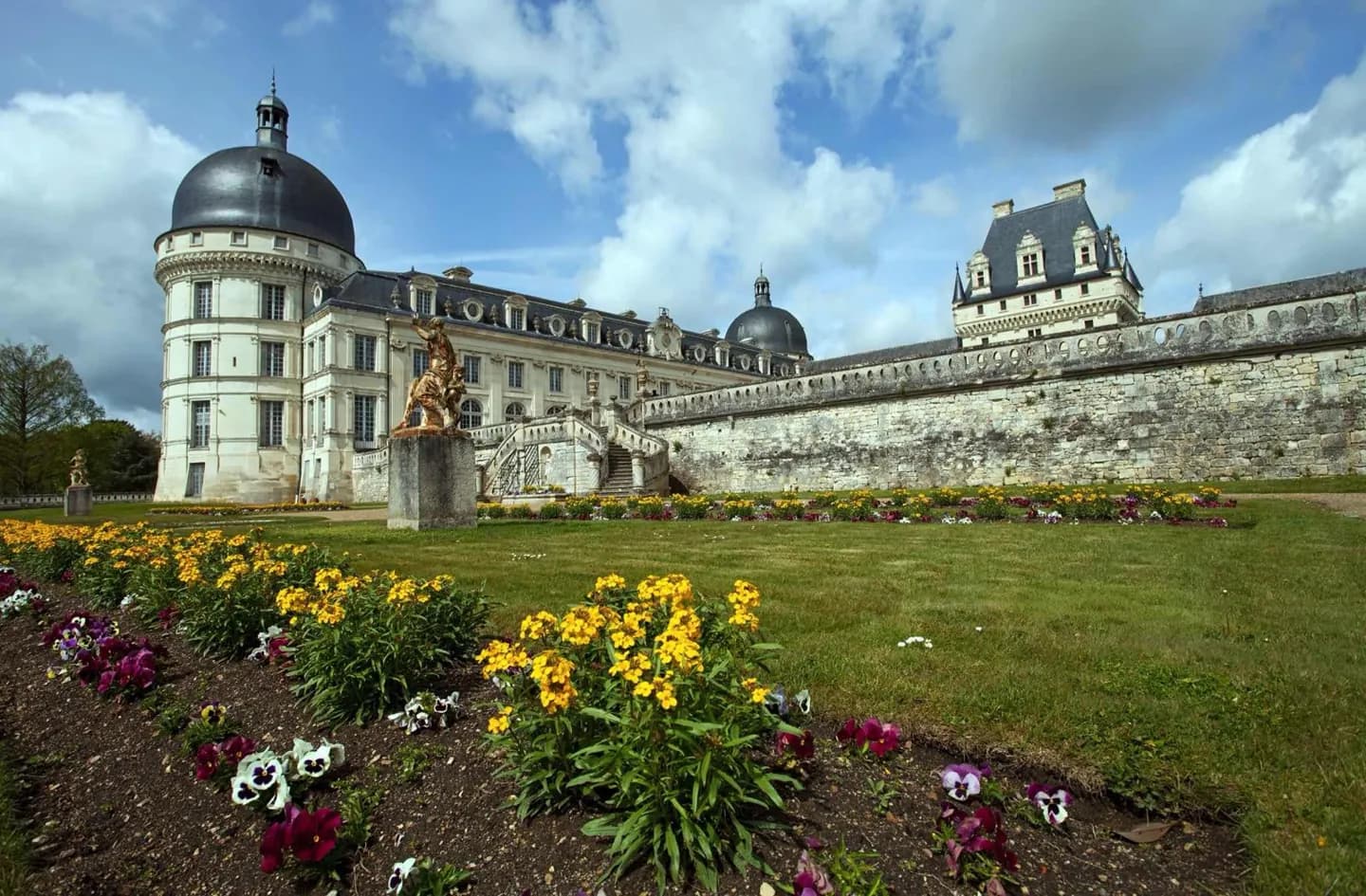
Look beyond the grand outline to see how a family of financiers enlarged a château over two centuries. The setting above the Nahon, the surviving Renaissance forms and Talleyrand's Empire-era rooms make Valençay a useful contrast to Loire residences built in a single campaign.
The full story
The d'Estampes family began replacing a medieval castle at Valençay in 1540. Building continued over roughly two centuries, with the south tower added in the 18th century. That drawn-out process helps explain the mix of forms: a large round corner tower and a central block with smaller turrets belong to the earlier château, while later work expanded the residence. In 1803, Napoleon directed his foreign minister Talleyrand to acquire Valençay for receiving foreign dignitaries. Ferdinand VII of Spain spent years here in Napoleonic captivity, giving the elegant rooms a sharper political meaning. During the Second World War, major works from the Louvre, including the Venus de Milo and the Winged Victory of Samothrace, were sheltered at the estate. Valençay is therefore more than a study in architectural taste: it was also a setting for diplomacy and a refuge for art.