
Why go
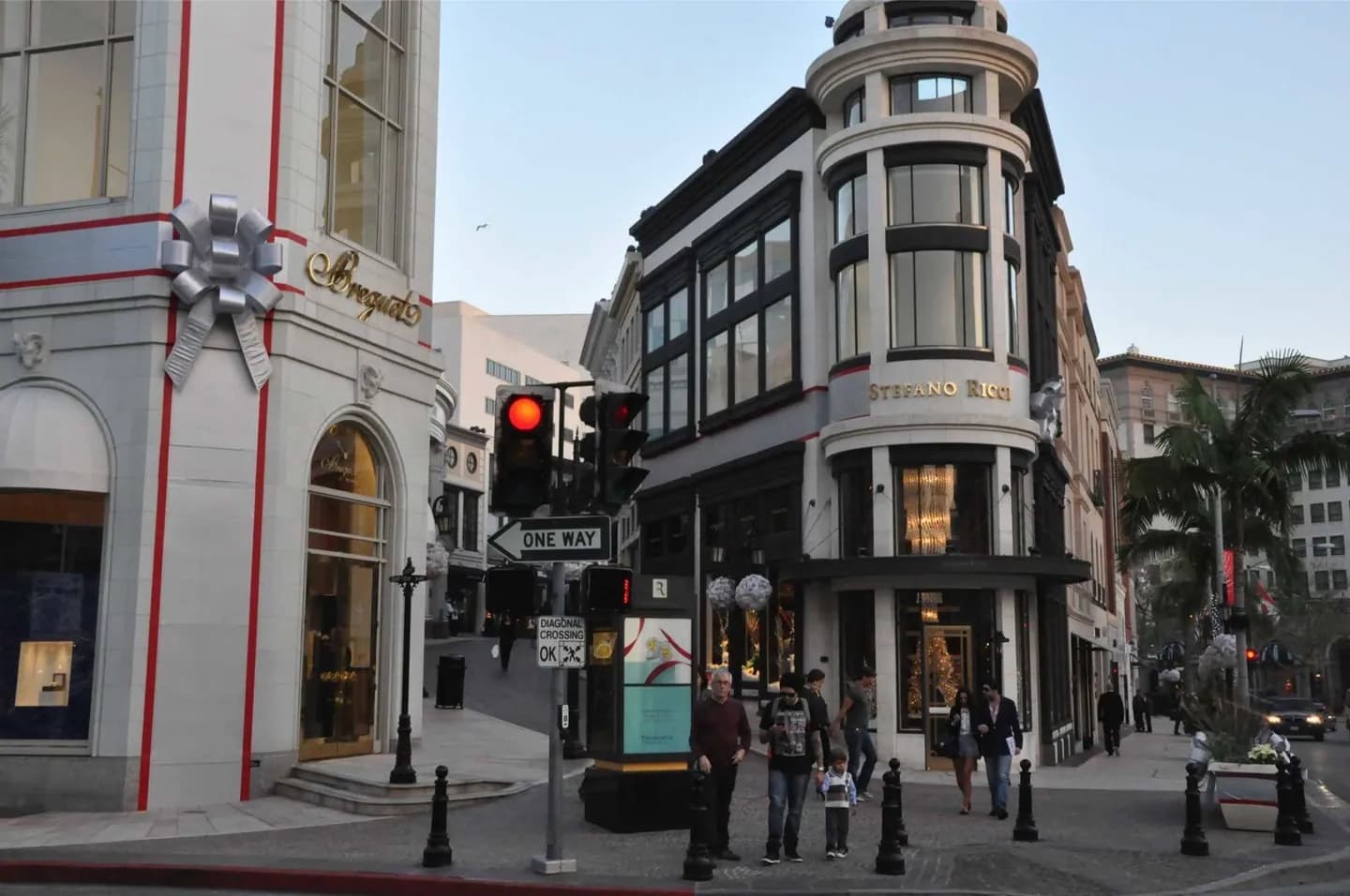
Use neighborhoods as the main planning unit. Little Tokyo, Chinatown and Koreatown each carry distinct community histories and food cultures, while Hollywood, Beverly Hills and Pasadena offer different street patterns and visitor rhythms. Combining adjacent areas creates depth and reduces travel.
The full story
Downtown contains several neighborhoods rather than one uniform core. El Pueblo and Union Station explain the early city and its rail connections; Chinatown and Little Tokyo add Chinese American and Japanese American history; Grand Avenue concentrates newer cultural architecture. Koreatown lies west of Downtown and becomes more active later in the day. Hollywood is another center entirely, with theaters, nightlife and views toward the hills. Beverly Hills and the Westside require separate movement, and Santa Monica is an independent beach city with a compact walkable cluster. Pasadena forms a coherent northeastern day around Old Pasadena and institutional architecture. Pick the district whose texture matters most, then add nearby anchors. The city becomes clearer when each day has a geographic argument.
Useful to know
- Pair adjacent districts and avoid assuming every famous name belongs to one walkable center.
- Choose a meal, museum, performance or beach as the anchor for each neighborhood visit.