
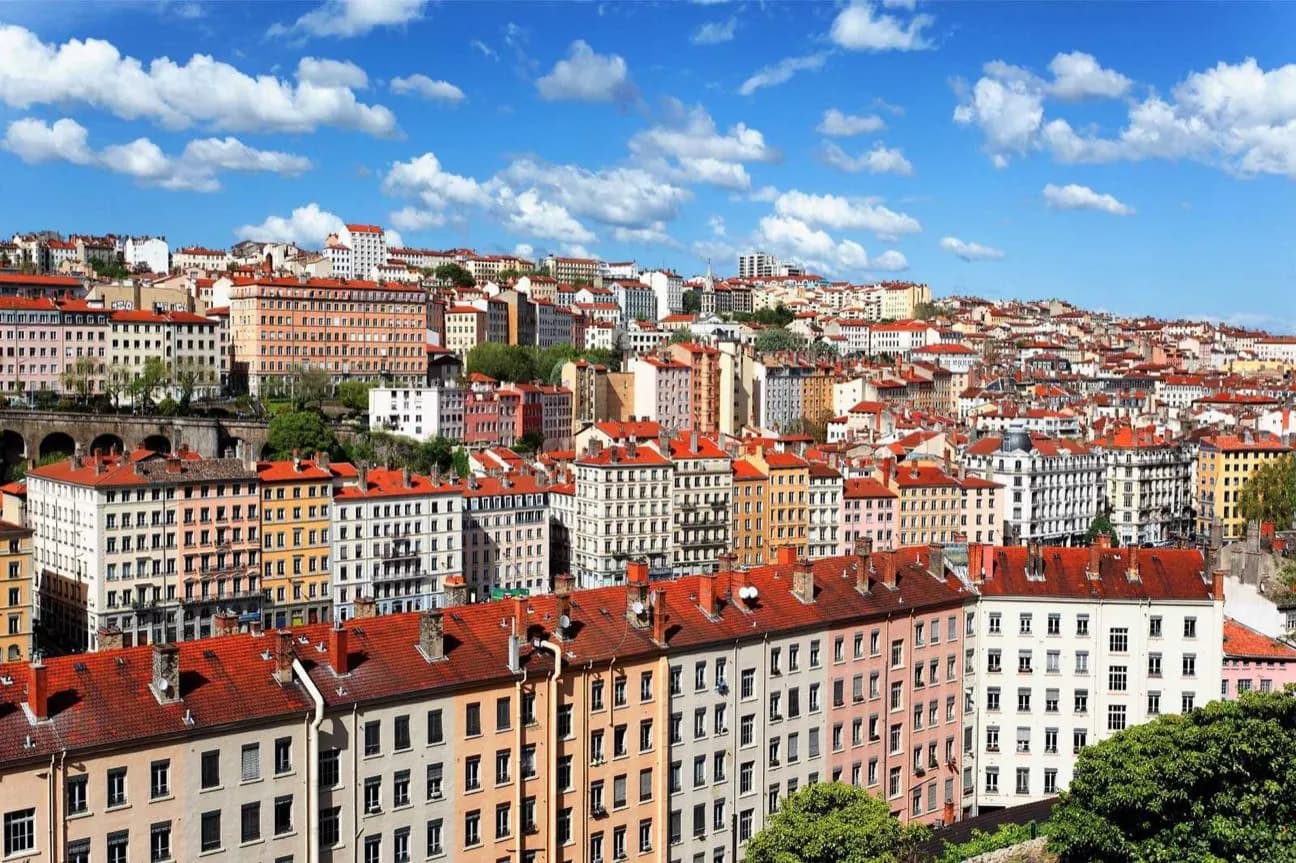
Why go
Choose a district by the experience you want. Fourvière suits Roman history and views, Vieux Lyon concentrates Renaissance architecture, Presqu'île works for civic monuments and shopping, and Croix-Rousse offers steeper neighborhood walks shaped by the historic silk trade and its canut workshops.
What to look for
- Fourvière for Roman sites and the broadest views
- Vieux Lyon for Renaissance streets and traboules
- Croix-Rousse for silk-worker architecture and steep passages
The full story
Fourvière is the historical high ground, with Roman theatres, Lugdunum museum and the basilica overlooking central Lyon. Vieux Lyon lies directly below along the Saône; its Renaissance houses, courtyards and traboules reward slow observation. Across the river, Presqu'île contains the formal civic center around Terreaux and Bellecour, plus the main shopping axes. Croix-Rousse begins north of Terreaux and climbs toward a plateau. Its tall-windowed canut buildings and passages preserve the physical imprint of silk weaving. The Rhône's left bank feels more modern and spacious, with Part-Dieu's towers and Tête d'Or Park as major anchors. These areas are close on a map, but hills and dense street networks make each worth its own block of time. Planning by area also leaves more room to notice courtyards, river views and changes in street scale between scheduled visits.
Useful to know
- Give Fourvière and Croix-Rousse separate climbs.
- Use Presqu'île as the flat link between historic districts.