
Why go
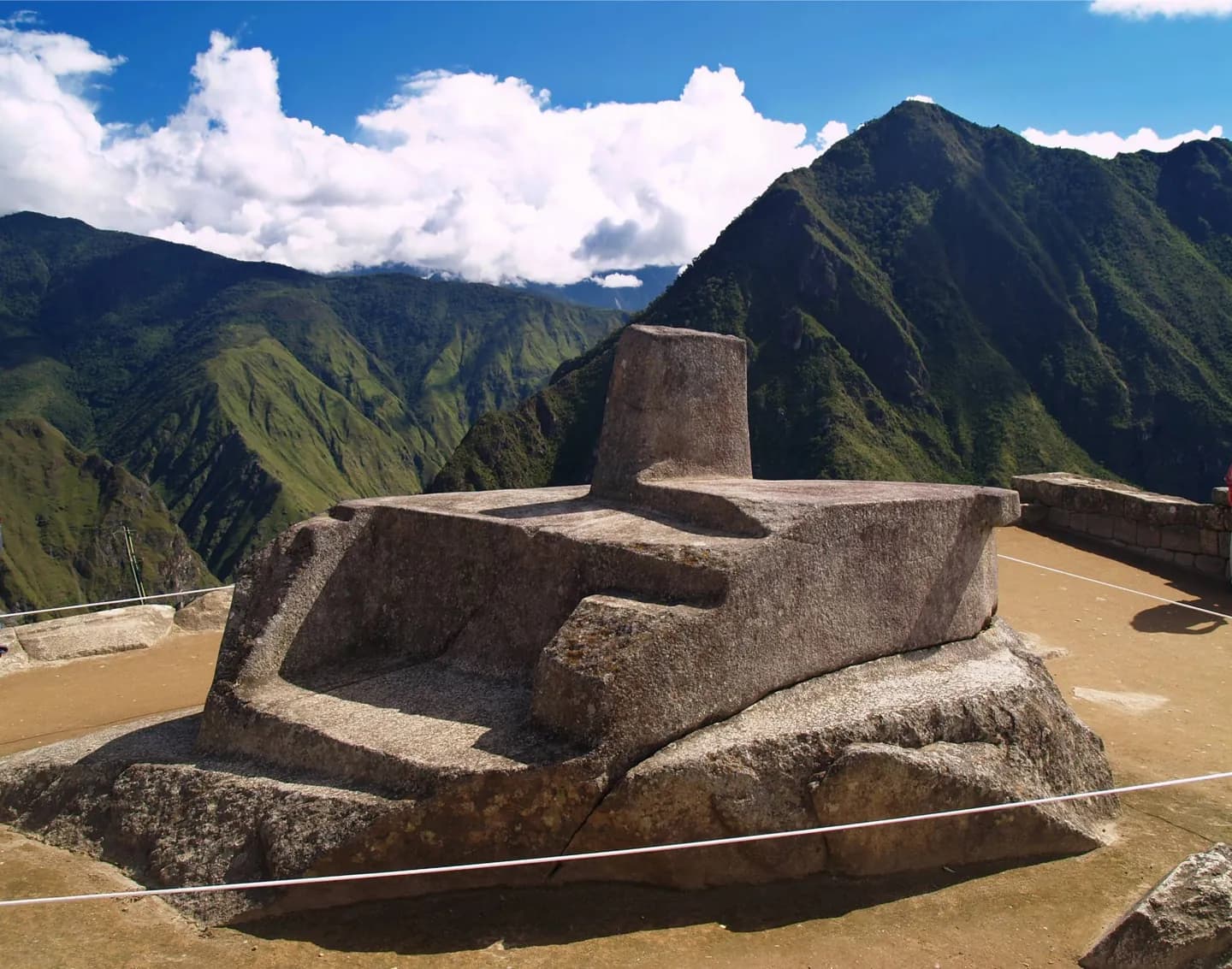
This feature gives a focused way to think about Inca attention to the sky. The name is commonly explained as a place or device for tying the sun, and the stone's form has prompted solar readings. It is best understood as a ritual feature whose precise use is still debated.
The full story
Inti Watana is a Quechua name often rendered as a place to tie the sun. At Machu Picchu it refers to a carefully shaped stone with a projecting pillar. Its position and shadows have encouraged interpretations linking it to the sun's annual course and ceremonial observation. Those ideas are useful context, but they should not be mistaken for a complete record of what happened here. Inca builders paid close attention to the landscape and sky, and the stone sits among structures that give the site's upper sector a distinctive ceremonial character. If your chosen circuit passes it, notice the worked surfaces and the relationship between the pillar, nearby stonework and surrounding mountains. Do not plan around a promised shadow effect on a particular date: light, weather and route access can vary, and a short visit cannot settle the feature's full meaning.