
Why go
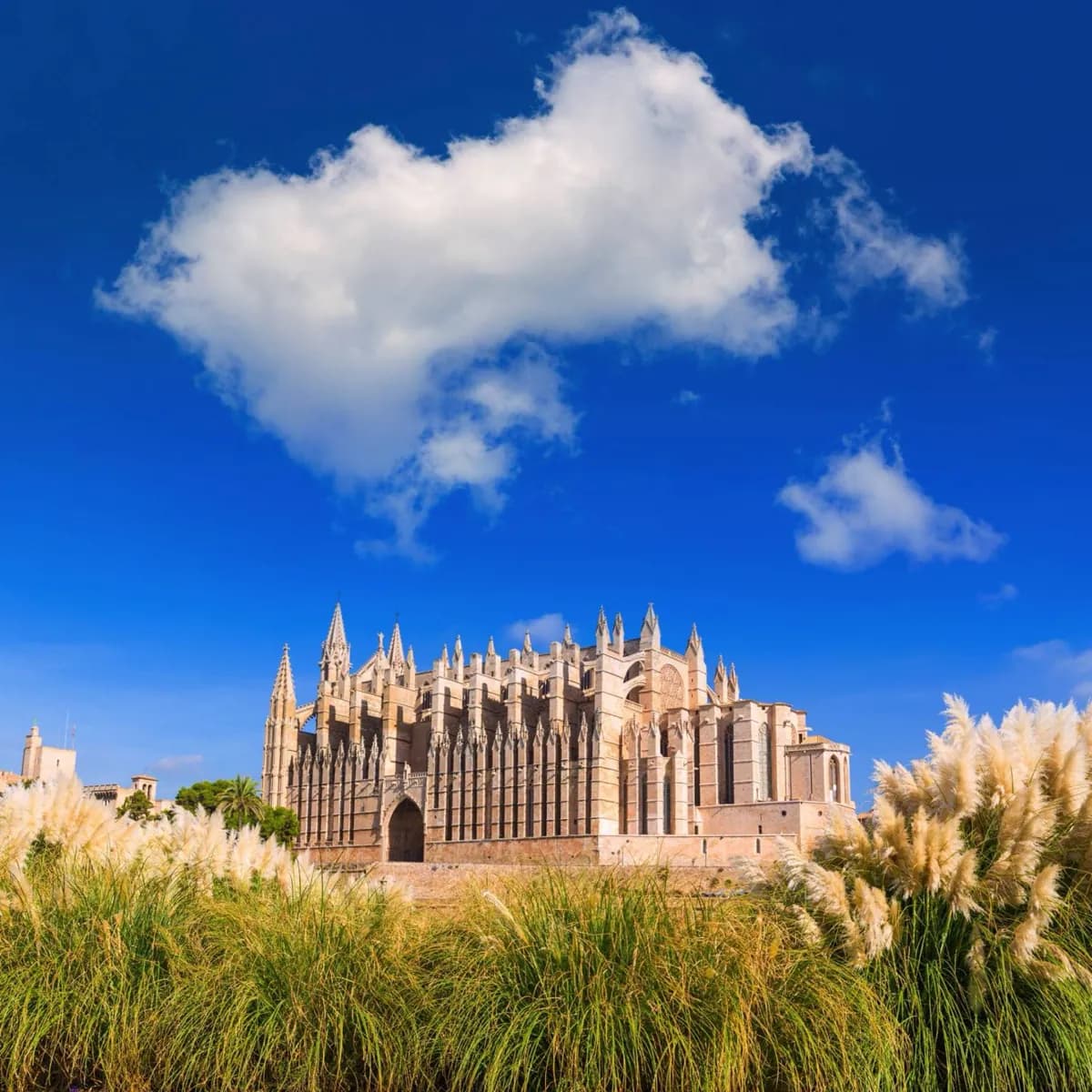
Come for the contrast between Gothic scale, royal rooms and the broad bay. Even without entering every building, the changing viewpoints from Parc de la Mar and the upper terraces explain Palma’s relationship with the sea. Use Palma Cathedral Quarter for a wider comparison. Let Palma Cathedral Quarter show how local terrain works; Palma Cathedral Quarter also shows how history shapes Palma Cathedral Quarter today.
What to look for
- La Seu’s buttresses and rose window rise above the old shoreline.
- The Almudaina stands immediately beside the cathedral.
- Parc de la Mar opens a long view back to both monuments.
The full story
This quarter compresses Palma’s royal, religious and maritime history into a few blocks. The Almudaina occupies a site shaped by Islamic and later Christian rulers. Beside it, La Seu grew over centuries into the city’s dominant Gothic landmark. The former shoreline once reached much closer to the walls; Parc de la Mar now provides a broad public foreground and reflecting pool. Behind the monuments, the lanes of the upper old city narrow quickly, leading toward patios, the Arab Baths and the former Jewish quarter. The area works best when seen from both levels: first from the park and waterfront, then from the terraces and streets above. Palma Cathedral Quarter rewards comparison nearby. Around Palma Cathedral Quarter, geography explains movement. Within Palma Cathedral Quarter, materials reveal changing use. Read Palma Cathedral Quarter beside its surroundings. This keeps Palma Cathedral Quarter tied to Mallorca; Palma Cathedral Quarter then supports clearer regional planning.
Useful to know
- Reserve separate time slots if you plan to enter both major monuments.
- Return to the park late in the day for softer light on the façades.