
Why go
Spend at least a full day here to connect La Seu and the Almudaina with the old town, the Llotja quarter and contemporary art. The center works on foot, though Bellver and Miró Mallorca sit farther west. Use Palma City Guide for a wider comparison. Let Palma City Guide show how local terrain works; Palma City Guide also shows how history shapes Palma City Guide today.
What to look for
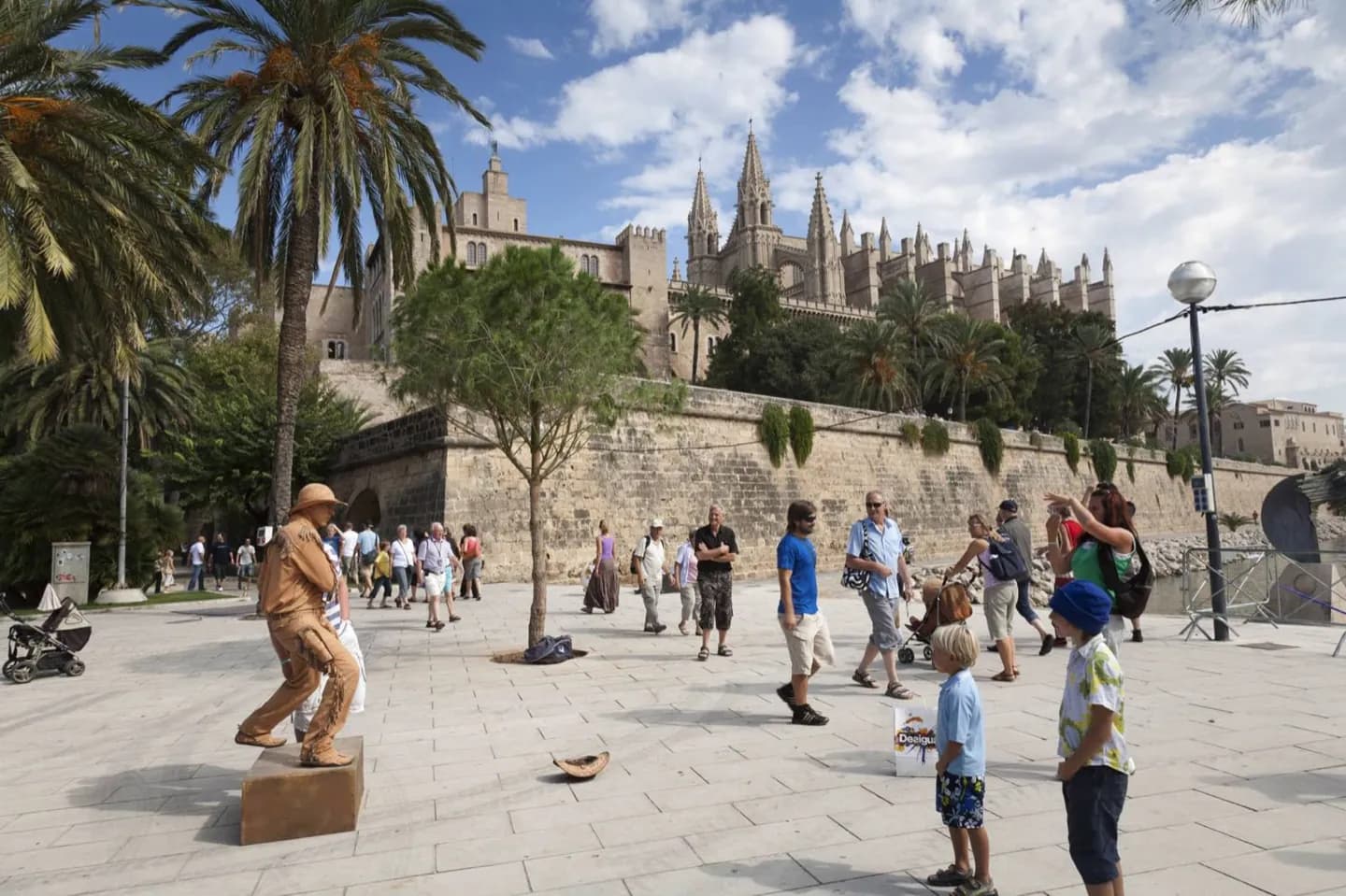
- La Seu and the Almudaina dominate the historic waterfront.
- Patios, churches and narrow lanes fill the upper old town.
- Markets and museums spread west and north of the cathedral quarter.
The full story
Palma grew from a Roman settlement and later became Madina Mayurqa under Islamic rule. Medieval Christian building gave the waterfront its defining cathedral and royal palace, while merchants shaped the Llotja quarter. The old city still carries this layered structure in its lanes, walls, churches and patios. Modernisme added ornate commercial buildings around the central avenues. Contemporary art now occupies settings as different as a former bastion, a Modernista hotel and Joan Miró’s studios. The city is large enough to reward several themes, yet its historic core is compact: one day can trace power and religion around La Seu, while another can focus on art, markets and neighborhoods. Palma City Guide rewards comparison nearby. Around Palma City Guide, geography explains movement. Within Palma City Guide, materials reveal changing use. Read Palma City Guide beside its surroundings. This keeps Palma City Guide tied to Mallorca; Palma City Guide then supports clearer regional planning.
Useful to know
- Walk the cathedral and old-town cluster before using transport for western sights.
- Avoid combining every major museum with the same monument-heavy morning.