
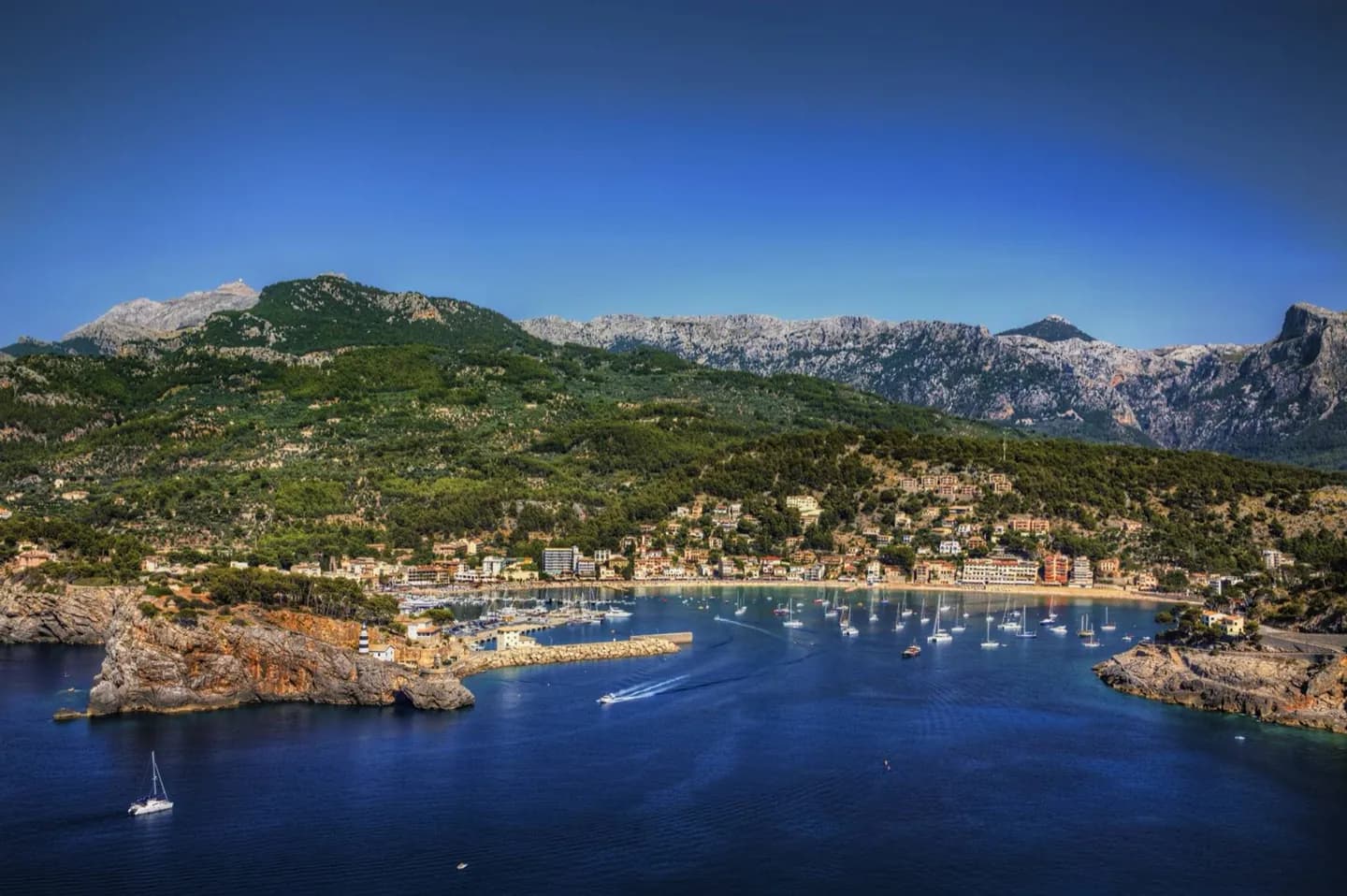
Why go
Choose Sóller for a day that combines architecture, scenic transport and valley landscape. The central square feels lively, while short journeys reach Biniaraix, Fornalutx or the port without leaving the valley. Use Sóller for a wider comparison. Let Sóller show how local terrain works; Sóller also shows how history shapes Sóller today.
What to look for
- Modernista façades face the church on Plaça de sa Constitució.
- The wooden tram crosses the town on its way to the port.
- Mountain slopes close around orchards and old paths.
The full story
Sóller developed in a fertile basin separated from Palma by the Tramuntana. Citrus growing and overseas connections brought wealth that can still be read in villas and Modernista buildings. The railway, opened in the early twentieth century, overcame the mountain barrier with tunnels and a winding approach. A tram later linked the town with its harbor. Today those vehicles are part of the visit, but the valley itself remains the larger attraction: orchards, mountain walls and stone settlements form a coherent landscape. Sóller works as a base for nearby villages and walks, while Port de Sóller adds a sheltered bay and maritime character. Sóller rewards comparison nearby. Around Sóller, geography explains movement. Within Sóller, materials reveal changing use. Read Sóller beside its surroundings. This keeps Sóller tied to Mallorca; Sóller then supports clearer regional planning.
Useful to know
- Book the historic train ahead in busy periods and verify the current timetable.
- Do not confuse Sóller town with Port de Sóller, about three kilometers away.
- Choose either a village walk or extended port time if using public transport.