
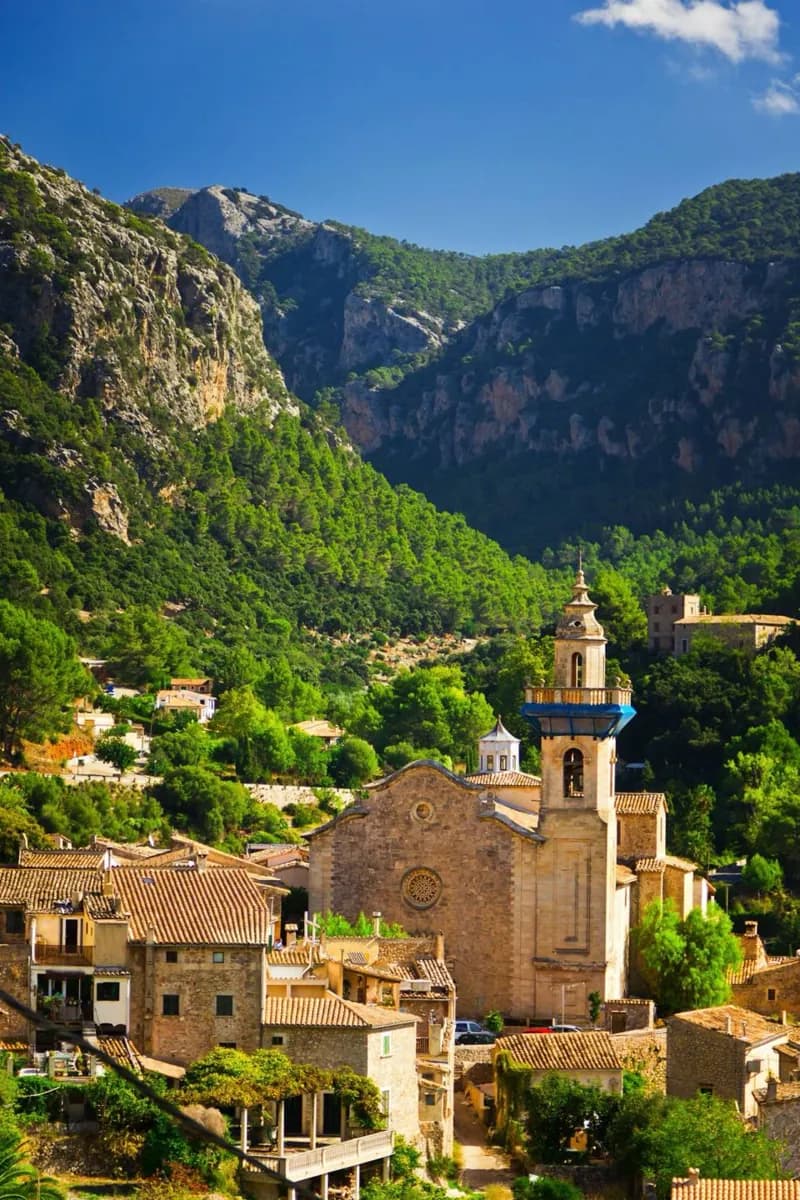
Why go
Look beyond famous façades to see how buildings manage shade, water and defense. Bellver’s circular plan, the Llotja’s spiral columns, Palma’s patios and Tramuntana terraces each solve a different practical problem. Use What to Notice in Mallorcan Architecture for a wider comparison. Let What to Notice in Mallorcan Architecture show how local terrain works; What to Notice in Mallorcan Architecture also shows how history shapes What to Notice in Mallorcan Architecture today.
The full story
Stone is the common thread in Mallorcan building. Prehistoric communities assembled massive walls and talaiots without mortar. Islamic Palma left fragments, water-minded gardens and an urban pattern adapted to heat. Gothic builders created La Seu, Bellver and the Llotja, each with a radically different spatial idea: vertical church, circular fortress and open merchant hall. Later mansions organized life around shaded patios. In the countryside, dry-stone terraces, walls and farm buildings shaped steep ground and scarce water. Modernisme introduced floral ornament, glazed surfaces and expressive ironwork to Palma’s commercial streets. Seeing these forms together reveals architecture as a response to power, trade, climate and terrain. What to Notice in Mallorcan Architecture rewards comparison nearby. Around What to Notice in Mallorcan Architecture, geography explains movement. Within What to Notice in Mallorcan Architecture, materials reveal changing use. Read What to Notice in Mallorcan Architecture beside its surroundings. This keeps What to Notice in Mallorcan Architecture tied to Mallorca; What to Notice in Mallorcan Architecture then supports clearer regional planning.