
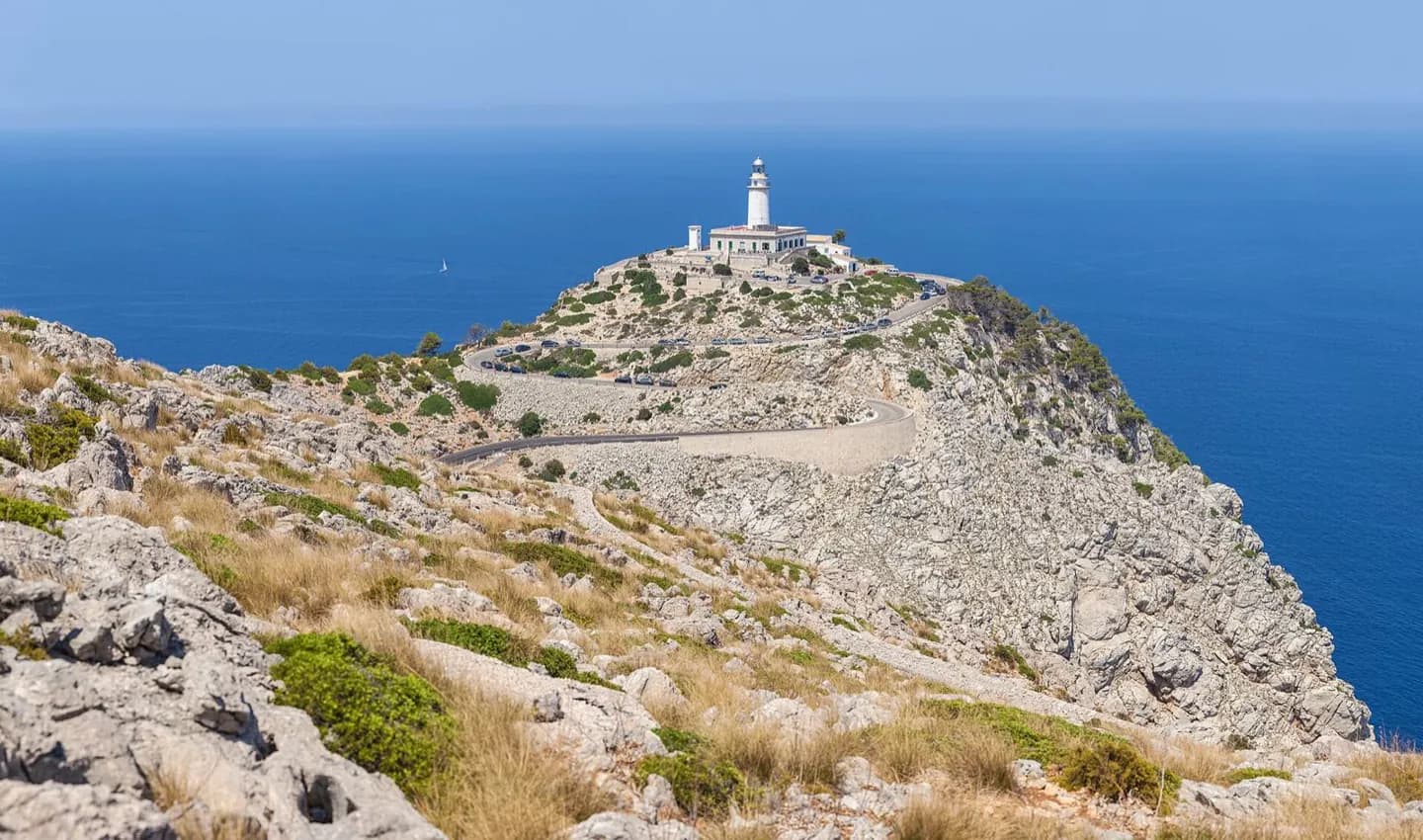
Why go
The Formentor road, engineered by Antonio Parietti in the twentieth century, opened a dramatic sequence of limestone cliffs, coves and viewpoints at Mallorca’s northern tip. The visit connects multiple cliff viewpoints, changing coastal angles and sharp Tramuntana geology. Choose it when visual composition is a priority and changing position reveals a different relationship each time.
What to look for
- Multiple cliff viewpoints.
- Changing coastal angles and sharp tramuntana geology.
The full story
The Formentor road, engineered by Antonio Parietti in the twentieth century, opened a dramatic sequence of limestone cliffs, coves and viewpoints at Mallorca’s northern tip. Today, Cap de Formentor is best understood through multiple cliff viewpoints, changing coastal angles and sharp Tramuntana geology. The wider Cap de Formentor context is Mallorca’s northern headland, where limestone cliffs and sea views build toward the island’s far edge. Change position several times before deciding on the defining view. Foreground, horizon and built elements combine differently from each angle, while light can alter the balance again. This slow visual reading explains why the site has become an image of Mallorca, yet also reveals details that disappear in the familiar postcard composition. Before leaving Cap de Formentor, set its arrival image—multiple cliff viewpoints—against its closing image: Mallorca’s northern headland.
Useful to know
- Check seasonal road and shuttle restrictions before leaving.
- Avoid rushing between viewpoints on the narrow road.
Your next visit
Estimated · Declared scenario and planning estimates; no live opening, weather, queue or booking service.
Outdoor visit · 22–45 min
World planning estimate; admission, opening, visit duration and access need checking.