
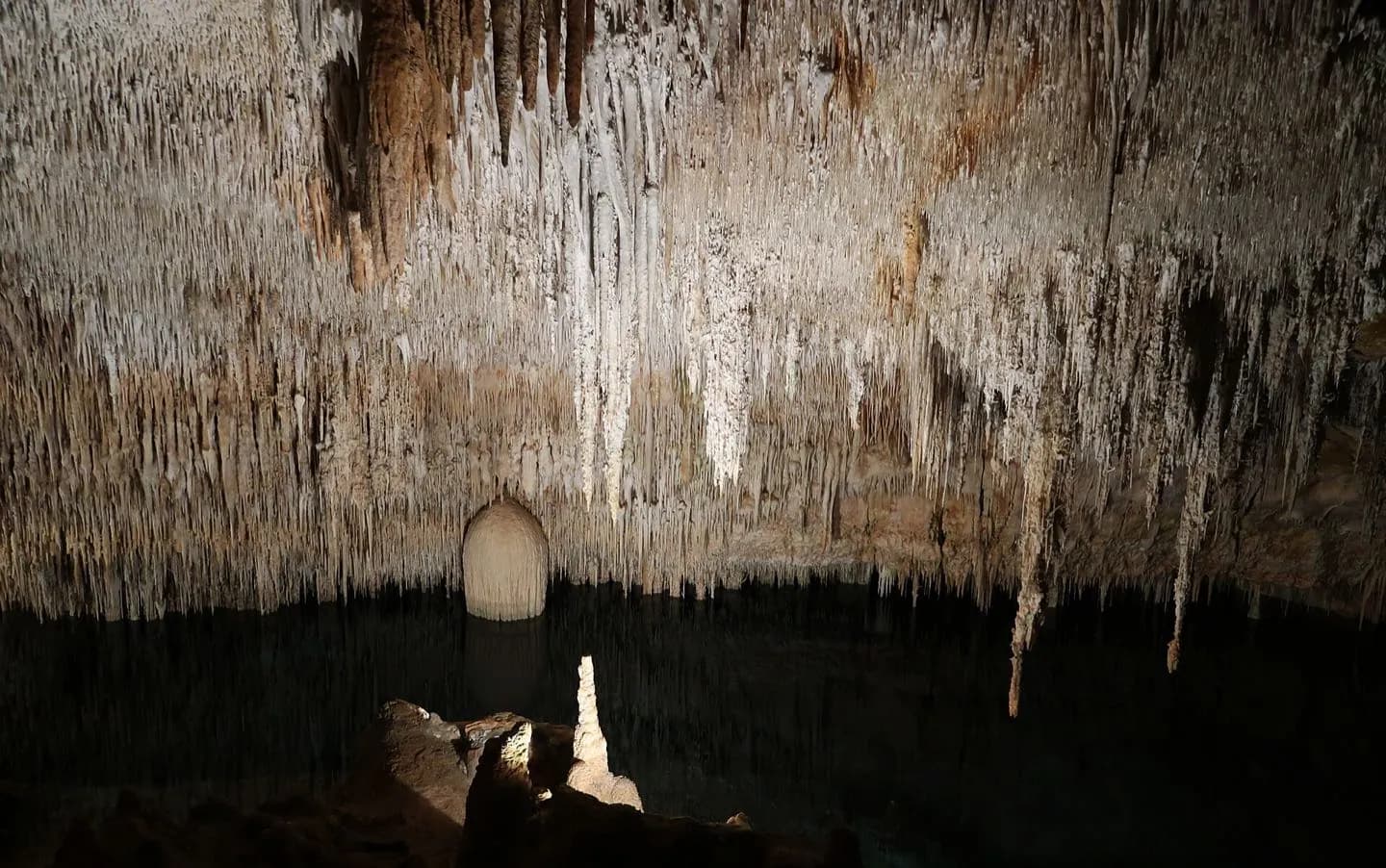
Why go
Scientific exploration in the late nineteenth century helped document the system and its underground lake, now known as Lake Martel, within a carefully managed visitor route. The visit connects stalactite formations, the lake and the carefully staged route. Choose one cave experience and give its chambers, mineral forms and controlled sequence enough attention.
What to look for
- Stalactite formations.
- The lake and the carefully staged route.
The full story
Scientific exploration in the late nineteenth century helped document the system and its underground lake, now known as Lake Martel, within a carefully managed visitor route. Today, Caves of Drach is best understood through stalactite formations, the lake and the carefully staged route. The wider Caves of Drach context is a highly organized cave visit known for large chambers and underground Lake Martel. Notice the change in scale from passage to chamber and from individual formation to the cavern as a whole. Lighting guides attention, but natural shapes remain the subject. Comparing wet and dry surfaces, ceiling height and the route’s turns gives the cave a geological logic that survives the theatrical presentation. Before leaving Caves of Drach, set its arrival image—stalactite formations—against its closing image: a highly organized cave visit known for large chambers and underground Lake Martel.
Useful to know
- Book a timed entry and arrive before the assigned slot.
- Expect a structured group visit rather than free exploration.
Your next visit
Estimated · Declared scenario and planning estimates; no live opening, weather, queue or booking service.
Indoor visit · 37–75 min
World planning estimate; admission, opening, visit duration and access need checking.