
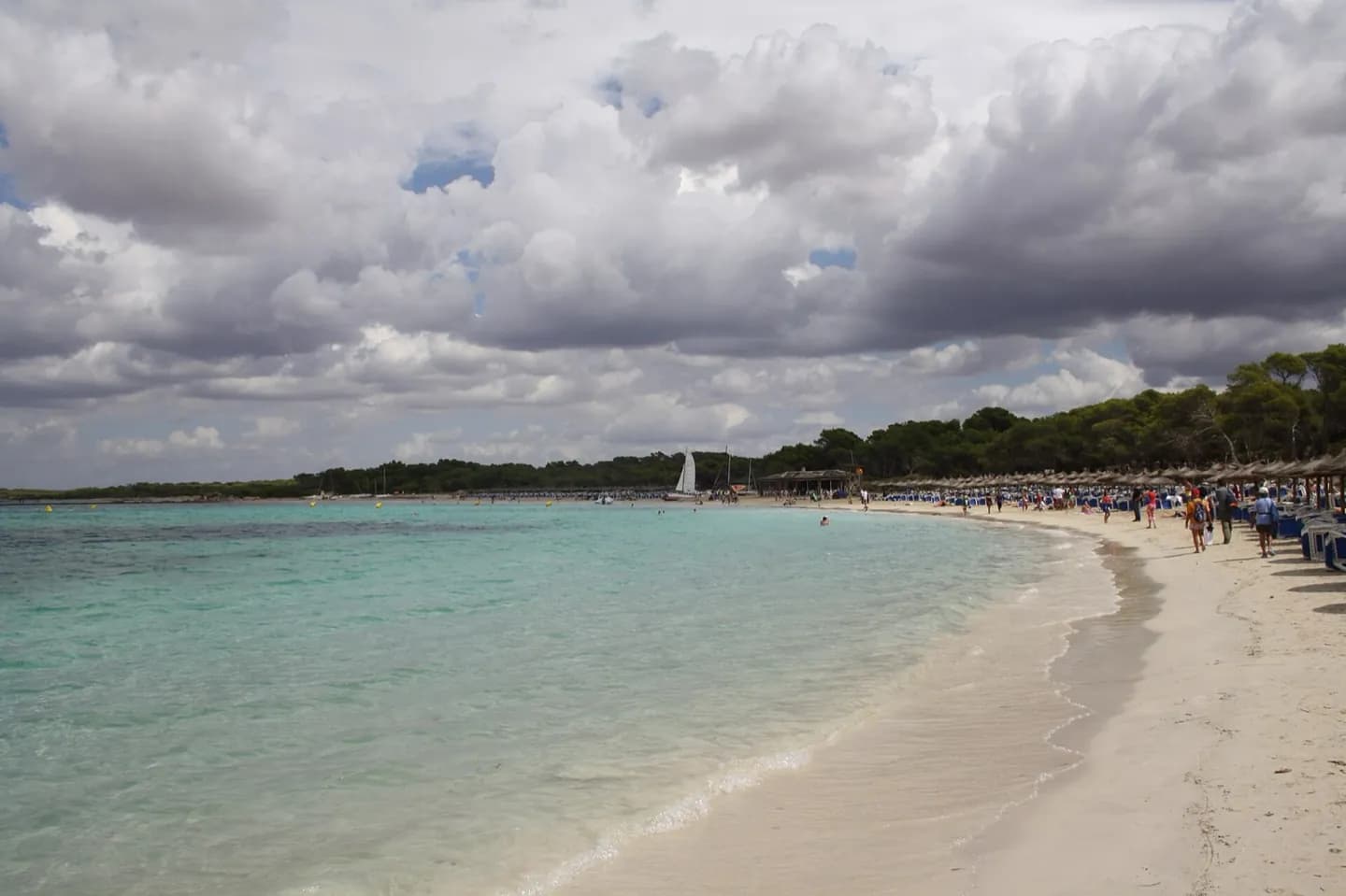
Why go
Es Trenc remains notable because dunes, salt flats and a long sandy shoreline retain an open character uncommon on Mallorca’s more developed coasts. The visit connects clear shallow water, broad horizons and the undeveloped shoreline. The stop works best when coastal scenery and the site itself carry equal weight in the day.
What to look for
- Clear shallow water.
- Broad horizons and the undeveloped shoreline.
The full story
Es Trenc remains notable because dunes, salt flats and a long sandy shoreline retain an open character uncommon on Mallorca’s more developed coasts. Today, Es Trenc Beach is best understood through clear shallow water, broad horizons and the undeveloped shoreline. The wider Es Trenc Beach context is a long, open sweep of pale sand beside protected dunes and salt-flat landscapes. Start with the horizon and coastline before focusing on walls, paths or interiors. Exposure to sea, wind and distance shaped the place as directly as any patron or architect. Looking outward again at the end clarifies why this location was chosen and how the site still depends on its maritime setting. Before leaving Es Trenc Beach, set its arrival image—clear shallow water—against its closing image: a long.
Useful to know
- Arrive early for parking and avoid walking on protected dunes.
- Bring shade and water; natural cover is limited.
Your next visit
Estimated · Declared scenario and planning estimates; no live opening, weather, queue or booking service.
Outdoor visit · 90–180 min
World planning estimate; admission, opening, visit duration and access need checking.