
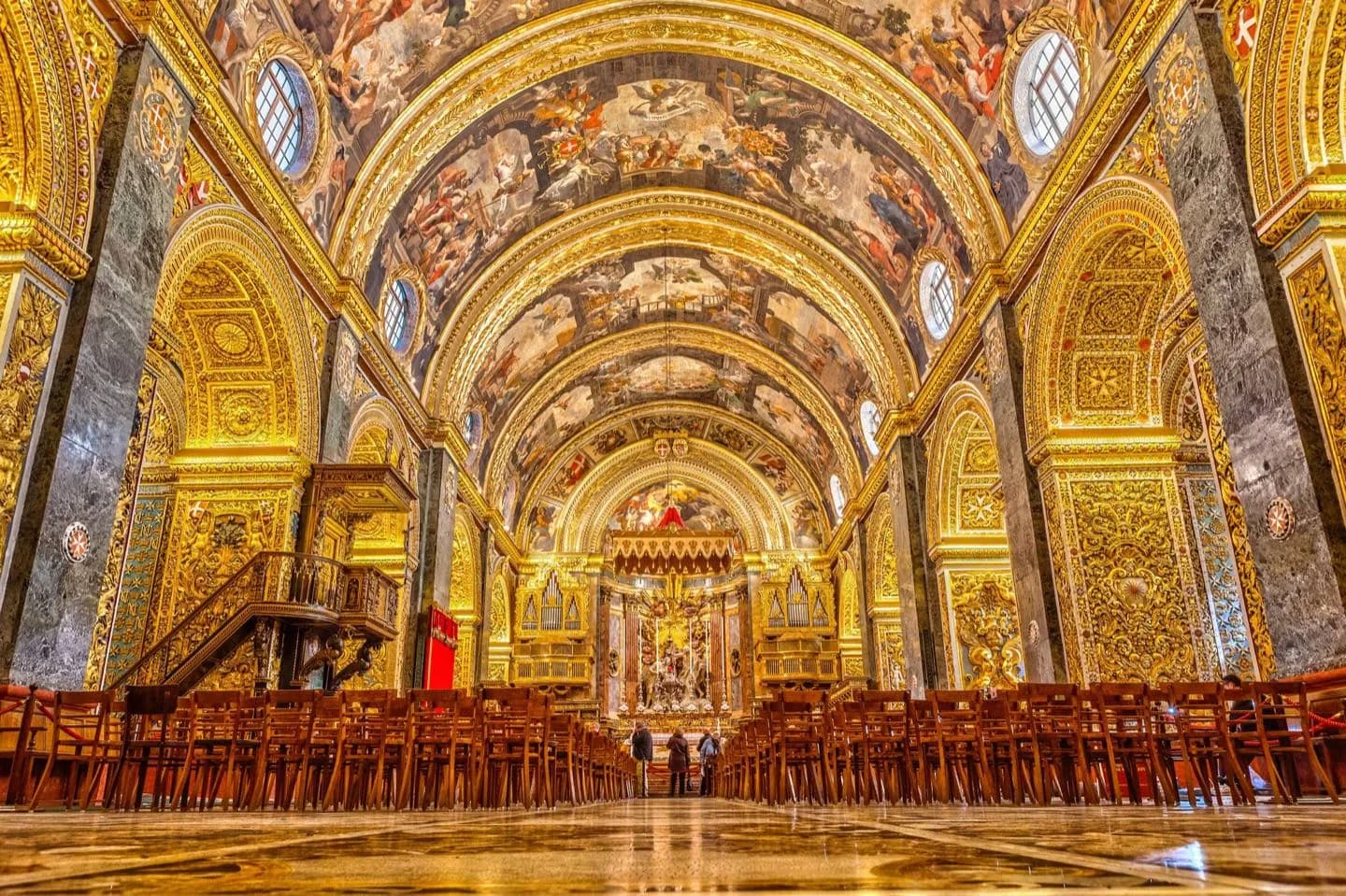
Why go
Religion is most rewarding here as a way to read the built environment. Valletta’s St John’s Co-Cathedral, village parish churches and harbour chapels show how belief, patronage and community life shaped Malta. Feast traditions add another layer, but their dates and local arrangements should be checked before travel.
The full story
Roman Catholicism has long been Malta’s predominant religion and is recognised in the country’s constitutional tradition. Its influence appears in the density of church buildings, the scale of parish domes, the names of local boats and the calendar of village saints’ feasts. St Paul, St Publius and St Agatha are among Malta’s patron saints, while Santa Marija has a special place in the islands’ religious life. For a visitor, architecture is the clearest entry point. In Valletta, St John’s Co-Cathedral brings the Knights’ patronage, baroque art and civic identity into one interior. Elsewhere, the Rotunda of Mosta and the Rotunda of Xewkija make their domes local landmarks. Religious observance remains personal and varied, so avoid treating every church as a museum. Dress and behaviour should suit an active place of worship, and check locally if a procession or feast affects access in a particular town.