
Why go
This background gives shape to visits at Ġgantija, Ħaġar Qim and Mnajdra. It links the temples to earlier settlement, farming and pottery, while keeping the disappearance of temple-building culture and the cart ruts honestly uncertain. See the sites first, then use this story to connect their stones and finds.
The full story
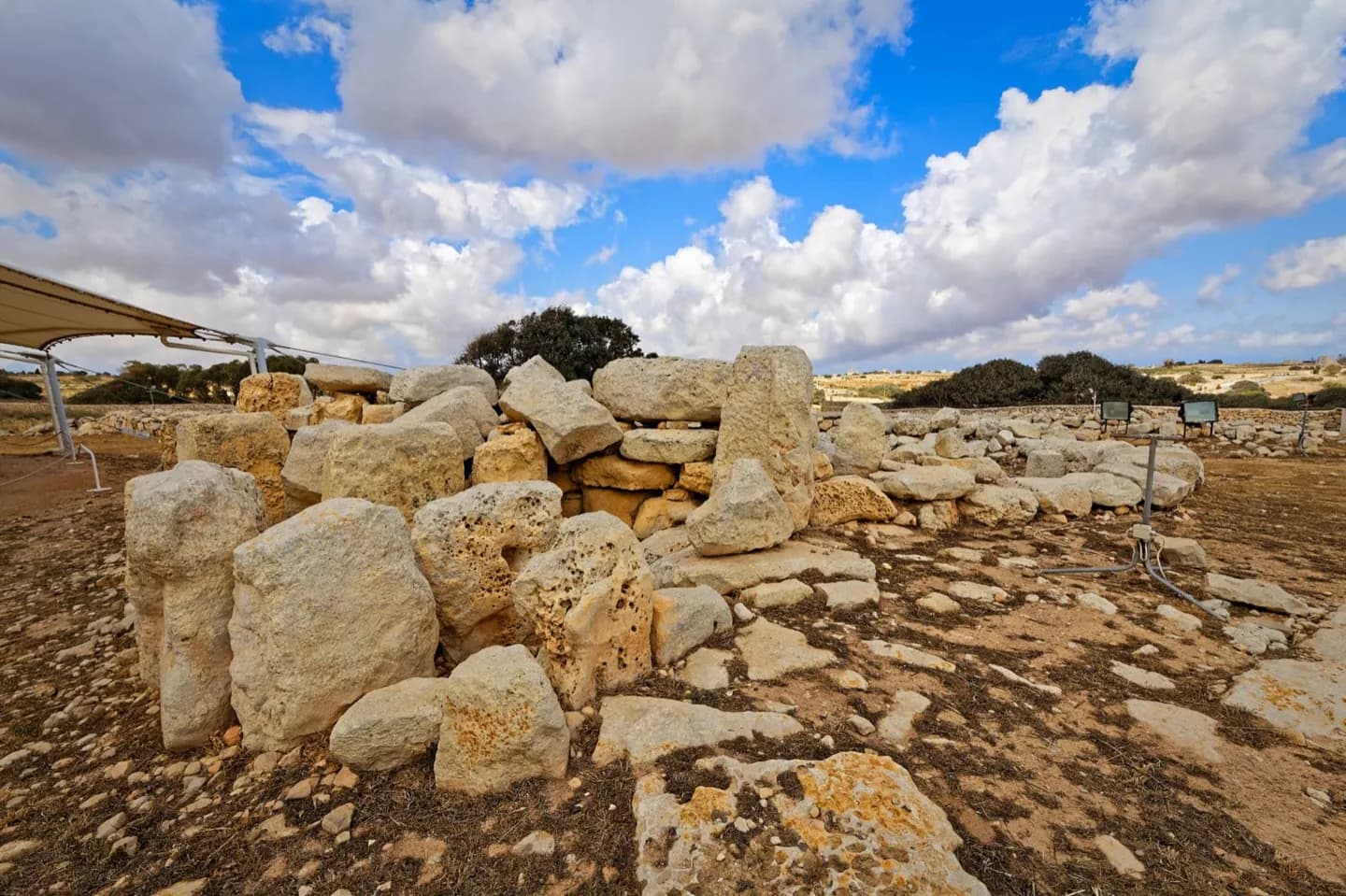
Archaeological finds suggest that people settled the Maltese islands by about 5200 BCE, likely arriving from Sicily. Early communities farmed, raised livestock and left evidence in open settlements and caves such as Għar Dalam. Pottery from Skorba and other sites helps trace these connections across the central Mediterranean. By the fourth millennium BCE, temple builders created the megalithic architecture seen at Ġgantija on Gozo and at Ħaġar Qim and Mnajdra on Malta. Their buildings use forecourts, apses and central passages, and finds of animal bones and knives indicate that ritual activity included animal sacrifice. The temple-building culture disappeared around 2500 BCE, but the reason remains unknown; famine and disease are possibilities rather than facts. Malta’s cart ruts are also striking but difficult to date securely. Treat both mysteries as invitations to look carefully, not settled explanations.