
Why go
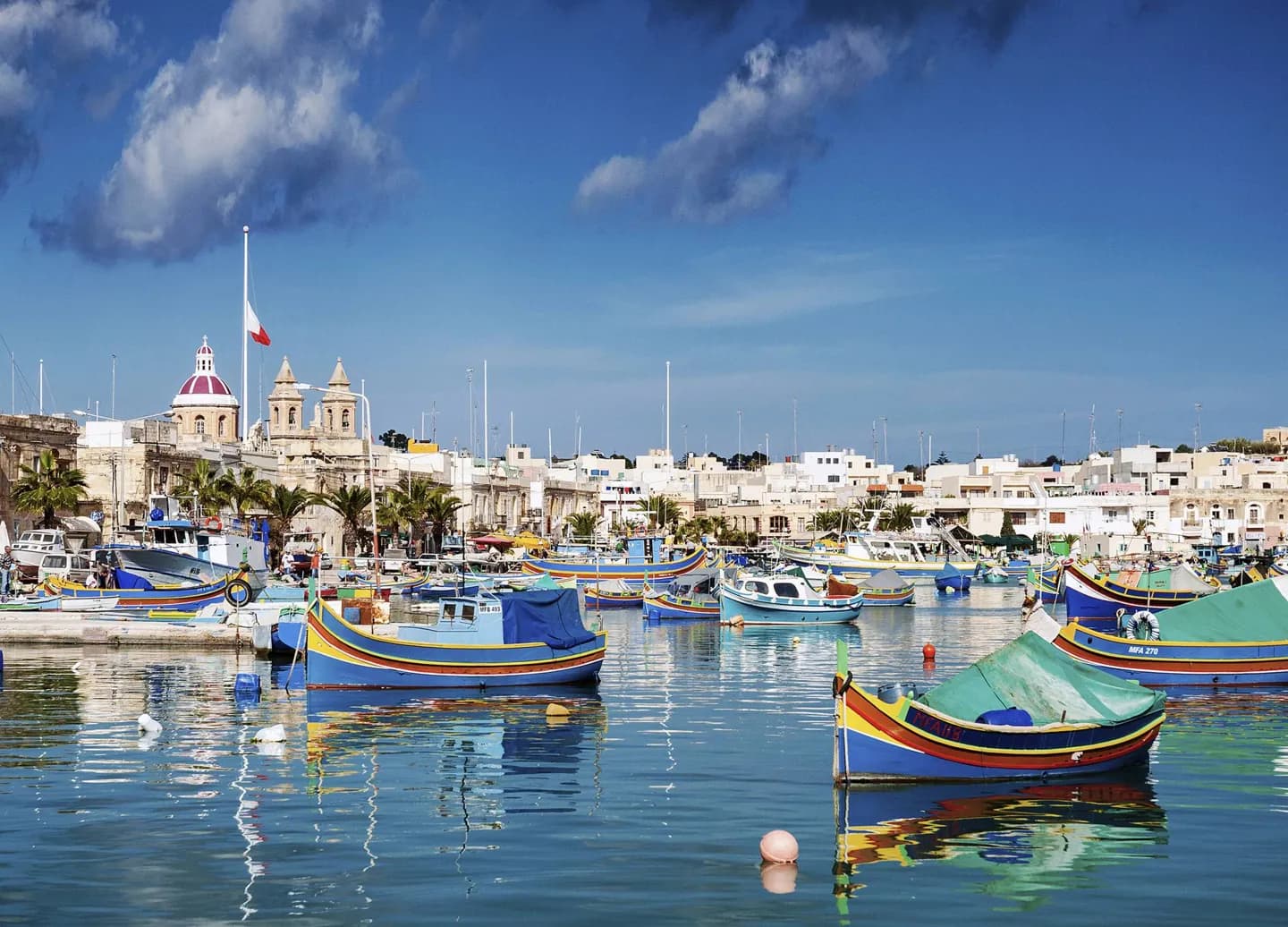
The cultural thread becomes clearest when you connect very different anchors: Ħaġar Qim and Ġgantija for prehistory, Valletta for the Knights and later powers, and Marsaxlokk for the working luzzu boat tradition. Add local food such as pastizzi or ġbejniet to move from monuments into everyday flavour.
The full story
Malta’s culture reflects long contact with neighbouring Mediterranean societies and the powers that ruled the islands before independence. The deepest visible layer is prehistoric: temples at Ġgantija, Ħaġar Qim and Mnajdra preserve a building tradition whose makers remain only partly understood. Later Sicilian, Arab, European and British connections changed language, religion, food, architecture and public life. The result is best approached through concrete encounters rather than one grand label. Valletta’s churches and fortifications show the legacy of the Knights. Marsaxlokk’s brightly painted luzzu boats carry painted eyes associated in tradition with protection at sea, while still recalling a working fishing culture. On a menu, pastizzi, ġbejniet, capers, rabbit and lampuki point to local ingredients and Mediterranean exchange. Let monuments, harbour life and food sit together: Malta’s cultural coherence comes from these layers meeting in a very small archipelago.